15 Easy Plants to Grow Indoors for Low Light
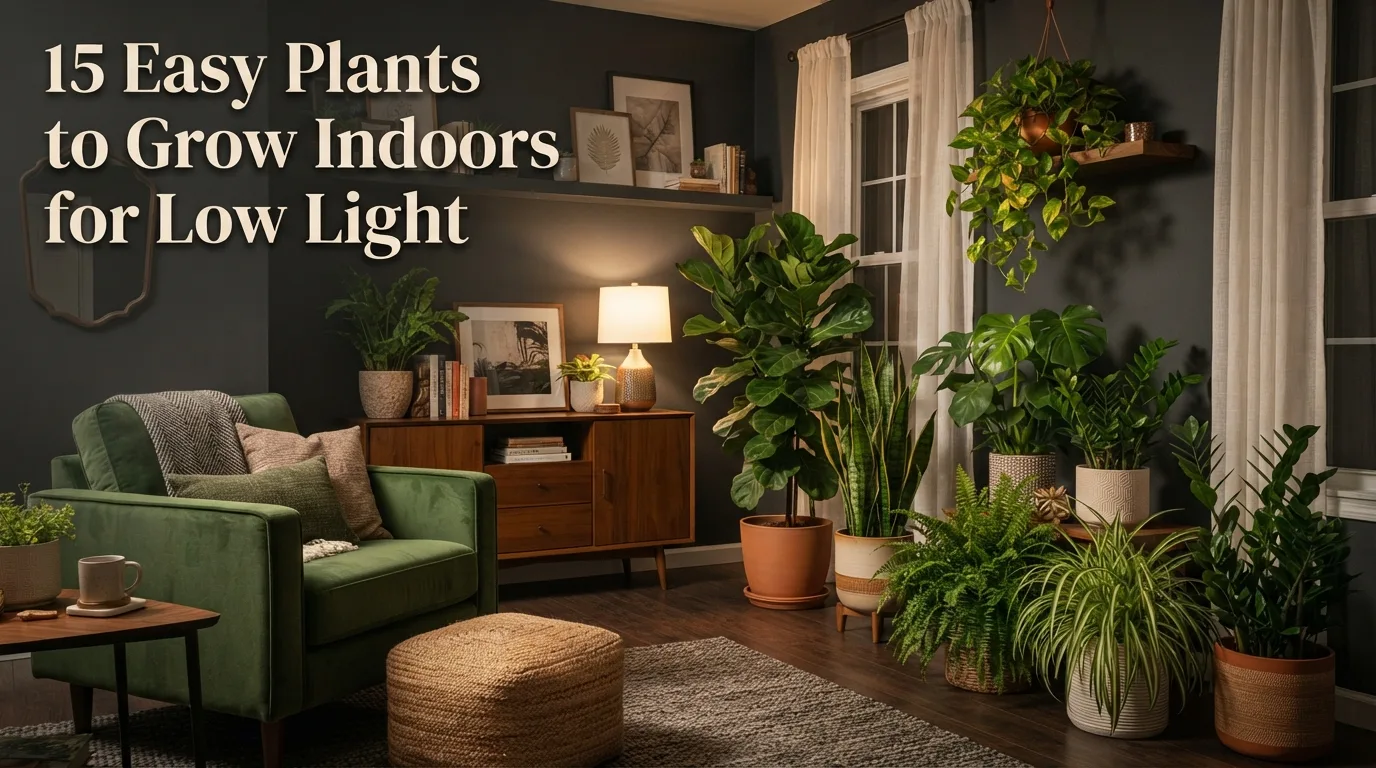
A north-facing apartment or an office desk without a window nearby usually gets written off as a place plants just can’t survive. That’s not actually true. I’ve noticed that most houseplant failures come down to picking a plant suited to bright, direct sun and putting it somewhere dim, not from low light itself being unworkable. A real low-light spot, meaning a room a few feet back from a window or lit mostly by indirect daylight, still supports a solid range of easy plants to grow indoors. The trick is matching the plant to the light you actually have instead of the light you wish you had. This list covers 15 specific houseplants that genuinely tolerate low light, with real care details for each: how often to water, what light range they’ll accept, and the problems that tend to show up when something’s off. No guesswork, no vague “keep out of direct sun” advice. Let’s start with the plant most people already have some version of.
1. Pothos
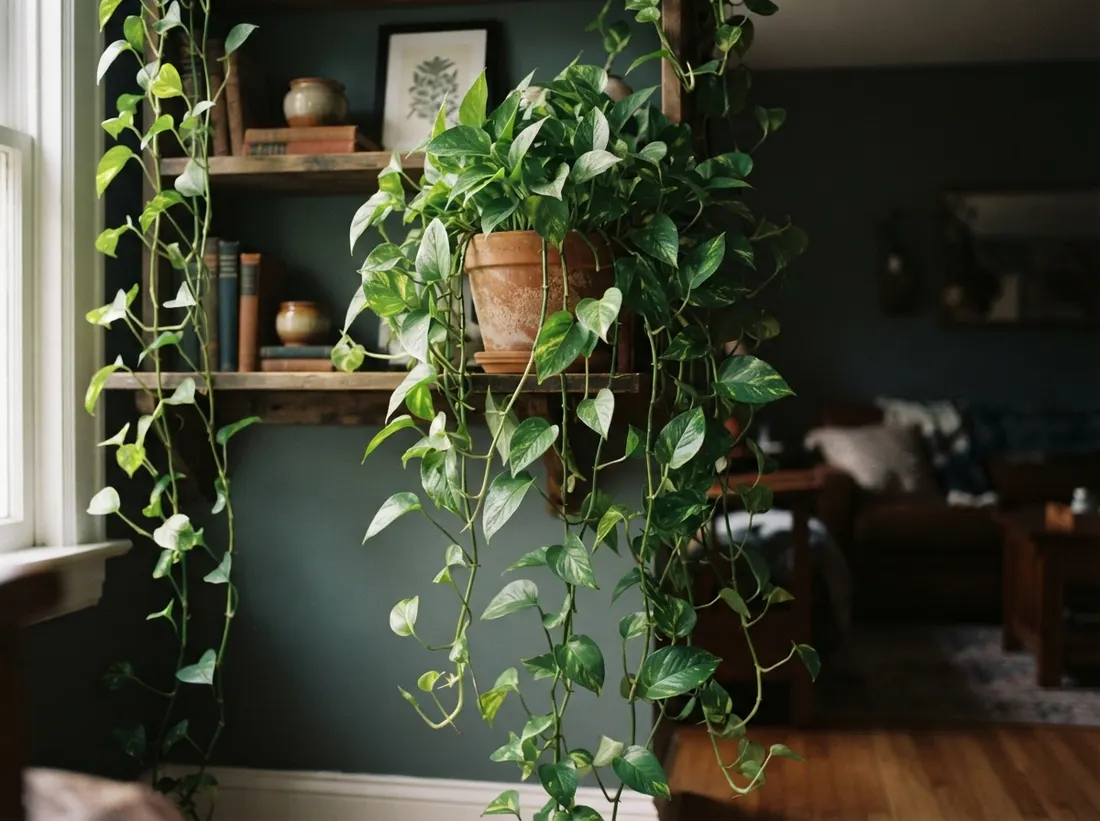
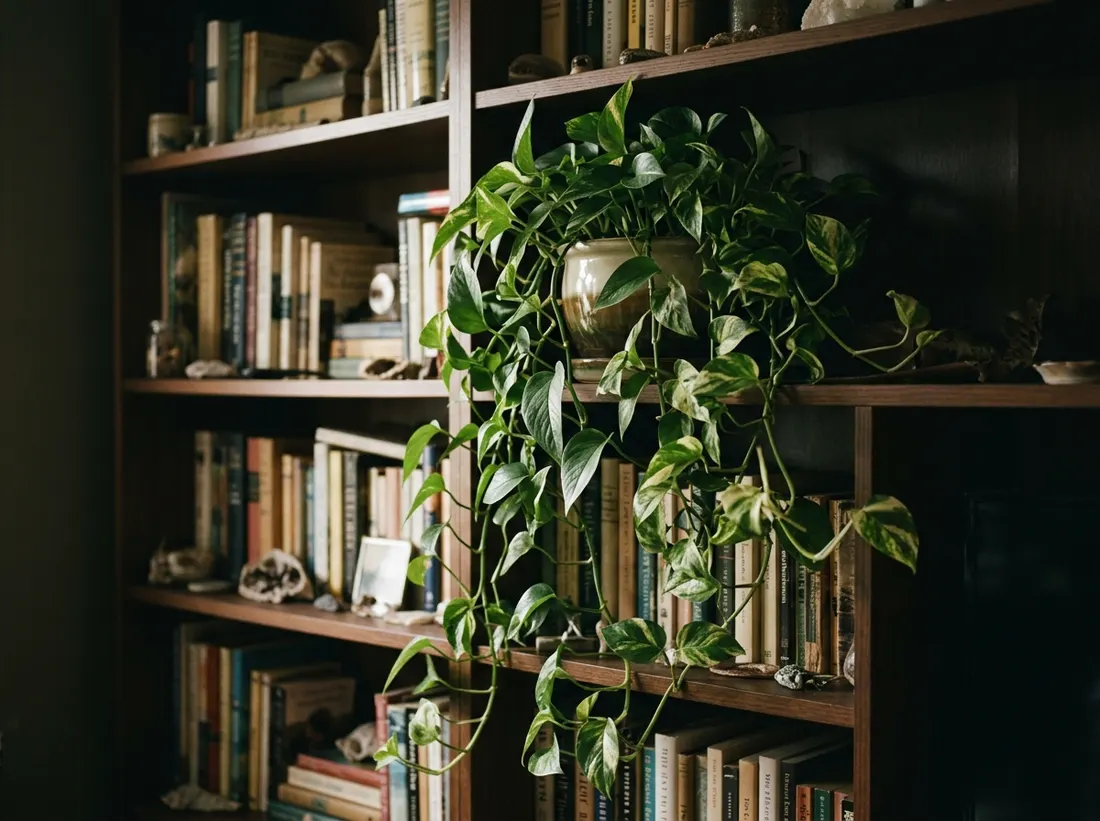
Pothos tolerates low to medium indirect light and keeps growing even several feet from the nearest window, making it one of the most forgiving houseplants available. Water it every 7 to 10 days, letting the top inch or two of soil dry out between waterings, since soggy soil causes root rot faster than underwatering causes any real damage. Yellowing leaves usually mean overwatering, while brown, crispy tips point to dry air or infrequent watering. Trim trailing vines whenever they get leggy to keep growth full instead of stringy.
2. Snake Plant
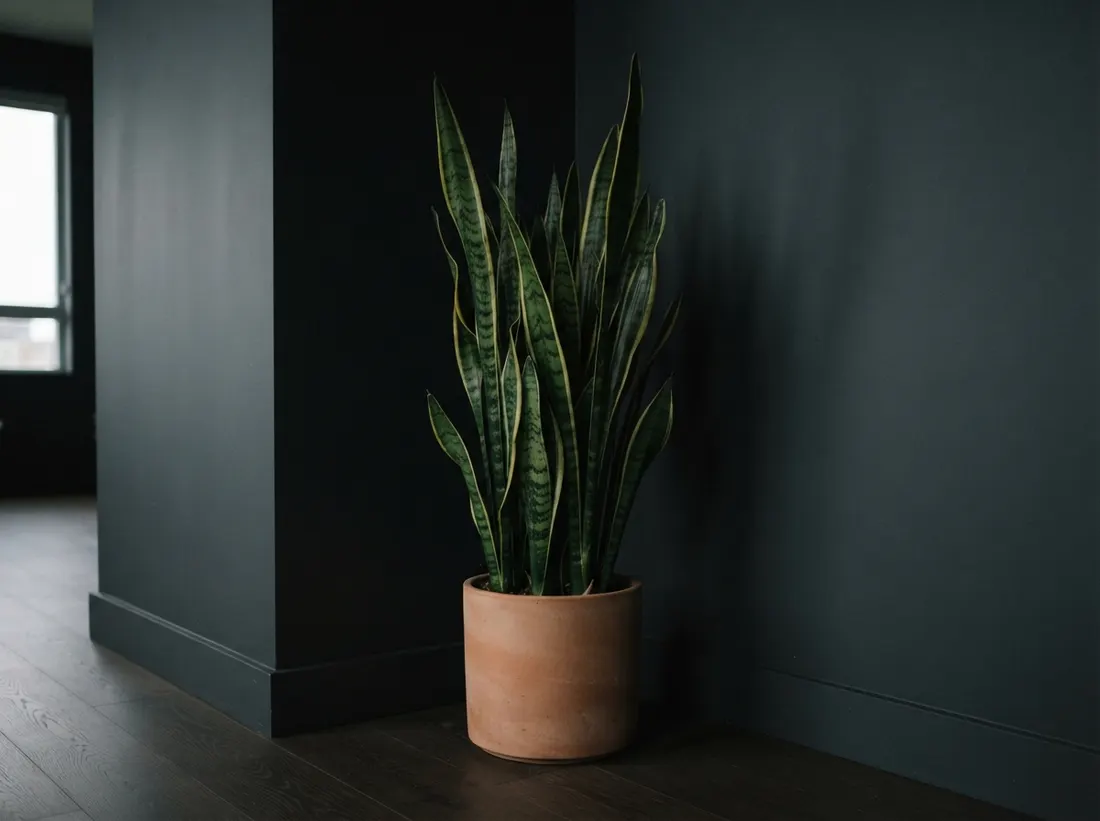
Snake plant survives in low light that would stunt most other houseplants, including corners that get almost no natural light at all. Water it only every 2 to 3 weeks, since its thick leaves store water and overwatering is by far the most common way to kill this plant. Mushy, discolored leaves at the base signal root rot from too much water, while a plant that just stops growing in very low light is normal and not a sign of a problem.
3. ZZ Plant
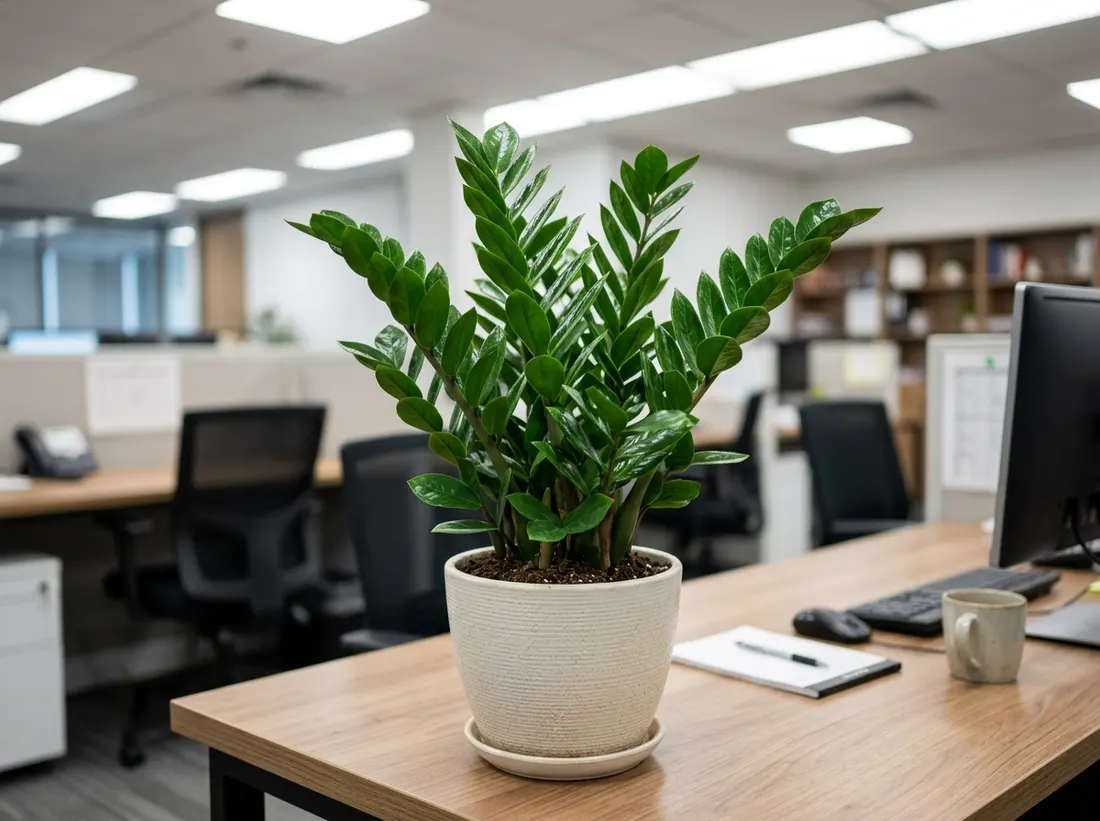
ZZ plant handles low light exceptionally well thanks to its thick, water-storing rhizomes, and it’s one of the few houseplants that genuinely thrives in an office with only fluorescent lighting. Water every 2 to 3 weeks, allowing the soil to dry out completely between waterings. Yellow, dropping leaflets almost always mean overwatering, and this plant would rather be forgotten about for a month than watered too often.
4. Peace Lily
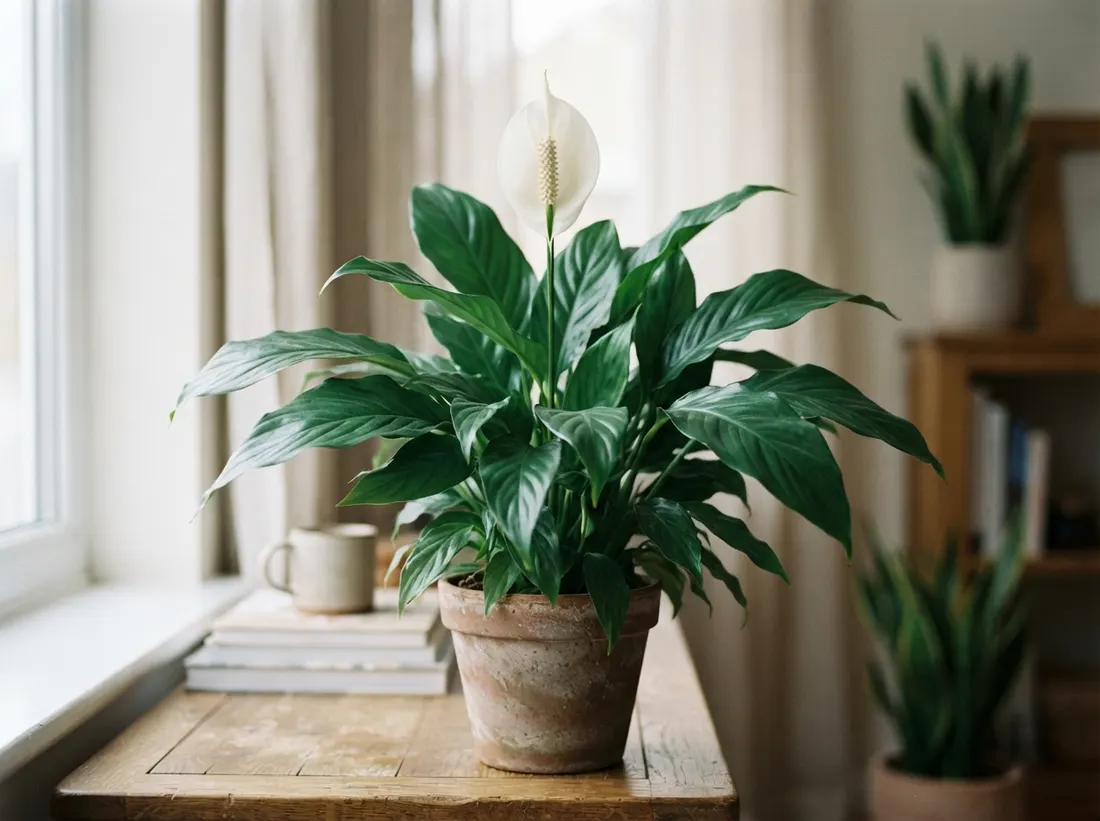
Peace lily grows well in low to medium indirect light and gives a clear visual cue when it needs water: the leaves droop noticeably, then perk back up within hours of watering. Water it about once a week, or as soon as you notice slight drooping, and keep soil evenly moist without letting the pot sit in standing water. Brown leaf tips usually point to low humidity or tap water with heavy mineral content, so filtered water helps if this becomes a recurring issue.
5. Cast Iron Plant
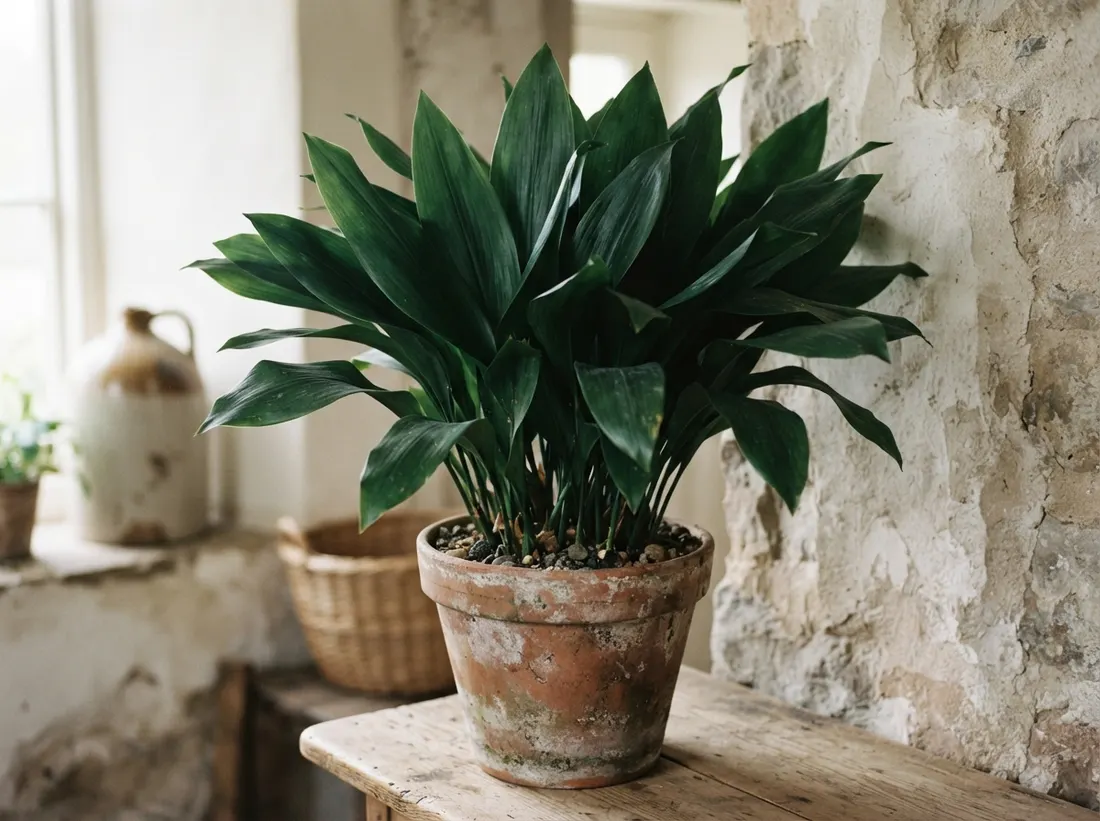
Cast iron plant earns its name by tolerating low light, temperature swings, and inconsistent care better than almost any other houseplant on this list. Water it every 10 to 14 days, letting the soil dry out between waterings, since this plant is more sensitive to overwatering than to being ignored. Growth is naturally slow, often just a few new leaves a year, so don’t mistake its pace for a sign that something’s wrong.
6. Chinese Evergreen
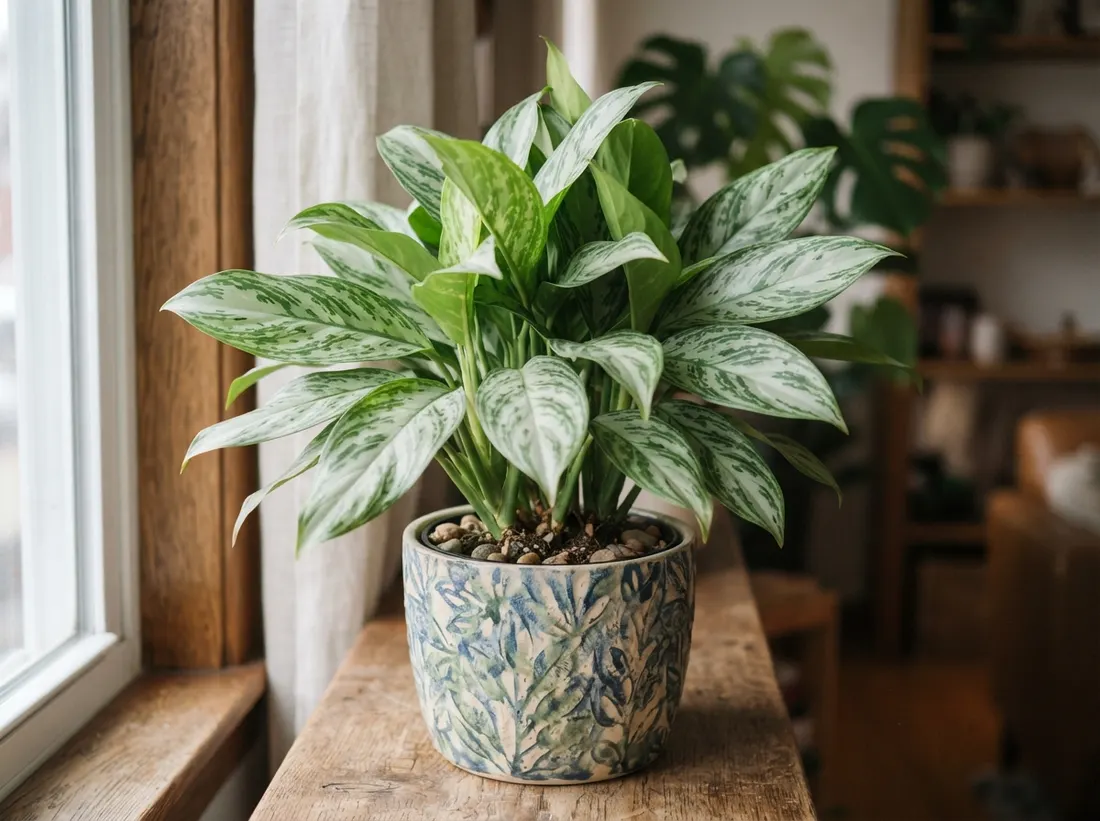
Chinese evergreen handles low light well, though varieties with more silver or white variegation need slightly brighter indirect light to hold their patterning. Water every 7 to 10 days, keeping soil lightly moist but never soggy. Curling leaves usually mean the room is too cold or the air is too dry, since this plant prefers steady temperatures above 60°F and average household humidity.
7. Philodendron (Heartleaf)
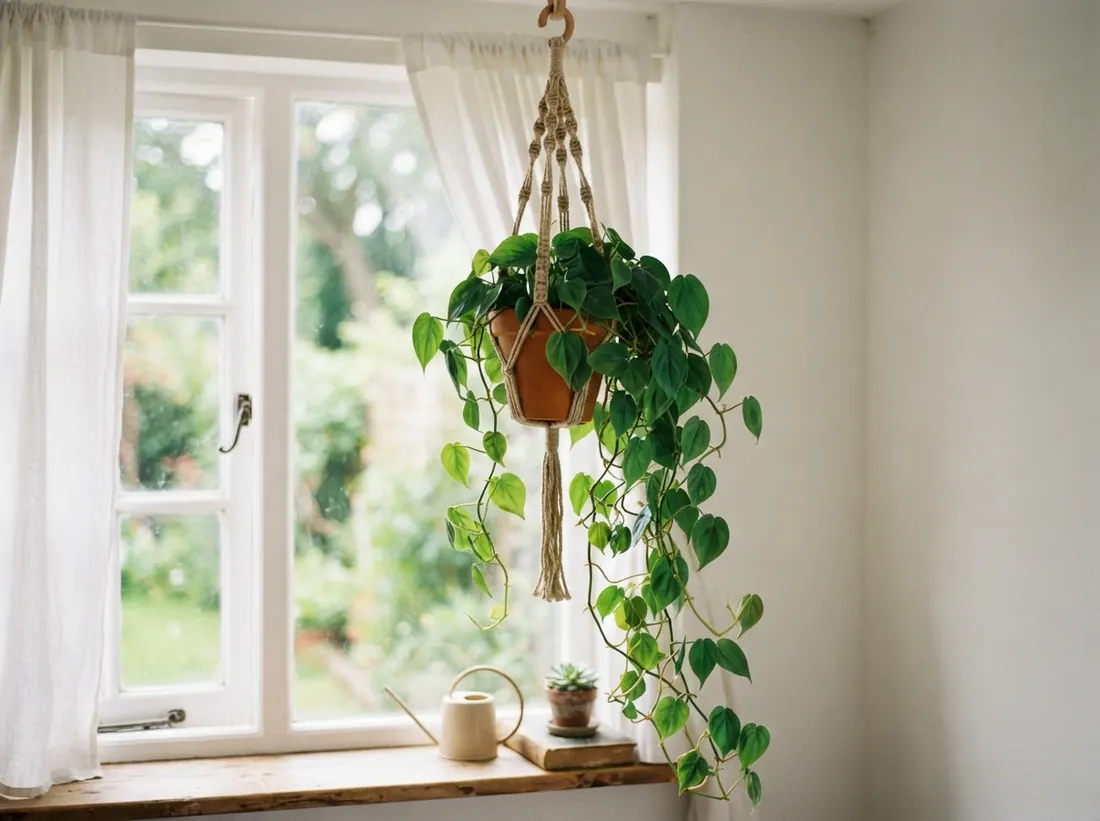
Heartleaf philodendron tolerates low indirect light and keeps producing new heart-shaped leaves even several feet from a window. Water every 7 to 10 days, letting the top inch of soil dry between waterings. Small, sparse leaves usually mean the plant needs a bit more light, while long gaps between leaves along the vine, called legginess, are normal in lower light and can be trimmed back to encourage fuller growth.
8. Dracaena (Corn Plant)
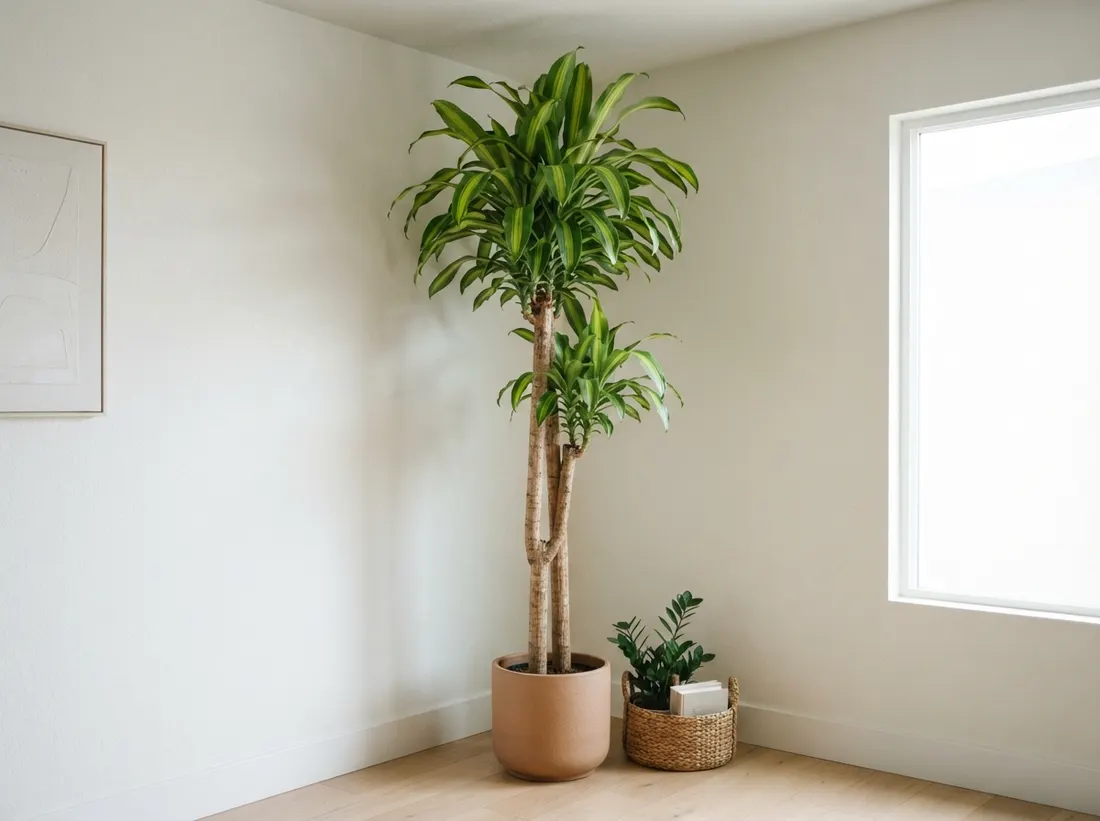
Dracaena tolerates low to medium indirect light and grows into a tall, architectural houseplant over several years with minimal fuss. Water every 10 to 14 days, allowing the top half of the soil to dry out, since dracaena is sensitive to both overwatering and fluoride in tap water. Brown leaf tips are commonly caused by fluoridated tap water, so switching to filtered or distilled water often resolves the issue.
9. Spider Plant
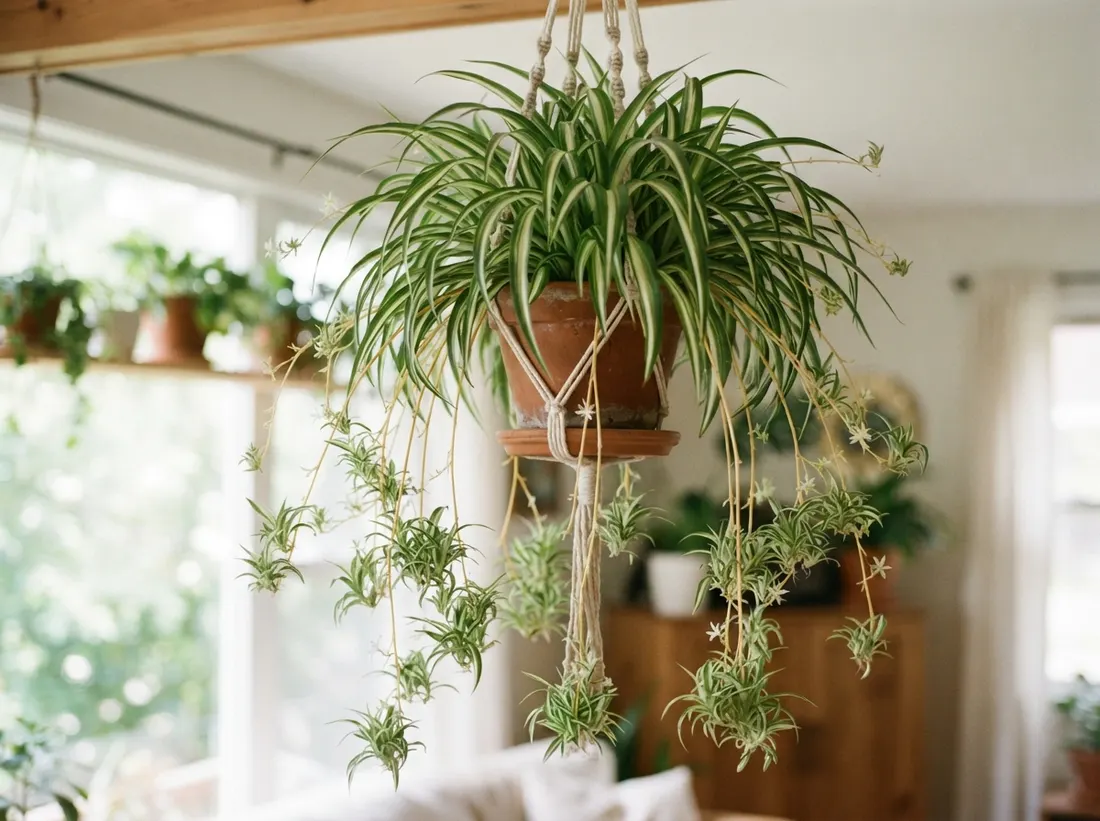
Spider plant handles low to medium indirect light well and produces small plantlets on long stems once mature, which can be rooted into new pots. Water every 7 to 10 days, keeping soil lightly moist and allowing it to dry slightly between waterings. Brown leaf tips are common and usually relate to tap water minerals or low humidity instead of a serious problem, and trimming the tips doesn’t harm the plant.
10. Parlor Palm
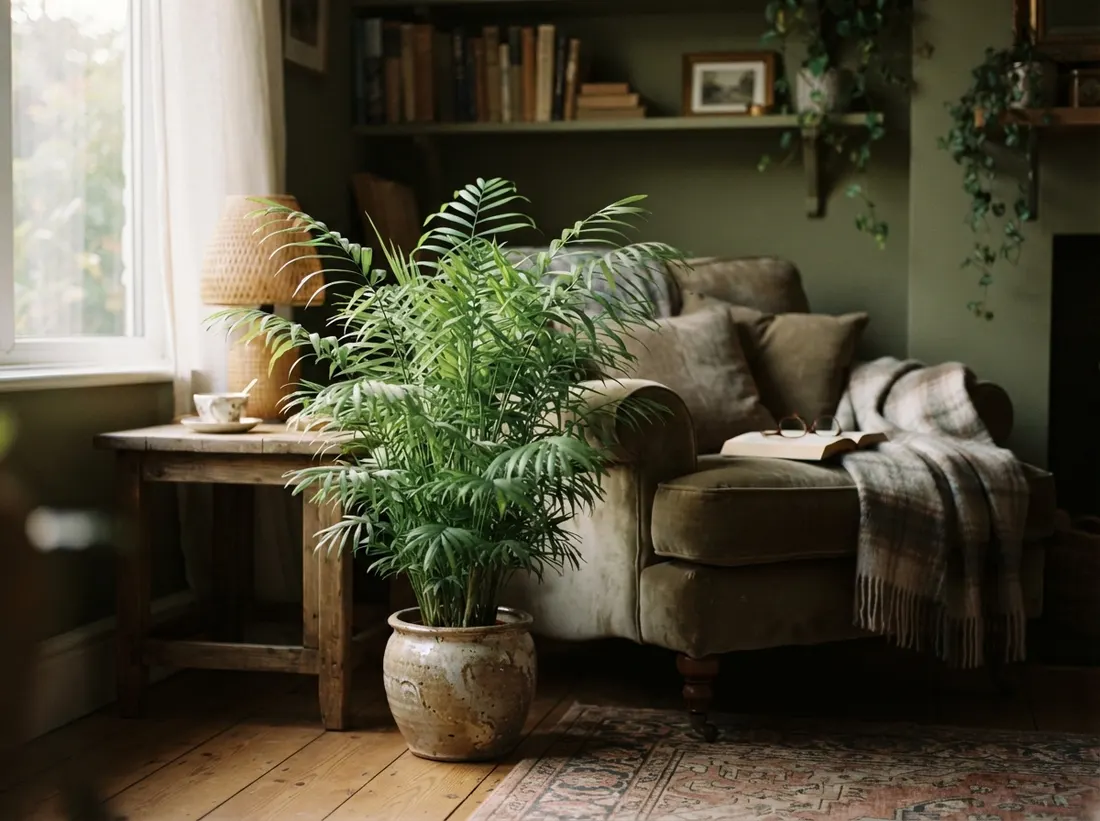
Parlor palm tolerates low light better than most palm varieties, making it one of the few palms that genuinely works as an indoor low-light plant instead of requiring bright, filtered sun. Water every 7 to 10 days, keeping soil evenly moist but never waterlogged. Brown frond tips typically indicate low humidity or a buildup of mineral salts from tap water, so occasional flushing with distilled water helps.
11. Peperomia
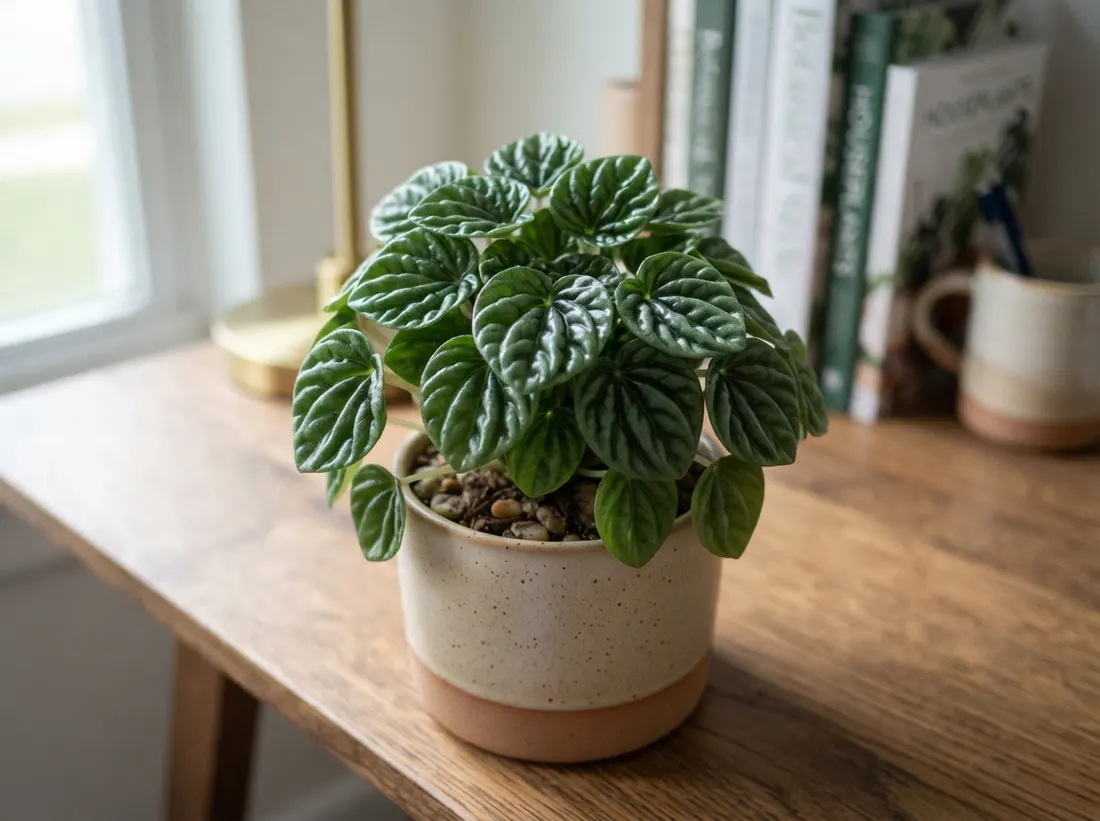
Peperomia tolerates low to medium indirect light and stays compact, making it a good choice for shelves or desks that don’t get much natural light. Water every 10 to 14 days, letting the soil dry out between waterings, since peperomia’s thick leaves store water and are prone to rot if overwatered. Wrinkled, soft leaves usually signal underwatering, while yellowing, mushy leaves point to too much.
12. English Ivy
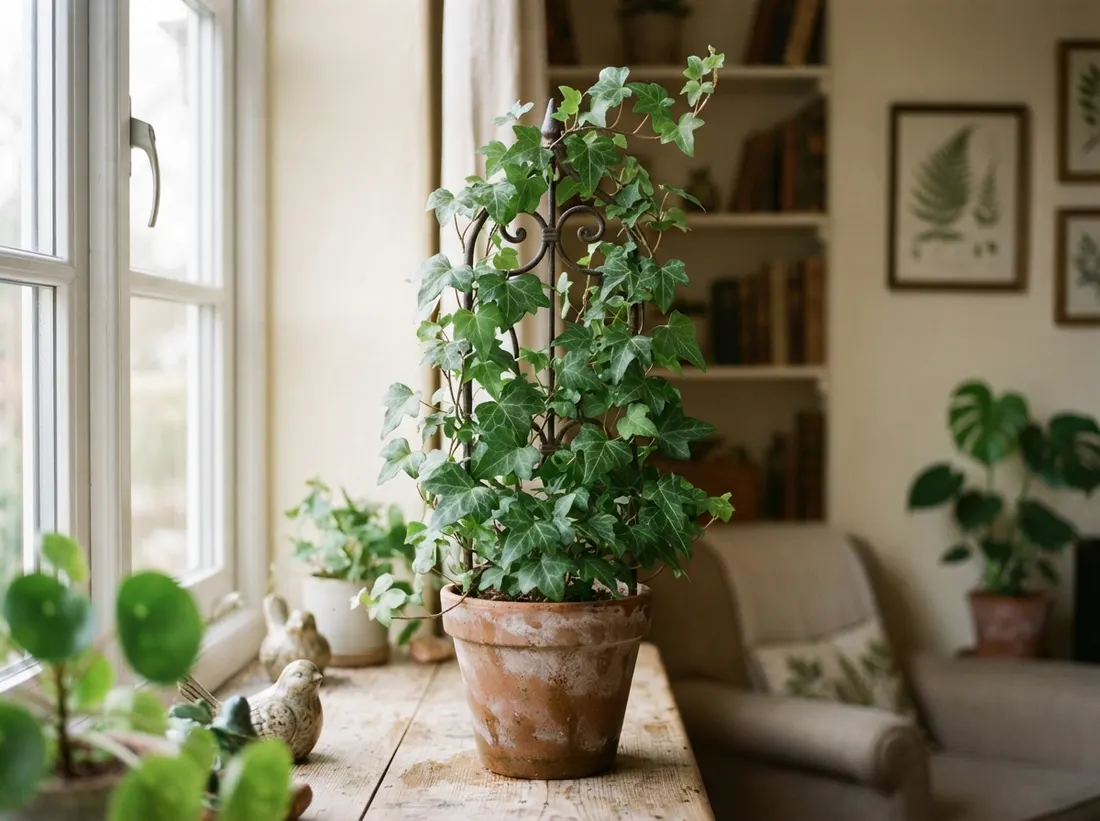
English ivy tolerates low indirect light and grows well as a trailing or climbing plant on a shelf, in a hanging basket, or trained up a small trellis. Water every 7 days, keeping soil consistently moist but well-drained, since ivy dries out faster than many other low-light plants due to its dense foliage. Spider mites are a common issue in dry indoor air, so occasional misting or a humidity tray helps keep them away.
13. Bird’s Nest Fern
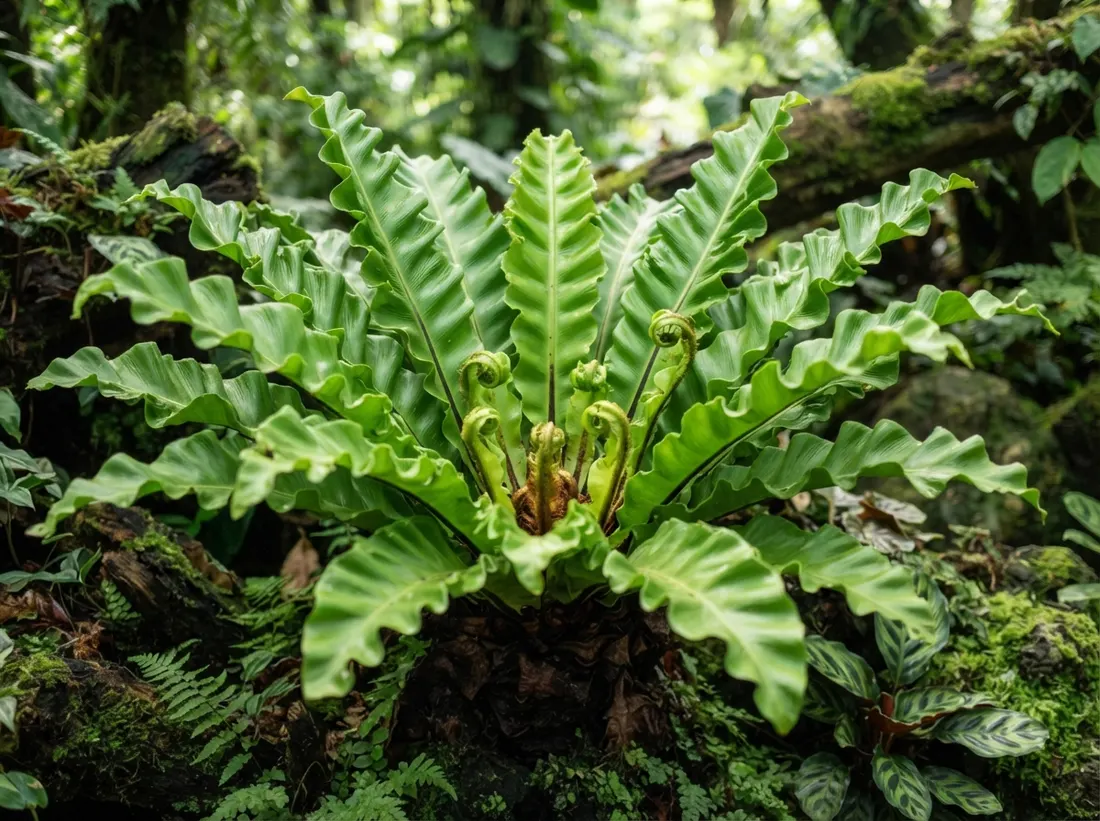
Bird’s nest fern tolerates low to medium indirect light far better than most ferns, including the notoriously fussy maidenhair fern, and it doesn’t need the same constant misting. Water every 7 days, keeping soil consistently moist without letting the pot sit in water. Crispy, browning fronds usually mean the air is too dry, so a spot in a naturally humid room like a bathroom with some light works especially well.
14. Aglaonema (Chinese Evergreen Relative)
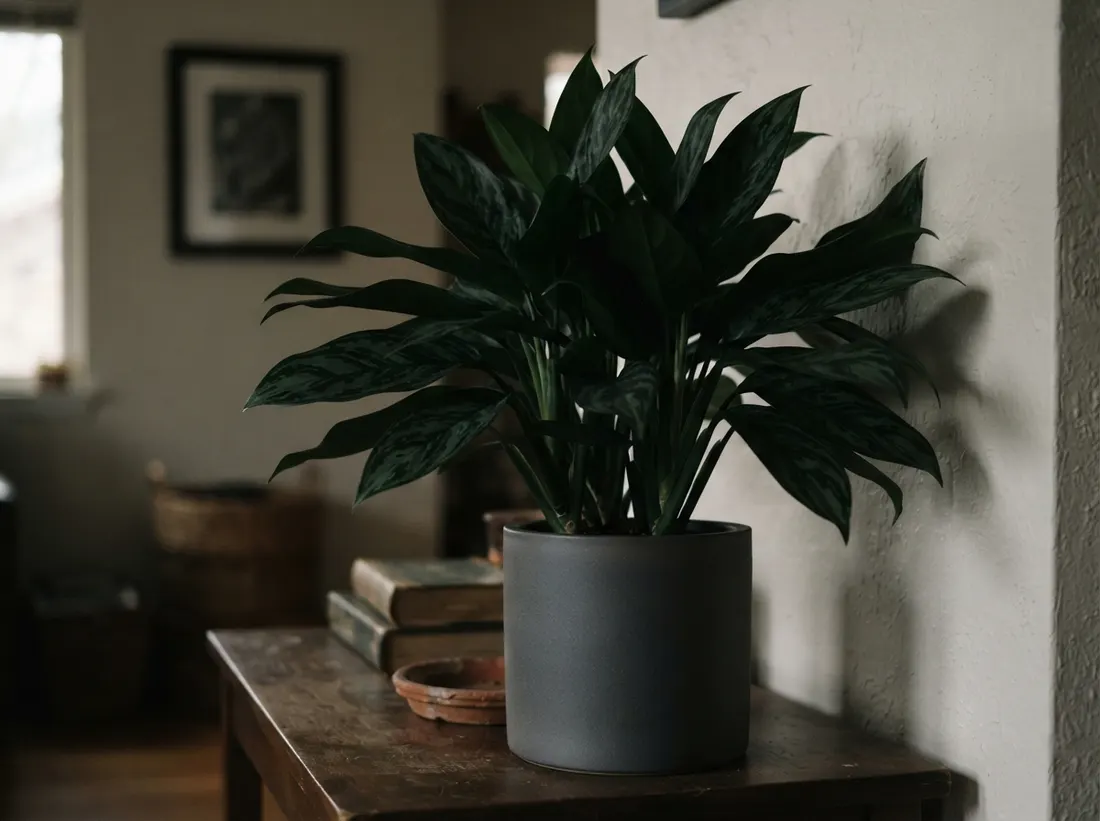
Aglaonema handles low light well, though darker green varieties tolerate dimmer conditions better than the pink or red-tinted cultivars, which need a bit more indirect light to keep their color. Water every 7 to 10 days, letting the top inch of soil dry between waterings. Yellowing lower leaves are often just natural aging, but widespread yellowing across the plant usually points to overwatering.
15. Rubber Plant
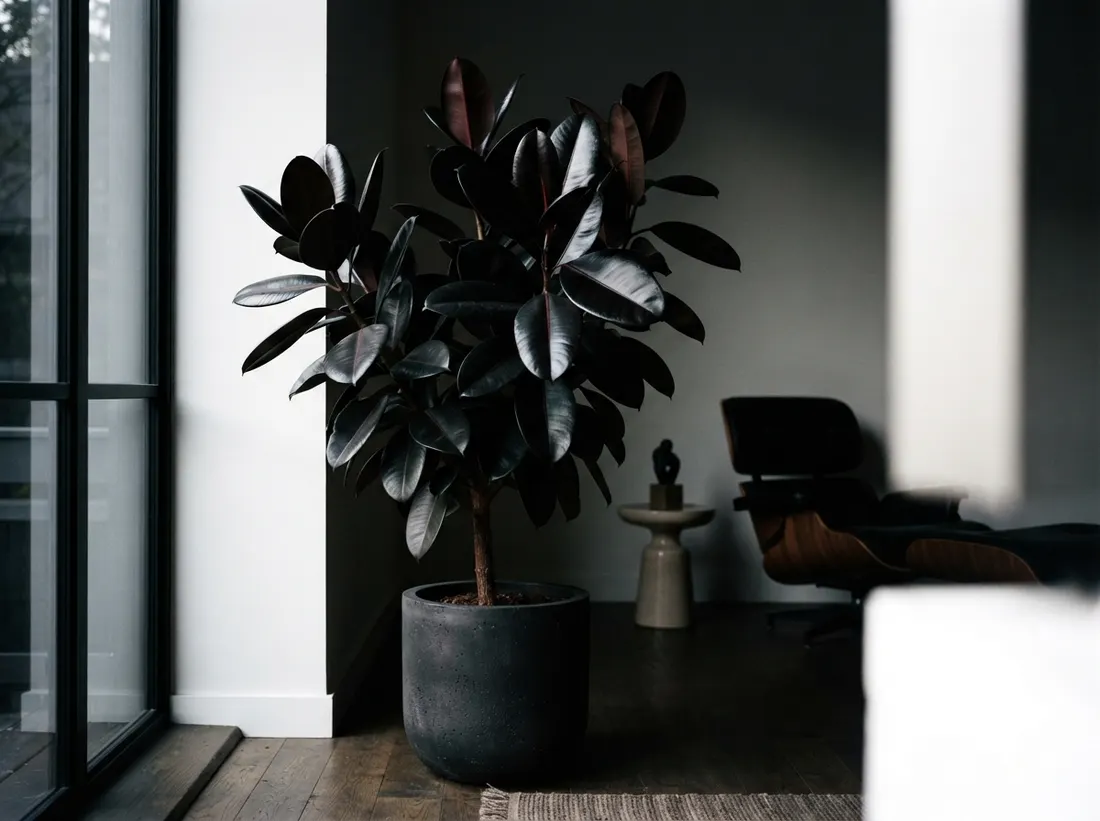
Rubber plant tolerates medium to low indirect light better than many people expect for a plant with such large, glossy leaves, though it grows more slowly and less densely in dimmer rooms. Water every 7 to 10 days, letting the top inch or two of soil dry out between waterings. Wipe the large leaves occasionally with a damp cloth, since dust buildup blocks what little light the plant is already working with.
Conclusion
Low light doesn’t rule out a full, green indoor plant collection once you know which species actually tolerate it. Pothos, snake plant, and ZZ plant are the most forgiving starting points if you’re new to this, while peace lily and peperomia add more visual variety once you’re comfortable with the basics. Pay attention to each plant’s specific watering needs instead of watering everything on the same schedule, since overwatering is the most common way any of these plants actually die. Pick two or three from this list to start, and build from there as you see what thrives in your specific space.
Frequently Asked Questions
What is the easiest houseplant to grow in low light?
Pothos and snake plant are the easiest houseplants for low light, since both tolerate infrequent watering and dim rooms without much fuss. Pothos grows quickly, roots easily from cuttings, and forgives missed waterings better than almost any other common houseplant. Snake plant goes even further, surviving in corners that get almost no natural light and only needing water every couple of weeks. Either is a solid starting point for a first low-light houseplant, and both are widely available and inexpensive.
How do I know if a plant is getting enough light?
A plant getting too little light usually shows slow or stopped growth, smaller new leaves, and longer gaps between leaves along the stem, a pattern called legginess. A plant that leans strongly toward a light source is also signaling it wants more light than it’s currently getting. Variegated plants often lose their pattern and revert to solid green in low light, which is another useful visual clue. Most low-light-tolerant plants, like ZZ plant and snake plant, will simply grow slower instead of showing obvious stress signs, so patience is usually the right response.
Can plants grow with only artificial light?
Yes, many low-light-tolerant houseplants, including pothos, ZZ plant, and snake plant, grow reasonably well under standard indoor fluorescent or LED lighting, such as in an office with no windows nearby. Growth will be slower and less dense than under natural light, but these species can sustain themselves indefinitely this way without declining. A dedicated grow light positioned a foot or two above the plant produces noticeably faster, fuller growth if that matters more to you than pure convenience.
How often should I water low-light indoor plants?
Most low-light houseplants need water every 7 to 14 days, letting the top inch or two of soil dry out between waterings, since low light also means slower water use through the leaves. Overwatering is the most common cause of death for these plants, far more so than not getting enough light. Always check the soil with a finger before watering instead of following a fixed calendar schedule, and adjust the interval longer during winter when growth naturally slows further.
Why do my low-light plants have yellow leaves?
Yellow leaves on a low-light houseplant most often mean overwatering, especially if the leaves feel soft or mushy instead of dry and crisp. Check that the pot has drainage holes and that you’re actually letting the soil dry out between waterings before watering again. Occasional yellowing of a single old, lower leaf is normal aging and not a cause for concern, but yellowing that spreads across several leaves at once usually points to a watering problem worth addressing right away.
Do low-light plants need fertilizer?
Yes, but less often than plants growing in bright light, since slower growth in low light means the plant simply uses fewer nutrients overall. Feed most low-light houseplants once every 6 to 8 weeks during spring and summer with a diluted balanced fertilizer mixed at half the label’s usual strength. Skip feeding entirely during fall and winter when growth naturally slows or stops. Overfertilizing in low light causes more problems, like salt buildup and root burn, than underfertilizing ever does.