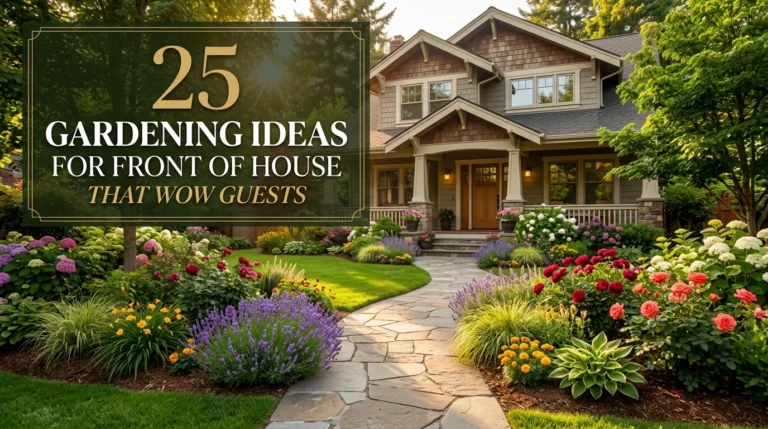

9 Front Yard Gardening Ideas Worth Stealing
I’ve noticed that most front yards get neglected simply because nobody wants to spend a weekend edging a lawn or babysitting a flower bed that needs constant deadheading. The front yard is the first thing anyone sees, yet it usually gets the least amount of care because it competes with a hundred other chores. That gap between wanting curb appeal and having the time for it is exactly where these front yard gardening ideas come in. Every idea below is chosen for one reason: it looks good with very little upkeep once it’s planted. I’m not covering every possible design option here, just the ones that keep working for you long after installation day, without a mowing schedule, a fertilizing routine, or a weekly trim. If your front yard currently feels like a chore you’re avoiding, start with the first idea and work down the list. Each one can stand alone, so you can pick just one or combine a few depending on how much space and time you actually have.
1. Swap Lawn Edges for Mulched Borders
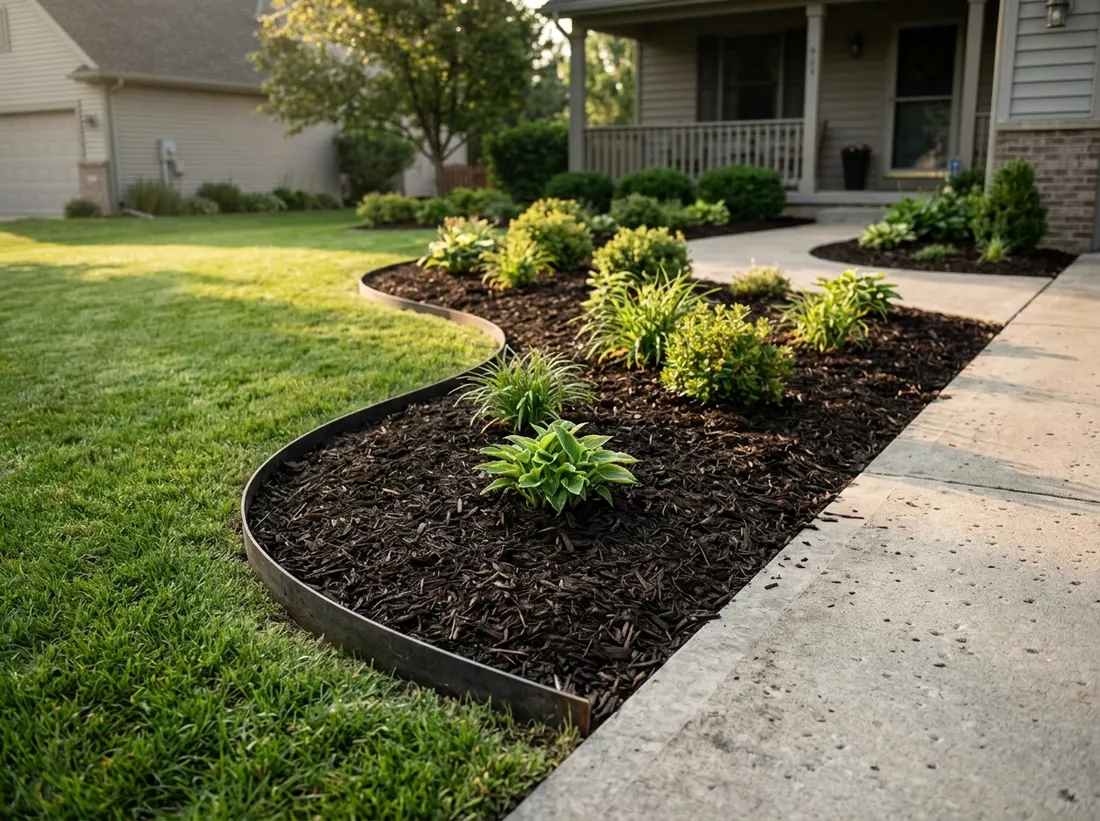
Grass that touches a driveway, walkway, or fence line needs constant trimming just to look tidy. Pull the turf back twelve to eighteen inches along those edges and replace it with a mulched border instead. A three-inch layer of shredded bark or pine straw stops weeds and never needs mowing. This single change removes the fussiest part of lawn care, the string-trimming along every hard edge, while making the whole yard look more finished within a single afternoon.
Use a flat edging material, like steel edging or a shallow trench cut with a spade, to keep the mulch from migrating back onto the grass over time. A clean line between lawn and border is what makes this read as designed rather than neglected, and it takes only a few extra minutes to establish once during installation.
2. Plant a No-Mow Groundcover Strip
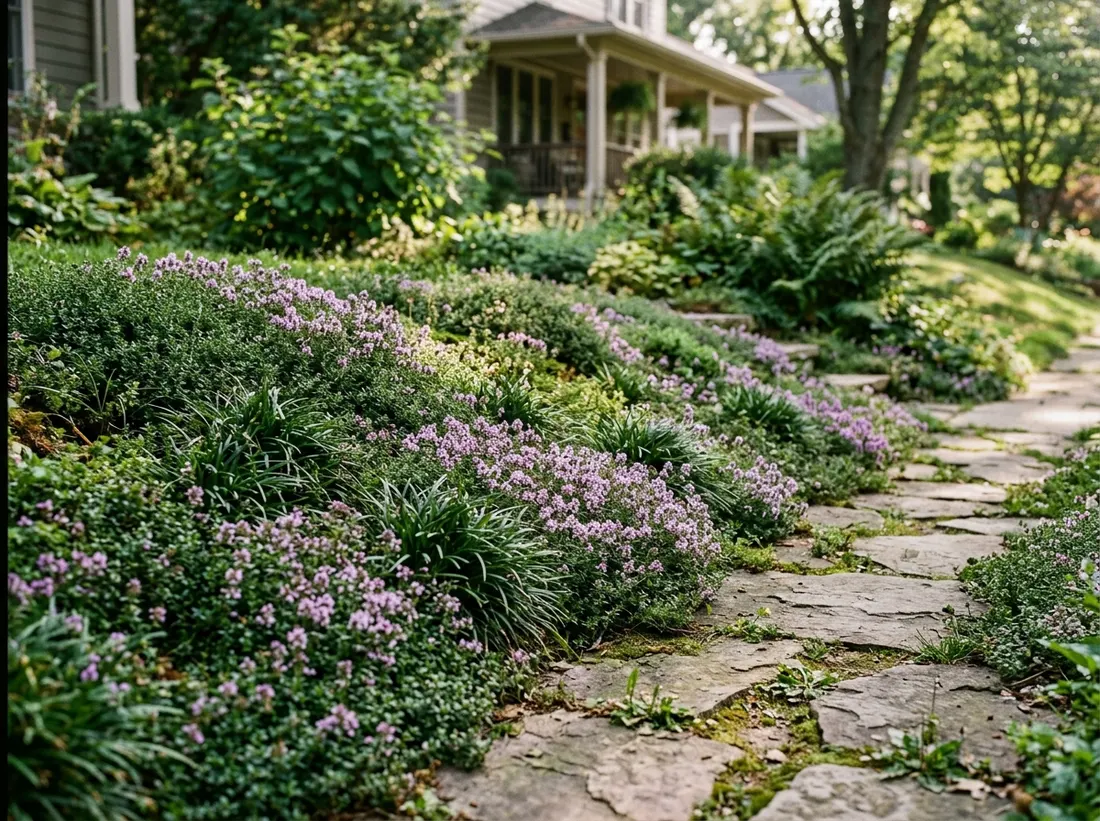
Groundcovers like creeping thyme, sedum, or dwarf mondo grass fill in bare soil and choke out weeds without ever needing a mower. Most spread six to twelve inches per plant within a season and only need watering while they establish, usually the first six to eight weeks after planting. Use a groundcover strip anywhere grass struggles anyway, like a narrow side strip or a slope that’s awkward to mow. Once established, these plants tolerate light foot traffic and need no trimming at all.
3. Group Containers Near the Front Door
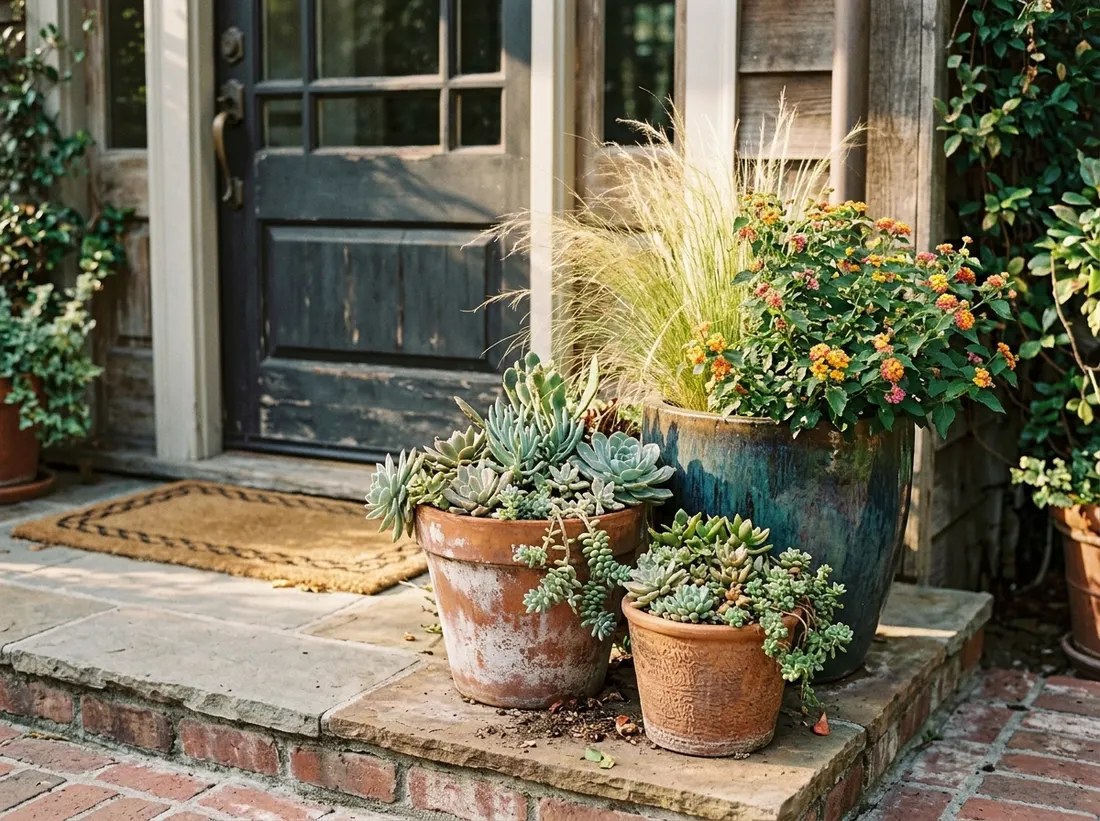
A cluster of three to five pots by the entry gives instant color without touching the rest of the yard. Pick drought-tolerant plants like succulents, ornamental grasses, or ever-blooming annuals such as lantana, and use a quality potting mix that holds moisture longer. Grouping pots at different heights, using an upturned crate or a small stand under one pot, adds visual interest without adding any extra plants to manage. Water them together on one schedule and you’ve covered the highest-visibility spot in the yard with the least effort.
4. Choose Native Perennials That Take Care of Themselves
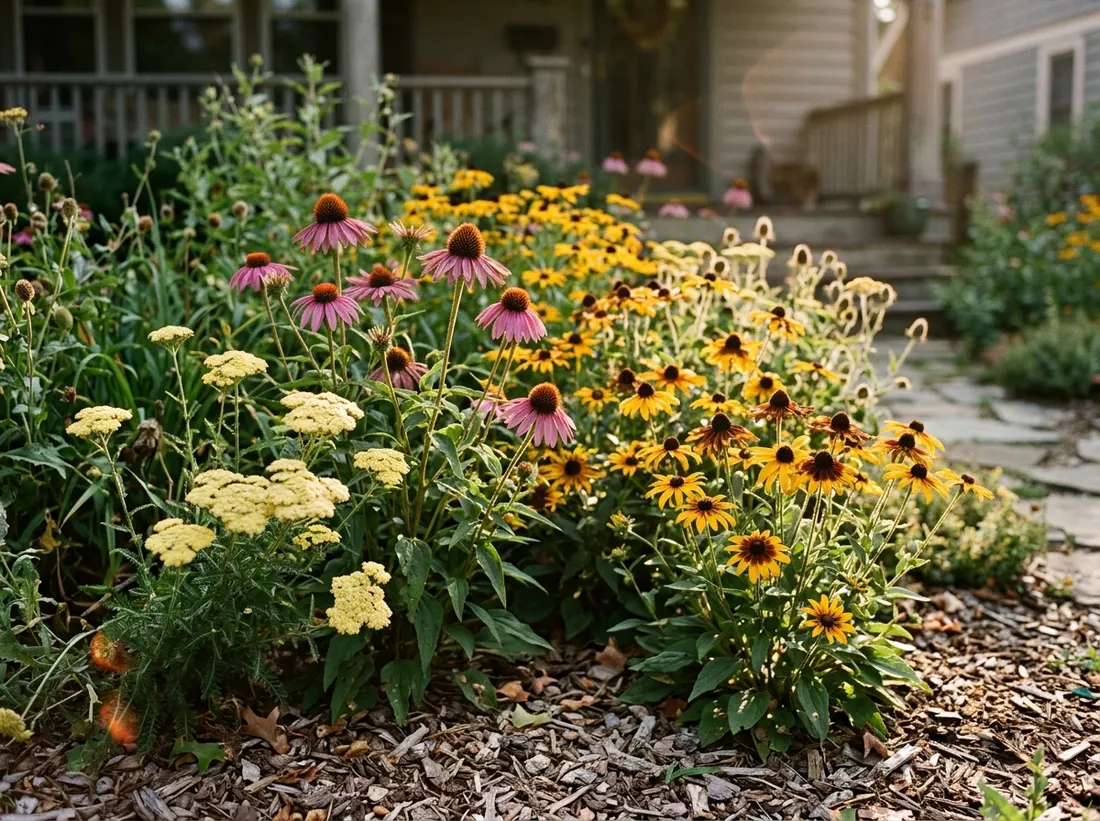
Native perennials are adapted to your local rainfall and soil, so once they’re rooted in, usually after their first full year, they rarely need supplemental water or fertilizer at all. Look up species native to your specific region rather than a generic list, since a plant native to the Southeast behaves very differently than one native to the high desert. Coneflower, black-eyed Susan, and yarrow work across much of the country and come back reliably every spring without dividing or deadheading.
5. Add a Gravel Path With Nothing to Trim
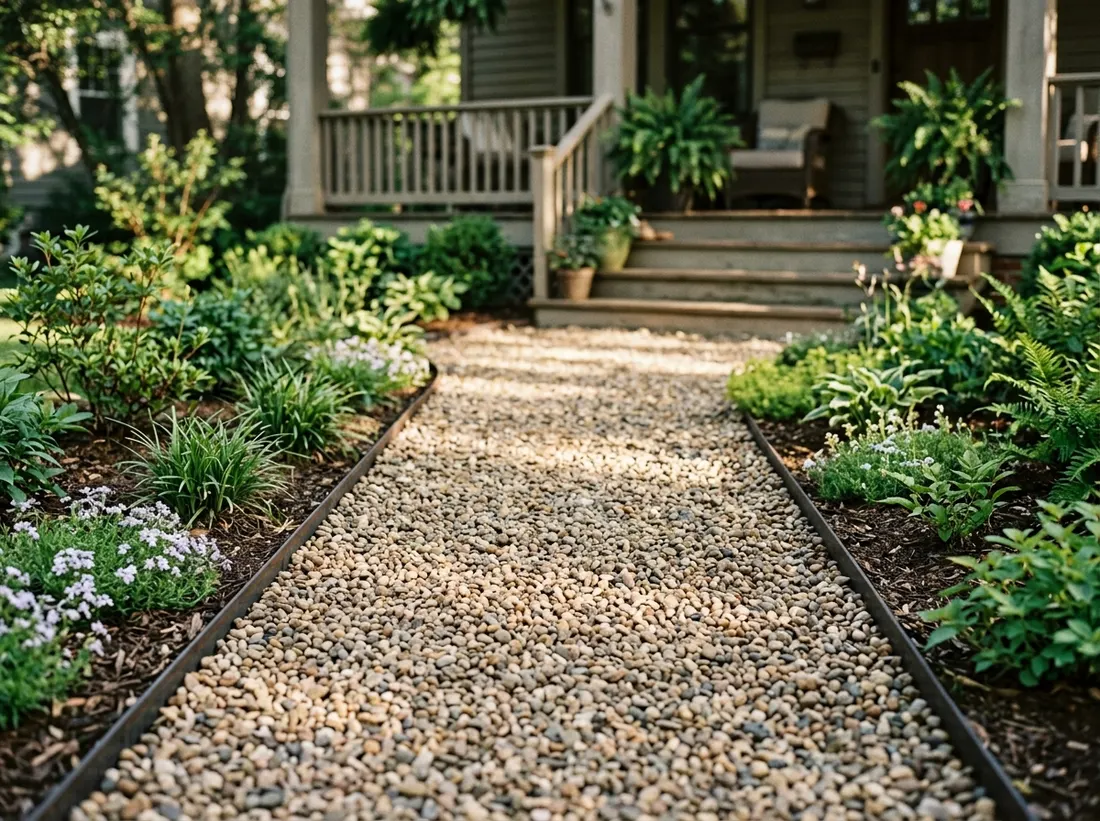
A gravel path replaces a strip of lawn that would otherwise need mowing right up to its edge. Lay landscape fabric first, then two to three inches of decorative gravel, and edge it with steel or plastic landscape edging so it stays contained. Unlike a lawn path, gravel never needs cutting, and unlike pavers, it costs less and installs in a weekend. It also handles drainage well, so puddling near the front door becomes less of an issue after rain.
6. Use Ornamental Grasses for Instant Structure
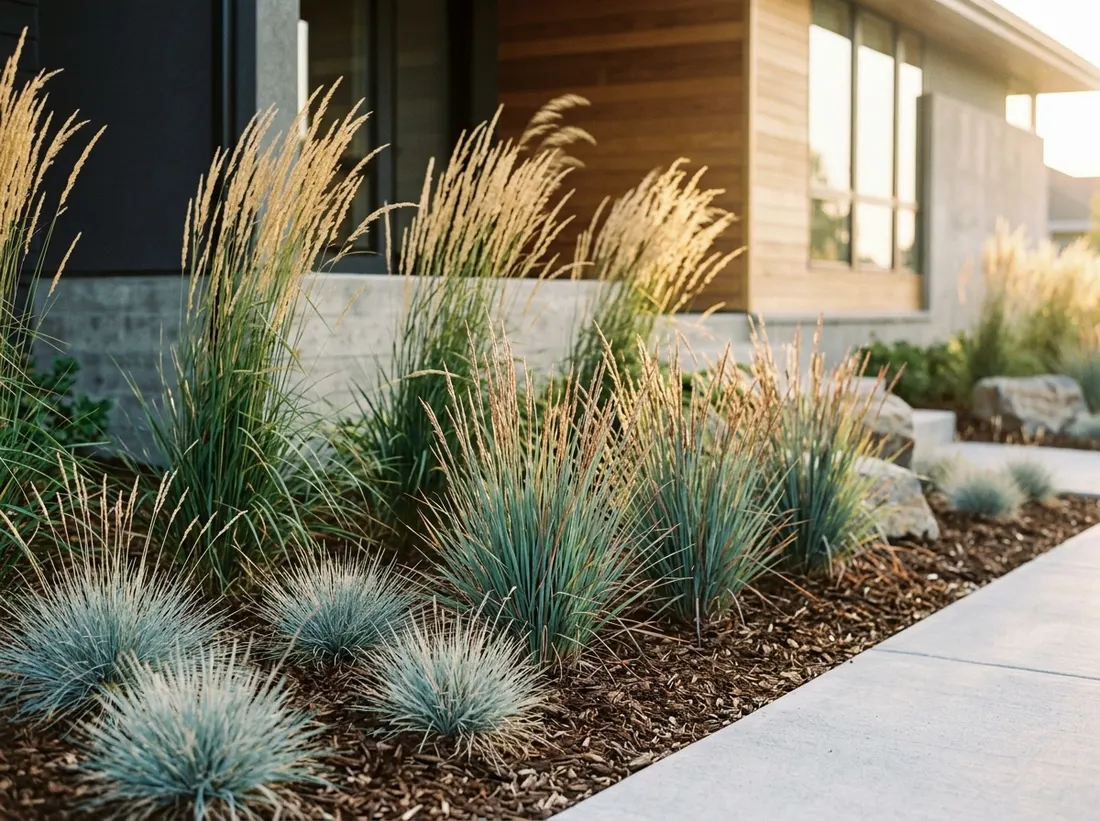
Ornamental grasses like little bluestem, feather reed grass, or blue fescue give a front yard height and movement without any pruning until late winter, when you cut them back once, to about four inches, before new growth starts. They tolerate poor soil, need minimal water once established, and never require staking or deadheading during the growing season. Plant them in odd-numbered groups near the foundation or along a walkway for a look that reads as intentional rather than empty.
7. Install a Basic Drip System Before You Plant
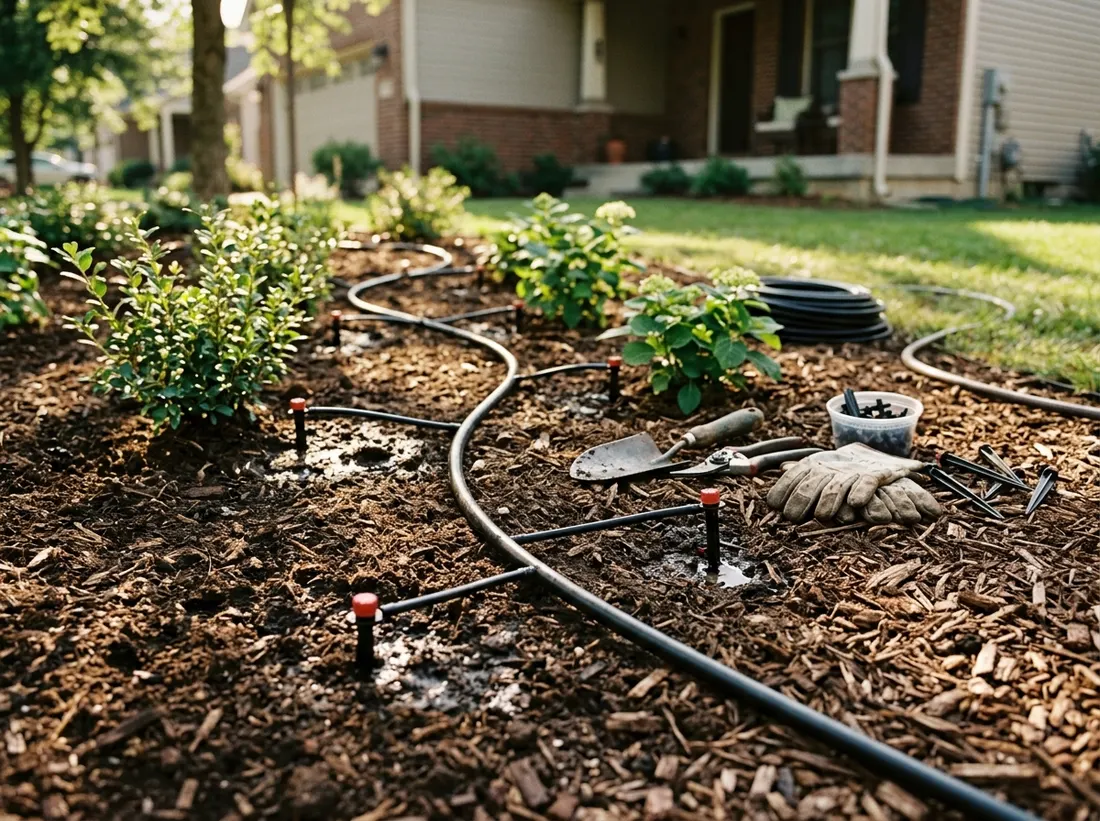
If you’re adding any new plants at all, run a simple drip line before you put them in the ground rather than after. A basic kit with quarter-inch tubing and a battery timer costs relatively little and takes an afternoon to lay out. Once it’s connected, watering becomes a set-it-and-forget-it task instead of a daily chore with a hose. This one step does more to keep a low-maintenance yard actually low-maintenance than almost anything else on this list.
8. Mulch Everything to Cut Down on Weeding
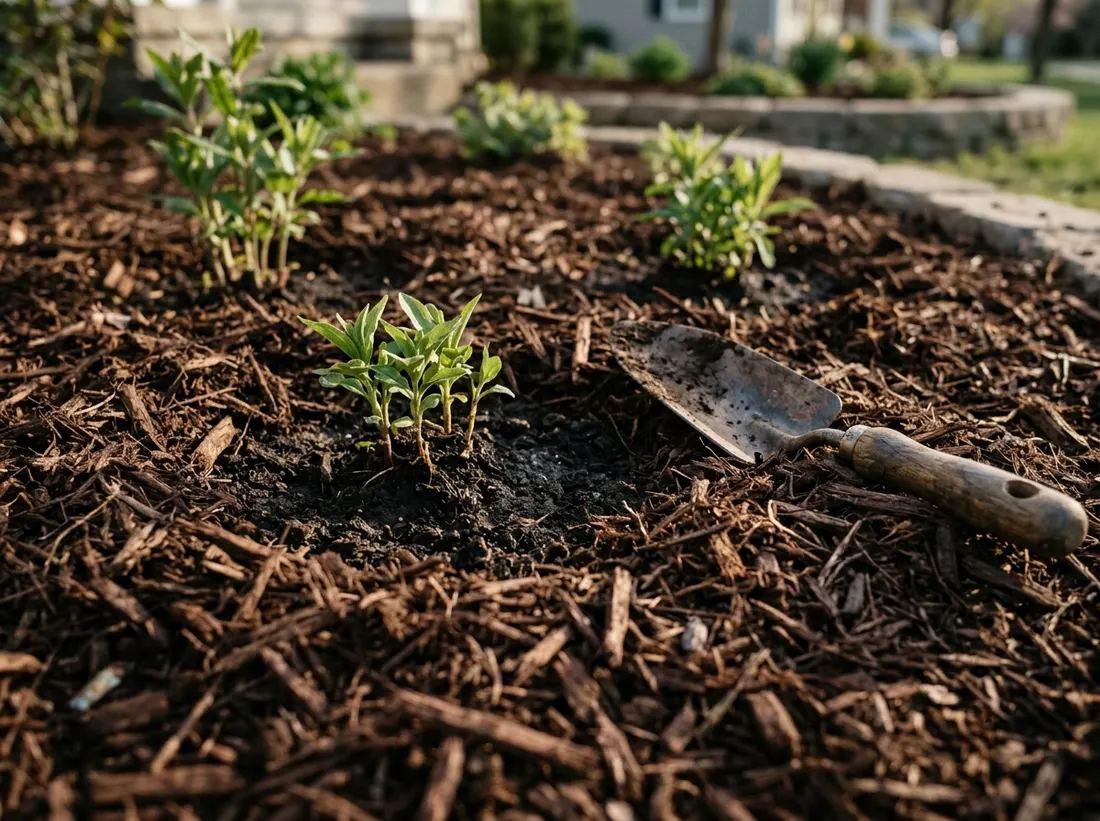
A consistent two-to-three-inch mulch layer across every planted bed blocks sunlight from weed seeds and holds soil moisture longer between waterings. Reapply once a year, usually in spring, and skip the weekly weeding sessions that eat up so much yard time. Mulch also moderates soil temperature, which helps roots stay stable through both summer heat and winter cold. Keep it pulled back an inch or two from stems and trunks so it doesn’t trap moisture against the plant itself.
9. Pick One Focal Shrub Instead of a Full Flower Bed
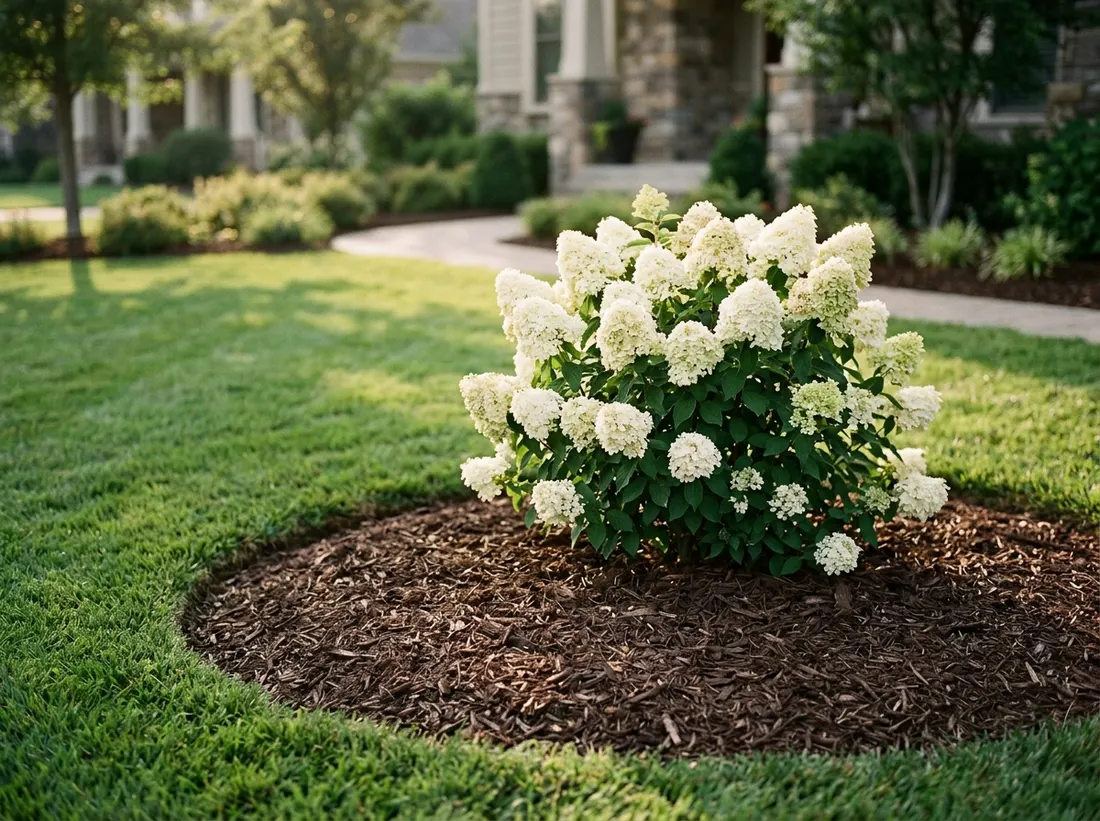
A single well-placed shrub, something like a dwarf hydrangea, boxwood, or compact crape myrtle depending on your climate, gives a front yard one clear point of interest without the upkeep a full flower bed demands. One shrub needs an occasional prune, maybe once a year, instead of the seasonal planting, deadheading, and replanting that annual beds require. Place it where it’s visible from the street or the front walk, and let the rest of the space stay simple around it. Underplant it with a low groundcover or a thick ring of mulch instead of a mix of annuals, and the whole bed stays tidy with almost no attention between seasons.
Choose a shrub sized for the spot it’s going into, since a plant that outgrows its space ends up needing regular pruning just to keep it in bounds, which defeats the point of picking a low-maintenance option in the first place. Check the mature width listed on the plant tag and give it that much room from the foundation, walkway, or fence.
Conclusion
None of these nine ideas require a big budget or a redesign of the whole yard. Start with whichever fits your biggest pain point, whether that’s the edging you dread trimming or the flower bed that keeps dying on you, and build from there. A mulched border, a few grouped containers, and a drip line handle most of what makes a front yard feel like ongoing work. Pick two or three to start this season, and add the rest as time allows. The goal isn’t a perfect yard, it’s one that looks cared for without demanding your weekends.
Frequently Asked Questions
What is the easiest way to improve front yard curb appeal with low maintenance?
Mulched borders along hard edges and a cluster of containers near the front door give the fastest visual improvement for the least ongoing work. Both can be done in a single weekend, need no mowing or regular pruning, and immediately make the entry area look intentional rather than neglected. Combine the two and you’ve addressed the two spots in a front yard that get the most attention from the street: the edges and the entry.
Do native plants really need less care than regular garden plants?
Yes, once established, usually after their first growing season, native perennials rely on natural rainfall in your region and rarely need extra fertilizer. They evolved alongside your local soil and climate, so they handle drought, pests, and temperature swings with far less intervention than non-native ornamentals. Look for species native to your specific state or region rather than a general national list, since local adaptation is what makes the low-care difference.
How much does a basic drip irrigation system cost for a small front yard?
A simple drip kit for a small front bed, covering roughly 100 to 200 square feet, typically costs under $100 for tubing, emitters, and a battery-powered timer. It installs in an afternoon and cuts watering time down to almost nothing once it’s connected and programmed. Running it before you plant, rather than snaking tubing around existing plants later, makes the layout far easier to get right the first time.
Can I replace my whole front lawn with low-maintenance plants?
You can, though it’s usually easier to convert it in sections rather than all at once. Start with the hardest-to-mow areas, like slopes or narrow strips, and expand the planted area over one or two seasons as you see what thrives in your specific soil and sun conditions. This staged approach also spreads the cost out instead of requiring a full-yard renovation budget upfront.
How often does mulch need to be replaced in front yard beds?
Most mulch needs topping off once a year, typically in spring, since it breaks down and compacts over time. A fresh two-to-three-inch layer each year keeps weeds suppressed and moisture retention consistent through the growing season. Organic mulches like shredded bark break down faster than inorganic options like gravel, so beds mulched with bark generally need that yearly refresh, while gravel-mulched areas can go several years between top-ups.
Which ornamental grasses need the least care?
Little bluestem, blue fescue, and feather reed grass need the least attention since all three tolerate poor soil and drought once their roots are established. Each only needs a single cutback in late winter before new growth starts, with no watering, fertilizing, or staking required through the rest of the year. Plant them in groups of three or five for a fuller look right from the first season, since a single specimen plant tends to look sparse.
Do I need to remove my whole lawn to make a front yard low maintenance?
No, converting just the hardest-to-maintain sections, like narrow edges, slopes, or shaded strips where grass struggles anyway, gives most of the benefit without a full lawn removal. Many homeowners keep a smaller, simpler lawn area in the center while converting the borders to mulch, groundcover, or gravel. A smaller lawn is also faster to mow and easier to keep looking even, which adds to the overall time saved.