
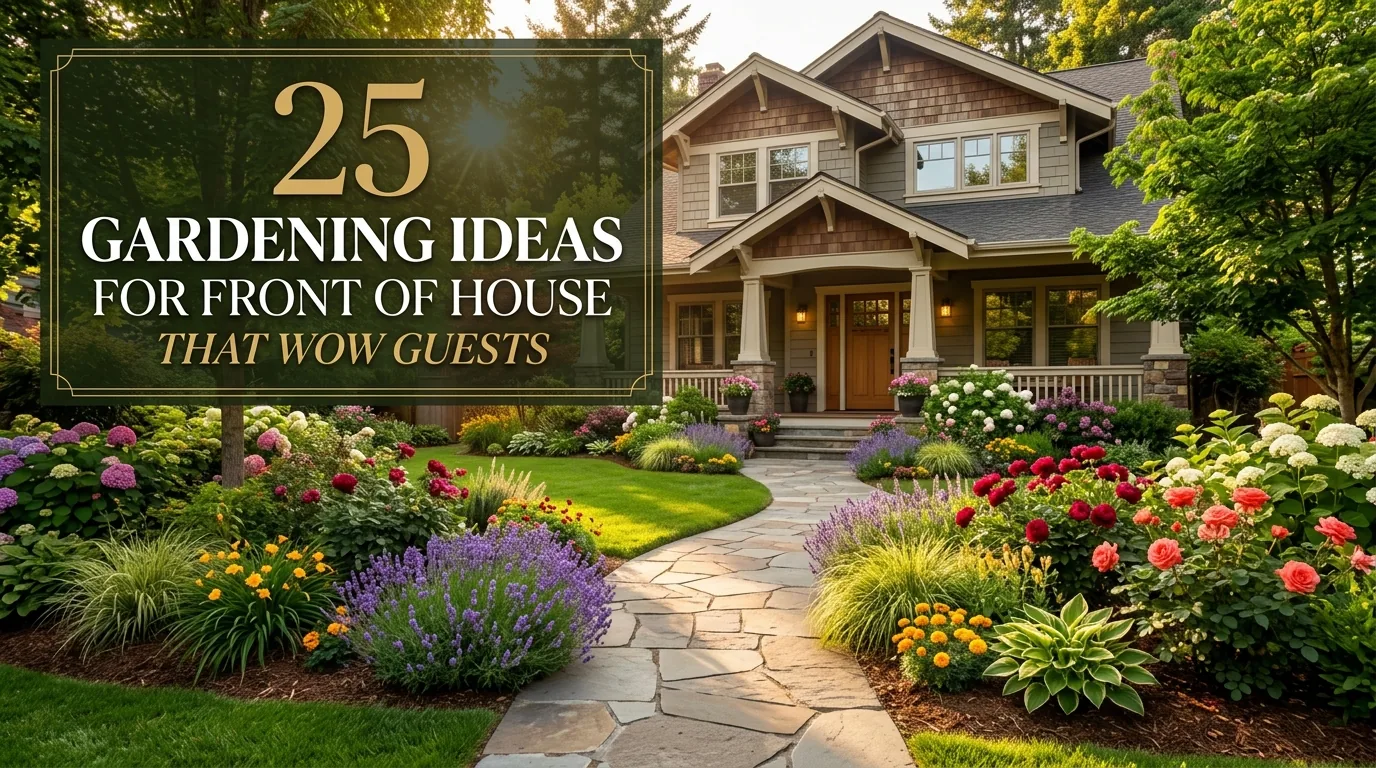
25 Gardening Ideas for Front of House That Wow Guests
Pulling into your own driveway should feel good, not like a reminder of the overgrown bed you keep meaning to fix. I’ve noticed that front yards often get the least attention of any garden space, even though it’s the part every guest, delivery driver, and passerby actually sees. A porch full of hanging baskets or a pair of matching topiaries by the door is a nice start, but there’s a lot more ground to cover between the sidewalk and your front step. Good gardening ideas for front of house work with your home’s actual style and light instead of copying a look that doesn’t fit your yard. This list moves past the usual entry-point touches and into the beds, borders, and design choices that shape how the whole front yard feels, from foundation plantings to seasonal color and low-water options for drier climates. Whatever your yard’s size or your home’s style, there’s an idea here that fits. Let’s start with the bed that runs along your house itself.
1. A Layered Foundation Bed
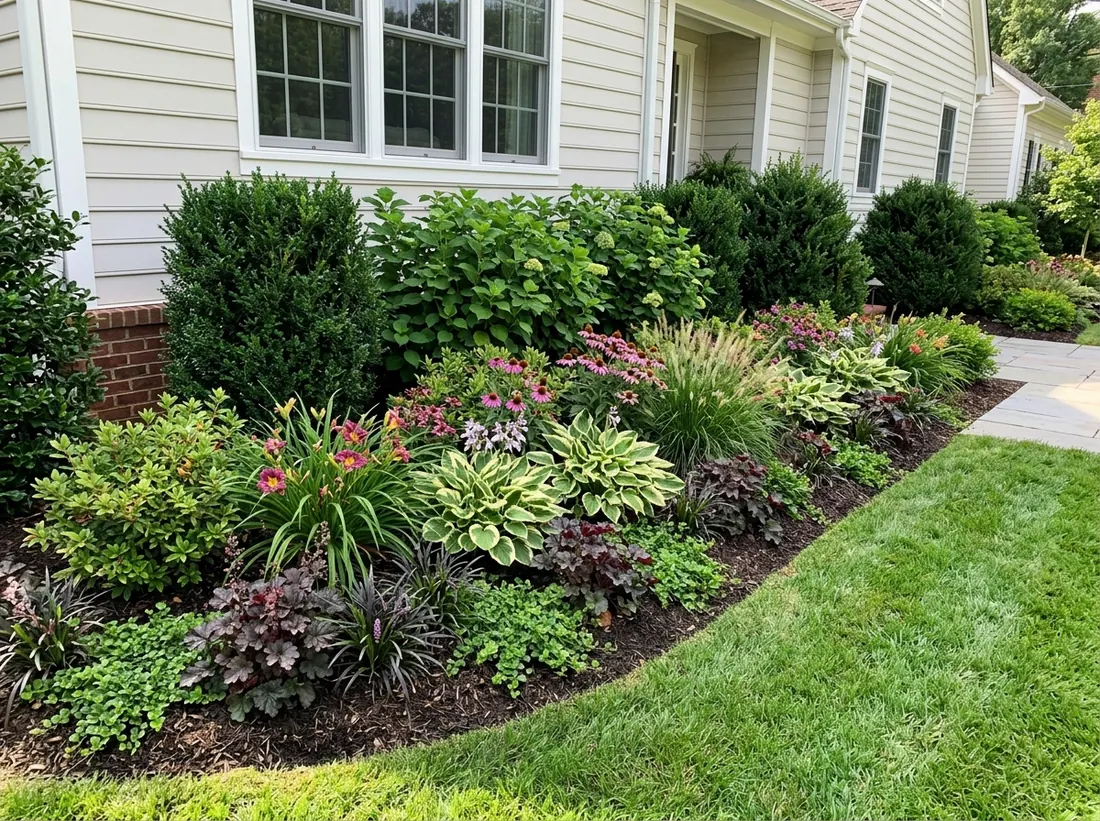
Build your foundation planting in three height tiers: taller shrubs against the house, mid-height perennials in front of those, and a low edging plant along the front. This layering hides the bare gap between siding and lawn that flat, single-height plantings leave exposed. Repeat the same three plants along the whole foundation run instead of mixing a different combination at each window for a more cohesive look.
2. A Rotating Seasonal Container Display
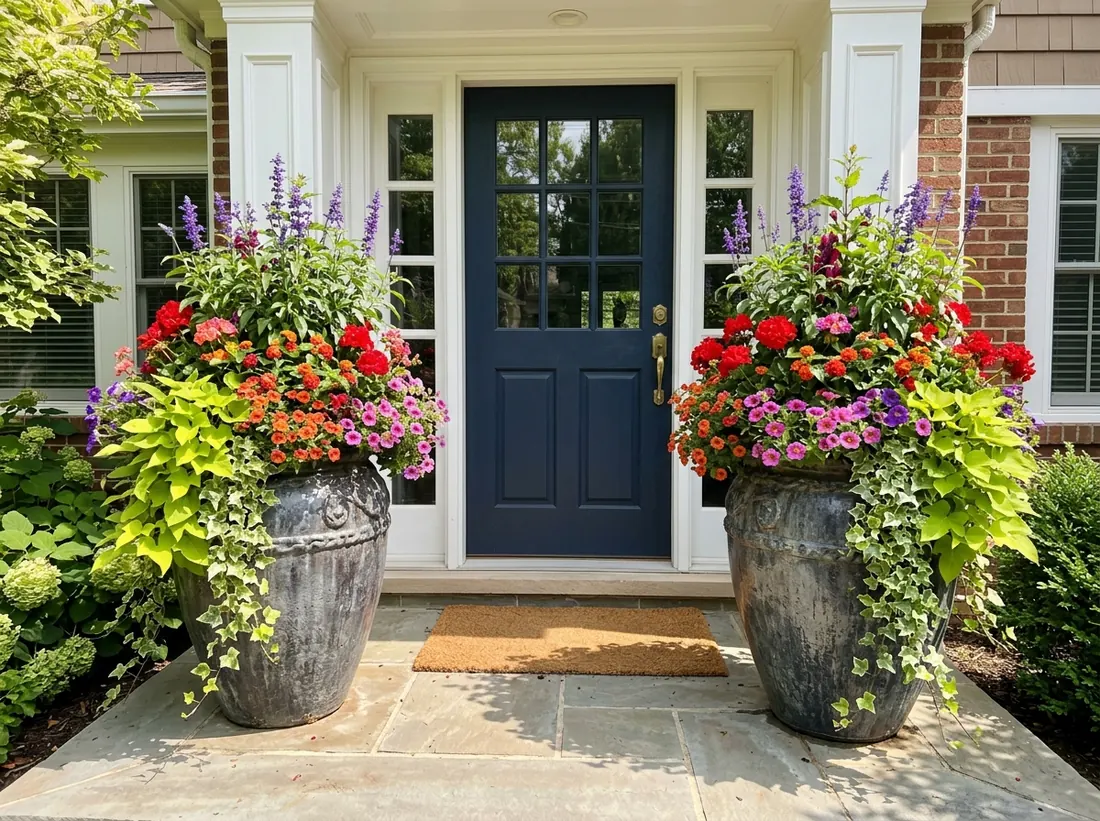
Set two or three large containers near the entry and swap their contents with each season: spring bulbs, summer annuals, fall mums, and winter evergreen clippings. This keeps the entry looking intentional year-round instead of tired by midsummer. Use the same containers each time so only the plants change, which keeps the look consistent even as the contents rotate.
3. A Formal Clipped Hedge Border
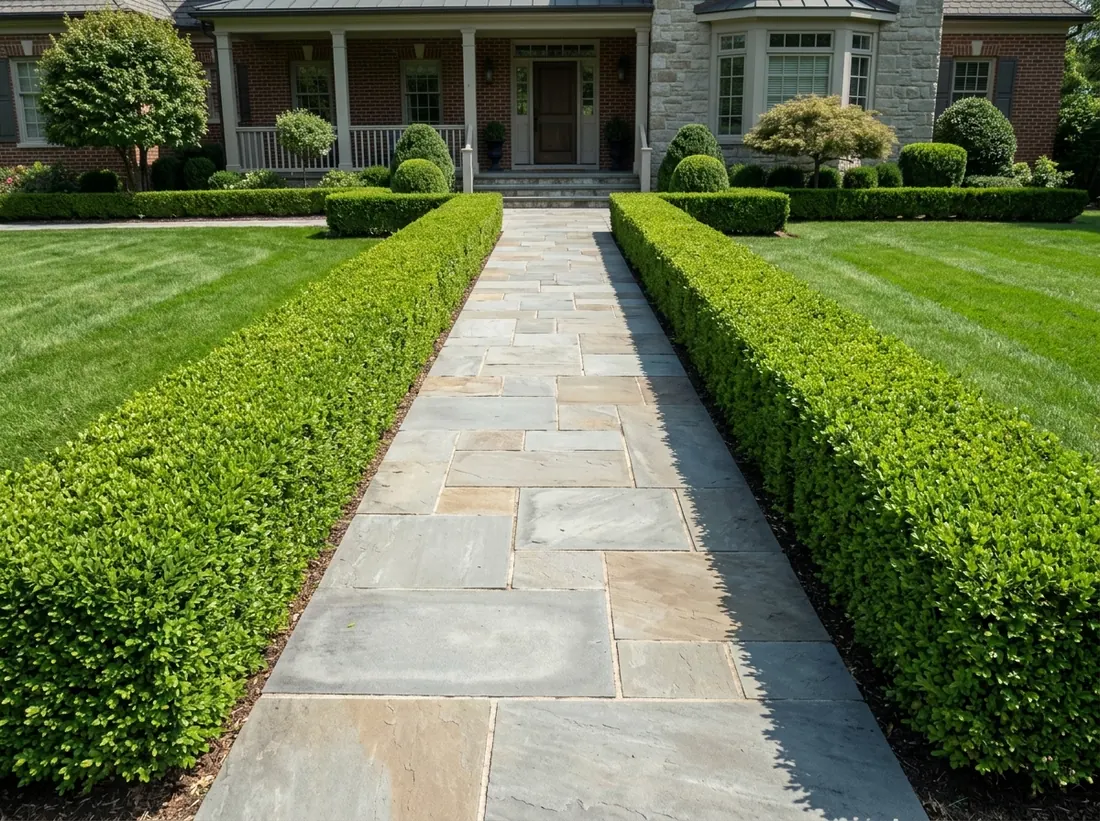
A low, tightly clipped boxwood or privet hedge along the front walkway or property line gives a front yard a clean, structured edge that reads as high-maintenance without actually requiring much water once established. Trim it two to three times during the growing season to keep lines crisp. This works especially well with traditional or colonial-style homes.
4. A Loose Cottage-Style Front Bed
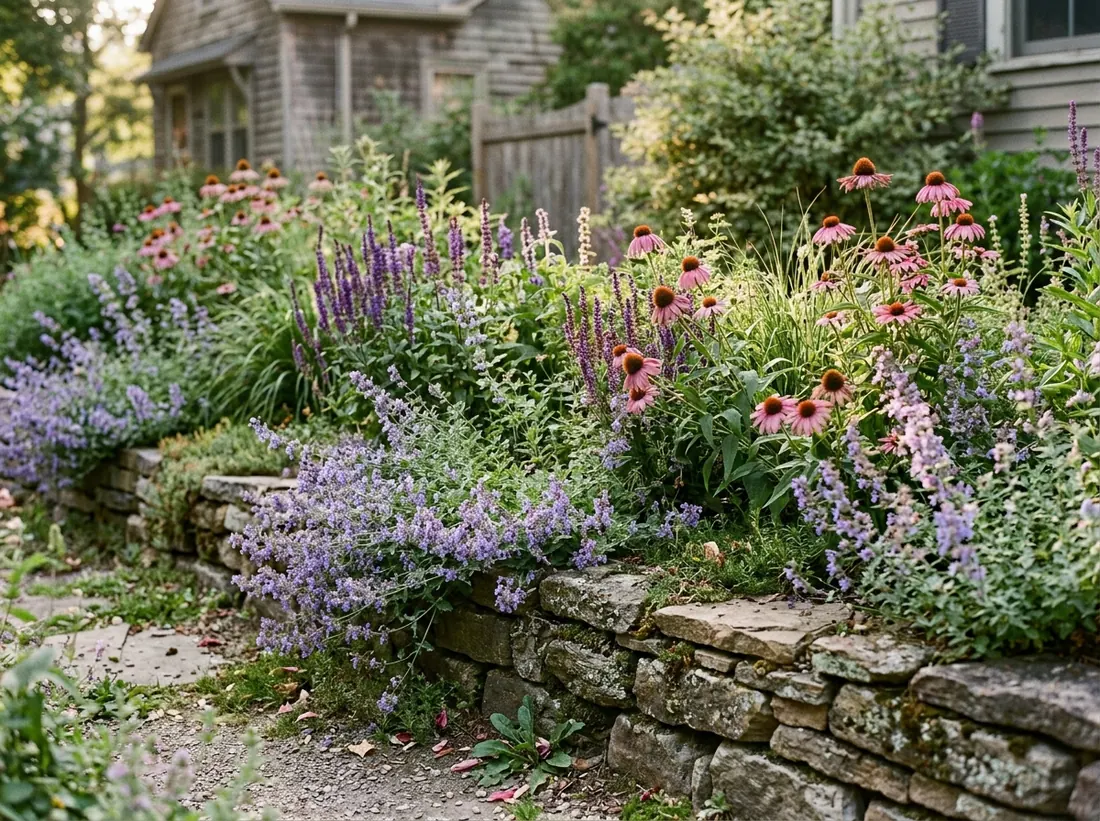
For a softer look, mix cottage perennials like coneflower, salvia, catmint, and black-eyed Susan in an informal, slightly overflowing bed along the front of the house. Let plants spill slightly over any edging instead of keeping hard, clipped lines. This style suits cozy, older-style homes far better than a rigid, formal layout would.
5. A Xeriscape Front Yard for Low Water Use
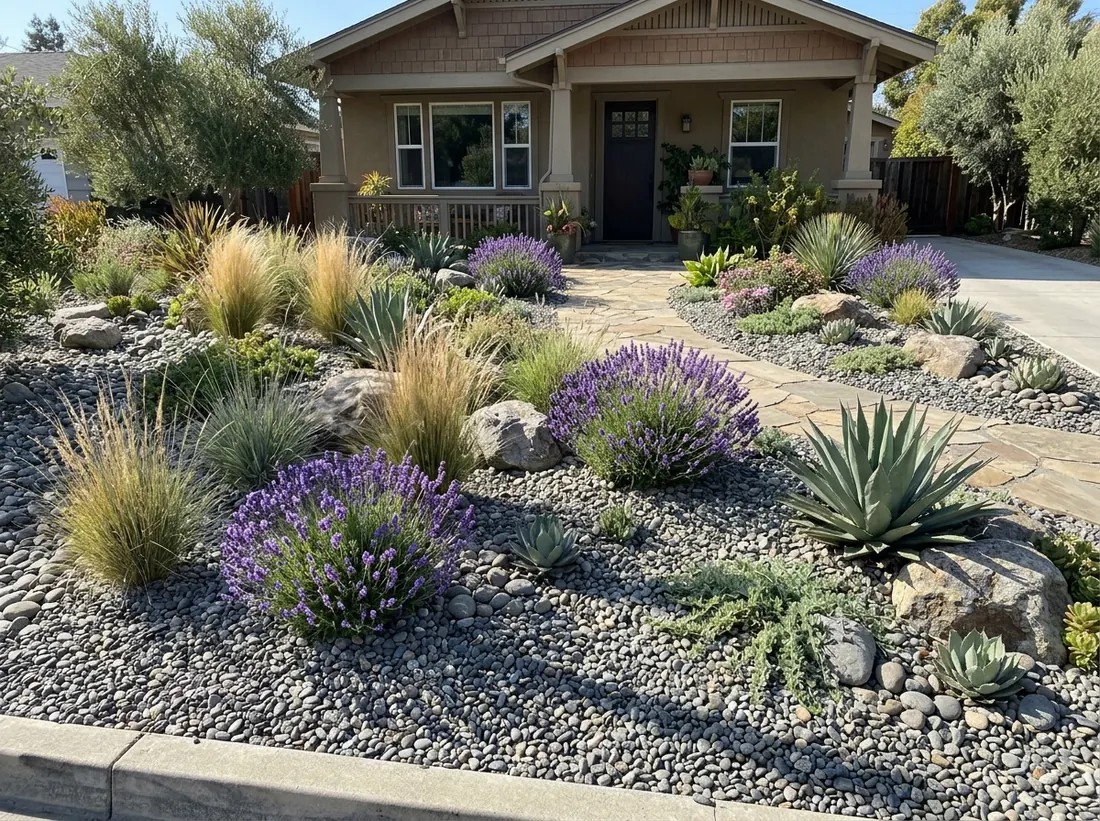
Replace all or part of a thirsty lawn with drought-tolerant plants like lavender, yarrow, ornamental grasses, and succulents set among gravel or decomposed granite. A xeriscape front yard cuts watering needs dramatically once plants are established, often to a fraction of a traditional lawn’s requirements. This works particularly well in hot, dry climates where a green lawn requires constant irrigation to survive.
6. A Gravel Garden with Structural Plants
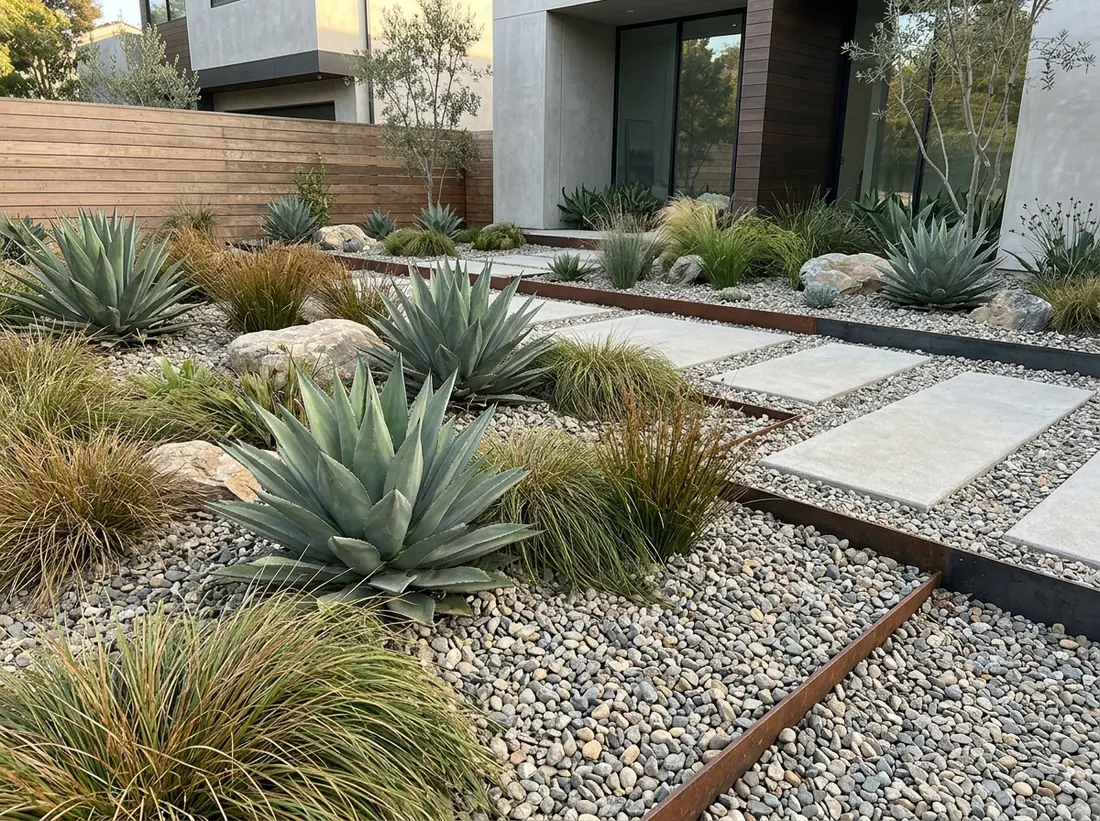
A gravel bed planted with structural, low-water plants like agave, ornamental grasses, and ornamental sedges creates a modern, textured front yard with very little upkeep. Gravel suppresses most weeds on its own and never needs mowing. This style pairs especially well with contemporary or minimalist home exteriors.
7. A Driveway Edge Planting Strip
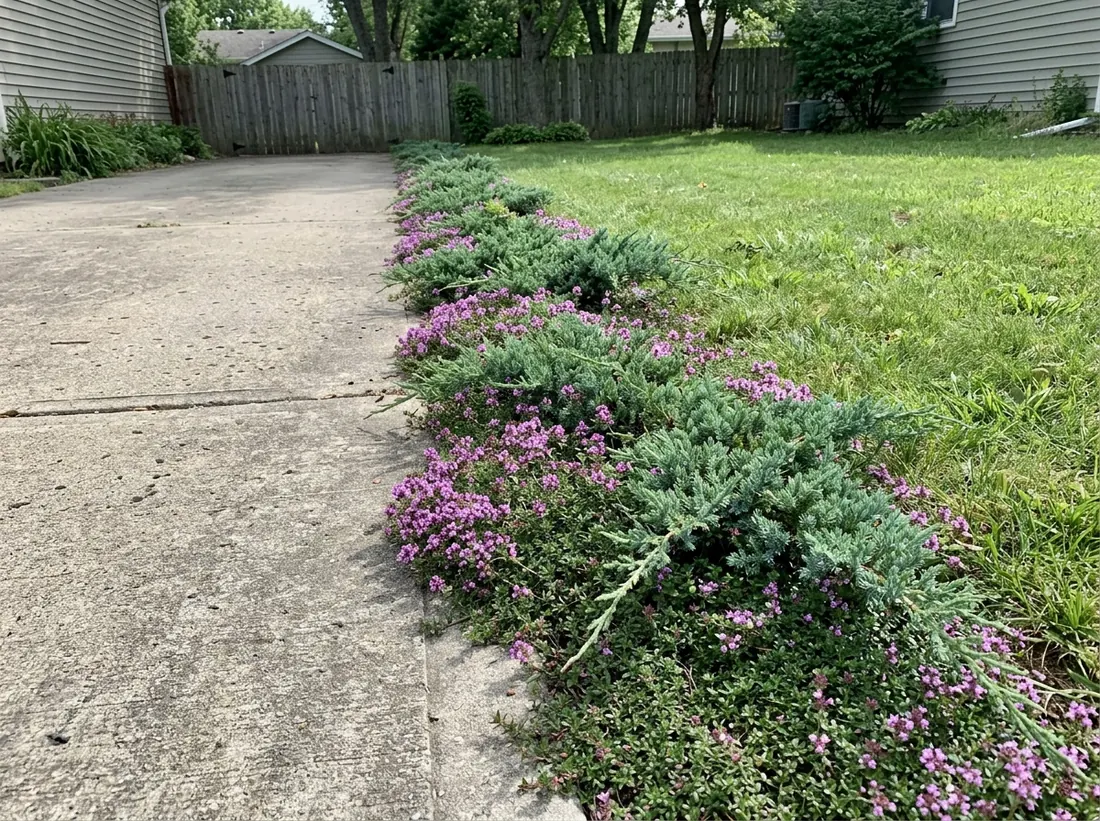
A narrow planting strip along the edge of the driveway, filled with low, tough groundcovers or compact shrubs, softens the hard line where pavement meets lawn. Choose plants that tolerate reflected heat and occasional foot traffic, like creeping thyme or dwarf junipers. This detail is easy to overlook but noticeably upgrades how a driveway reads from the street.
8. Uplighting for Key Trees or Shrubs
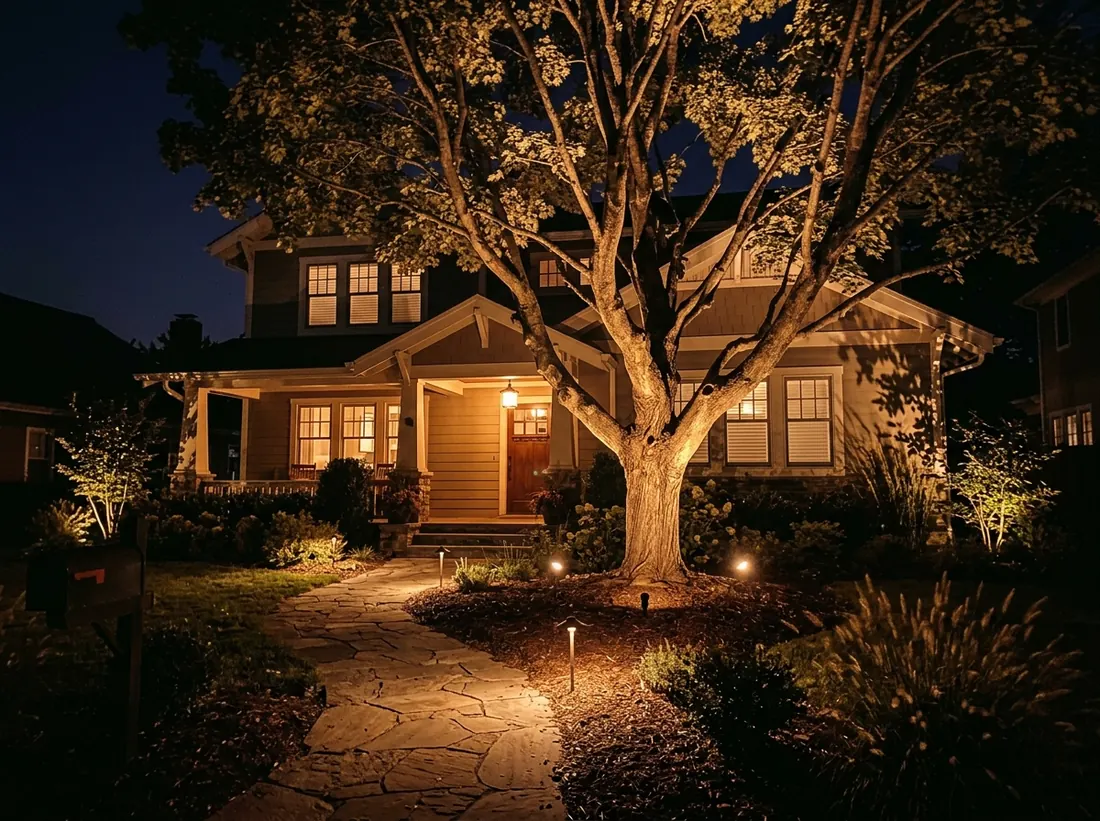
Install low-voltage landscape uplights at the base of one or two standout trees or large shrubs near the entry to highlight their shape after dark. Aim the light upward through the canopy instead of straight at the trunk for the most dramatic effect. This is one of the few front-yard upgrades that changes how the whole house looks at night, not just during the day.
9. A Meandering Stone Path Through a Planted Bed
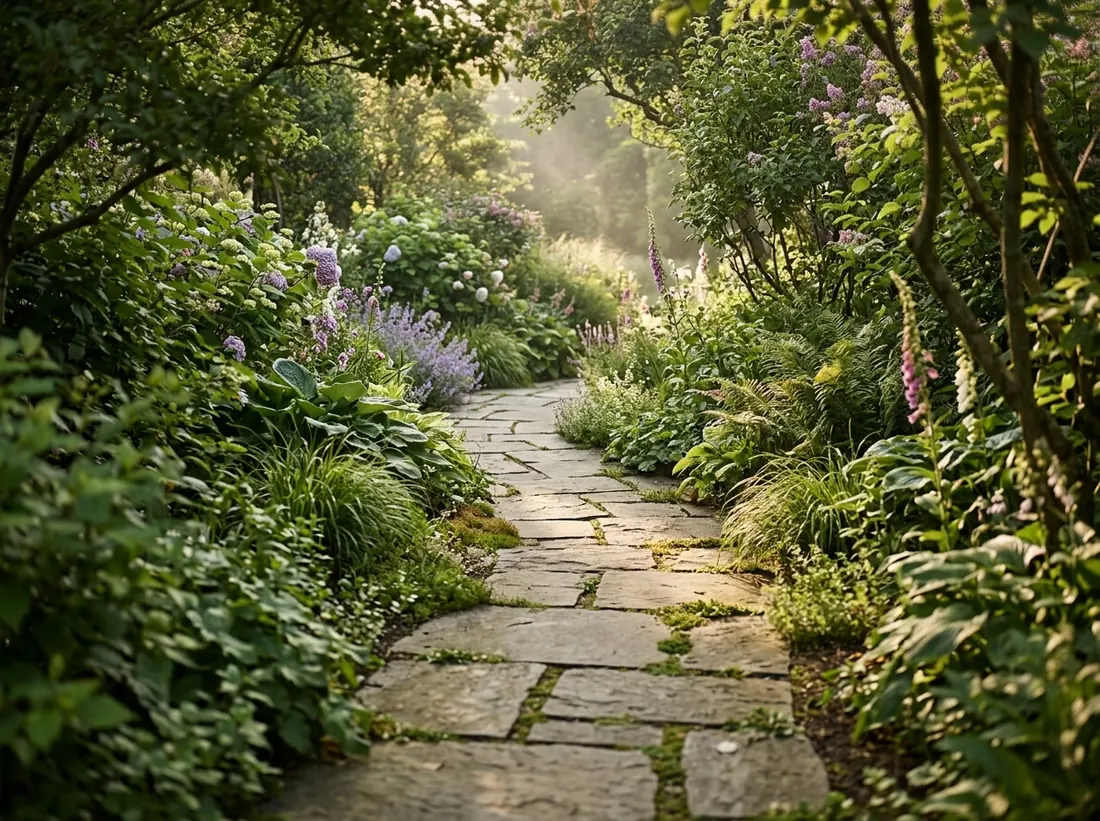
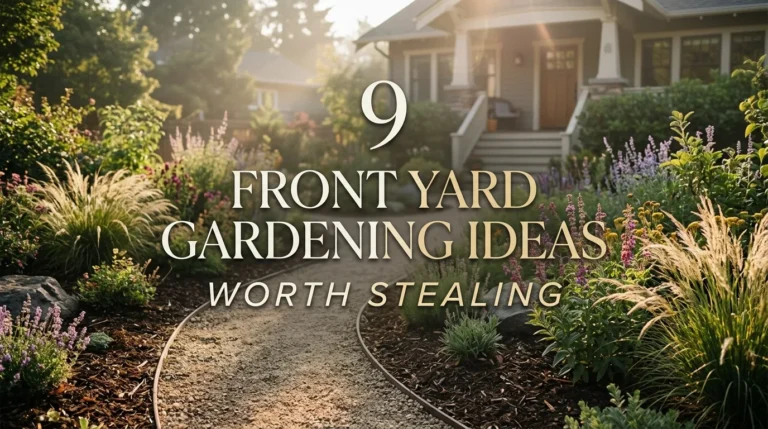
Replace a straight, purely functional walkway with a gently curved stone or paver path that winds through a planted bed instead of cutting straight across the lawn. A curved path slows the eye and makes even a small front yard feel larger. Set the pavers with low groundcover like creeping thyme between them for a softer edge.
10. A Color-Themed Planting Scheme
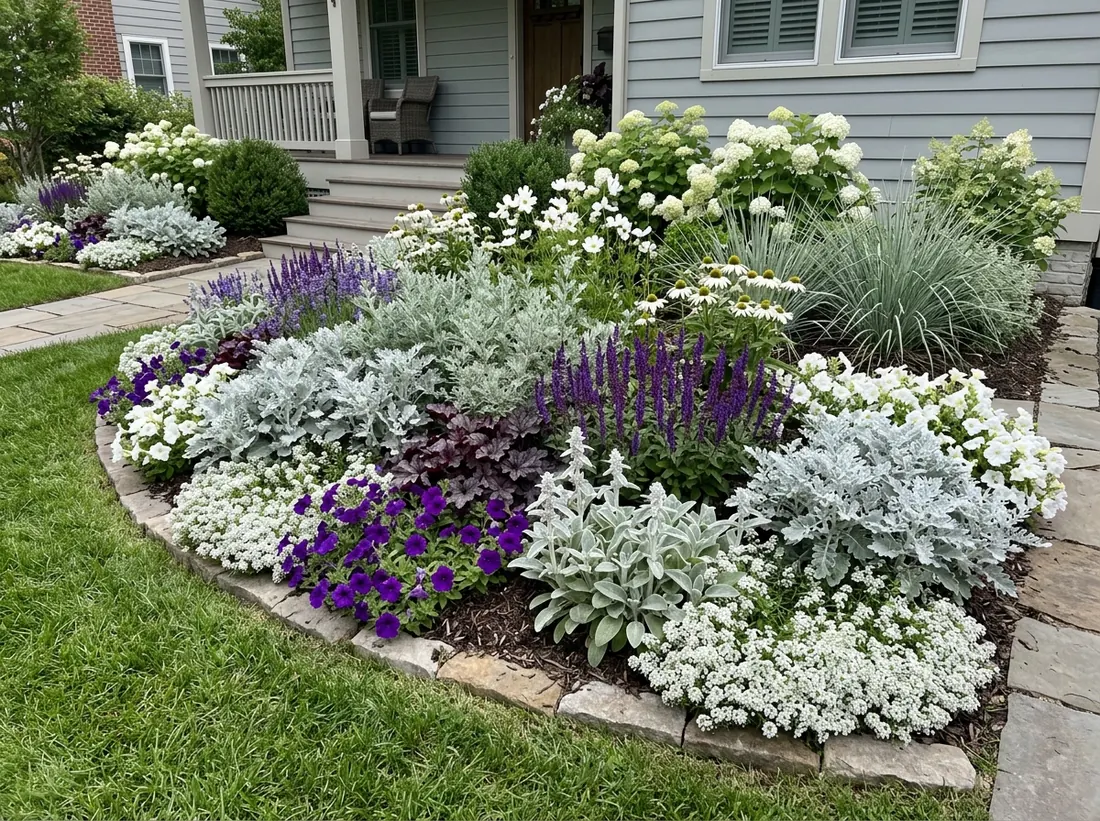
Choose two or three colors, such as purple, white, and silver, and repeat them across every bed and container in the front yard instead of mixing in whatever looks nice at the nursery. A limited, repeated palette reads as far more designed than a random mix of bright colors. Silver-leafed plants like dusty miller work well as a neutral that ties other colors together.
11. A Dwarf Conifer Collection
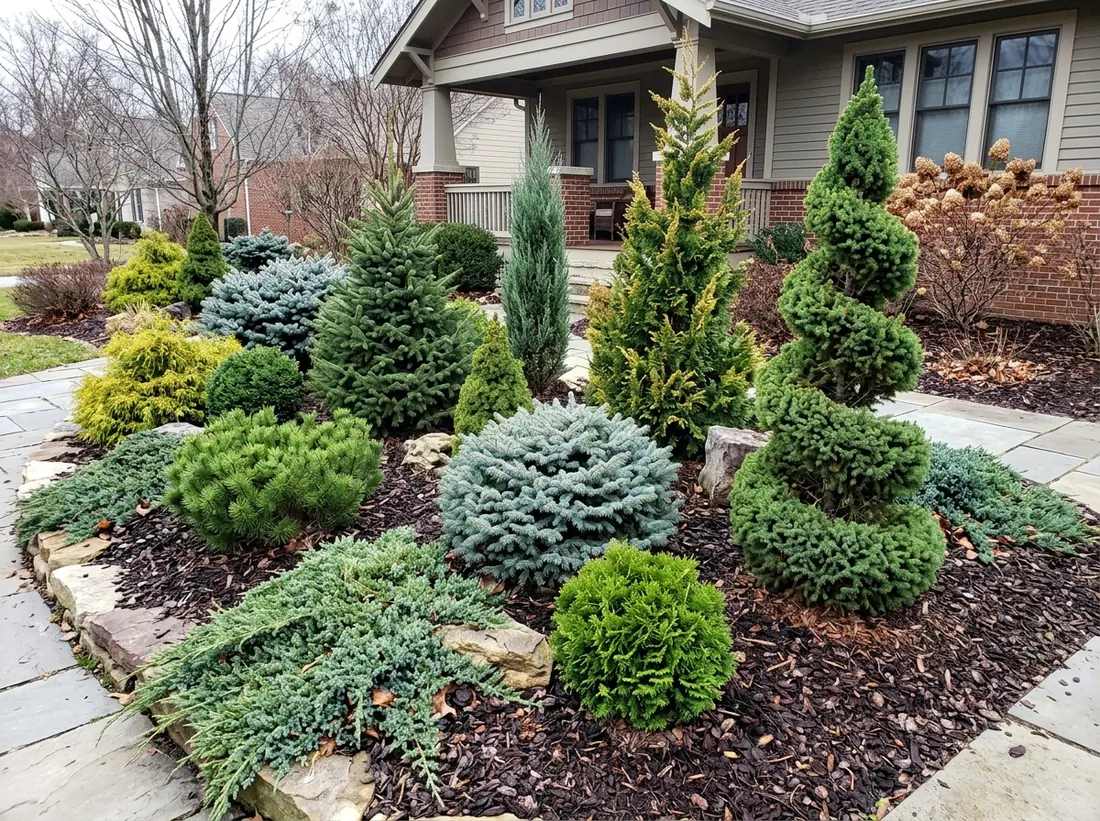
A grouping of two or three dwarf conifers in different shapes, such as a globe, a spiral, and an upright form, gives a front bed year-round structure that doesn’t disappear in winter. Space them so each retains its natural shape without crowding, since most dwarf conifers still reach 3 to 5 feet at maturity. This is a strong option for homeowners who want low-maintenance color that doesn’t rely on flowers.
12. An Ornamental Grass Border
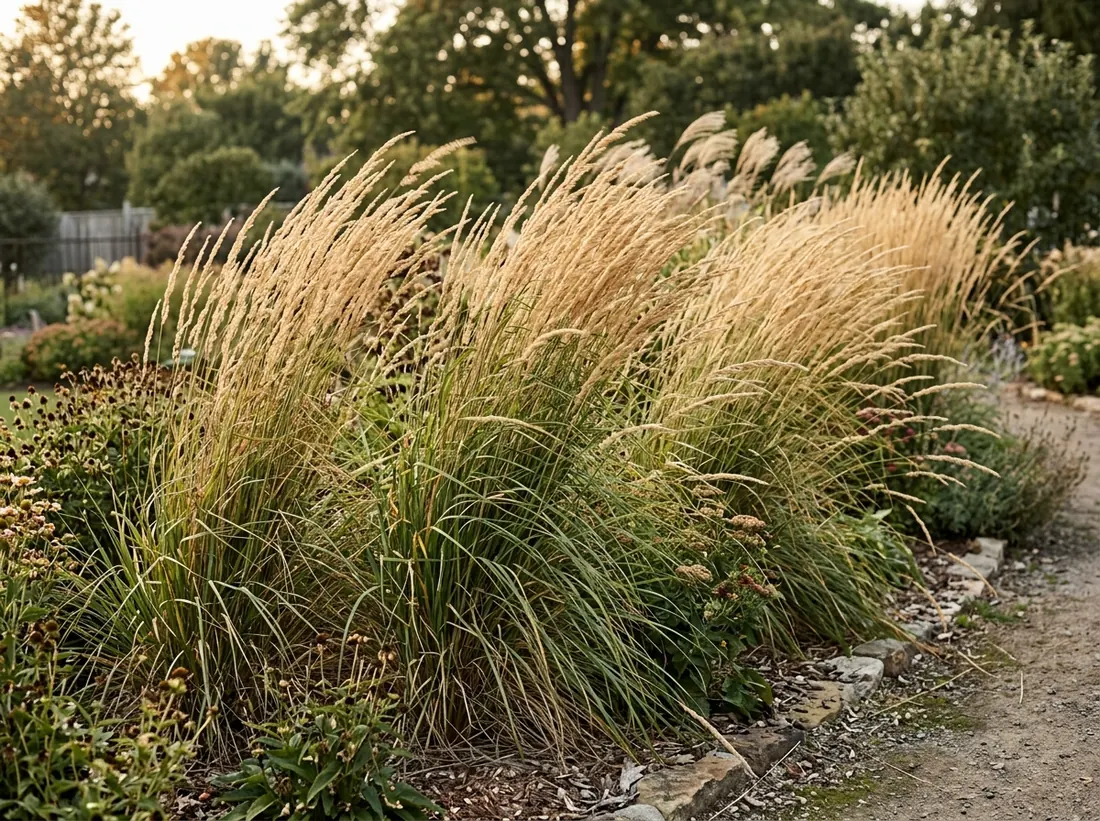
A row of ornamental grasses like feather reed grass or little bluestem along a front bed’s back edge adds movement and texture that flowering plants alone don’t provide. Grasses catch wind and light in a way that makes even a still yard feel alive. Cut them back once in late winter, and they need almost no attention the rest of the year.
13. A Symmetrical Formal Entry Garden
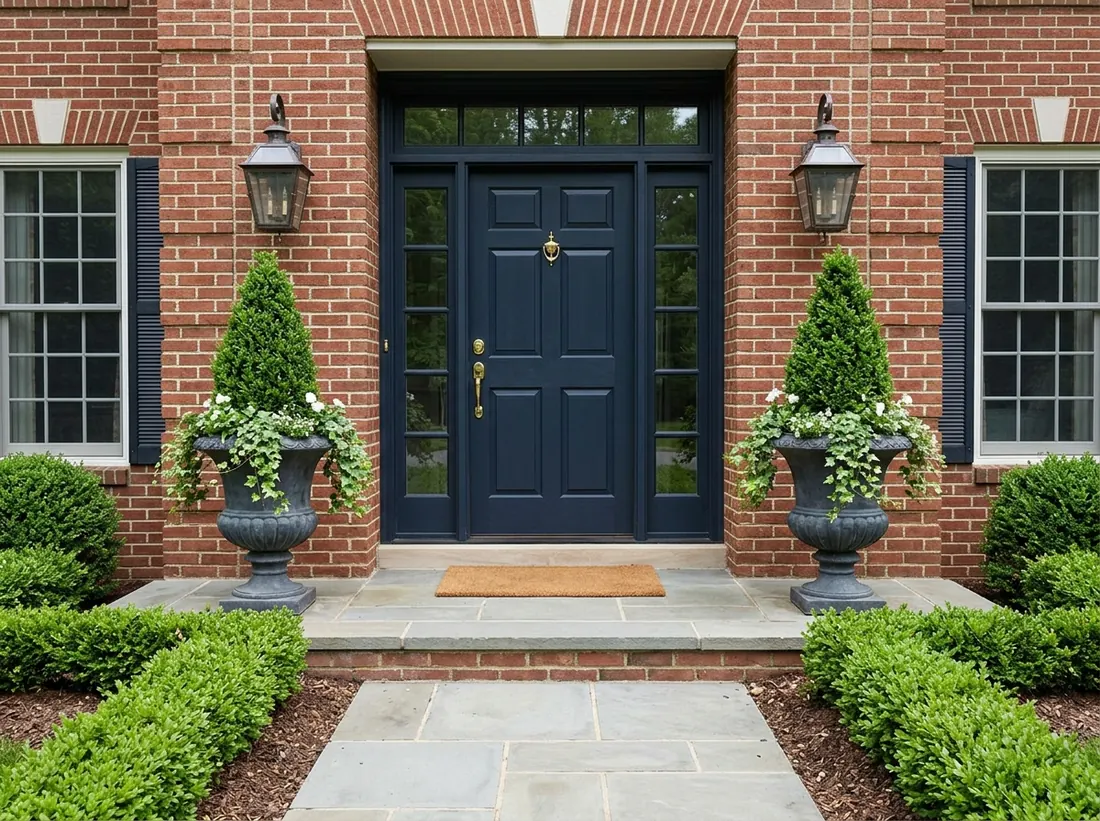
Mirror the planting on both sides of the front door exactly, using matching plant types, pot styles, and spacing on each side. Symmetry reads as formal and put-together even with a modest plant selection. This approach suits homes with a centered front door and a traditional or classical architectural style especially well.
14. A Mailbox-Free Roadside Planting Strip
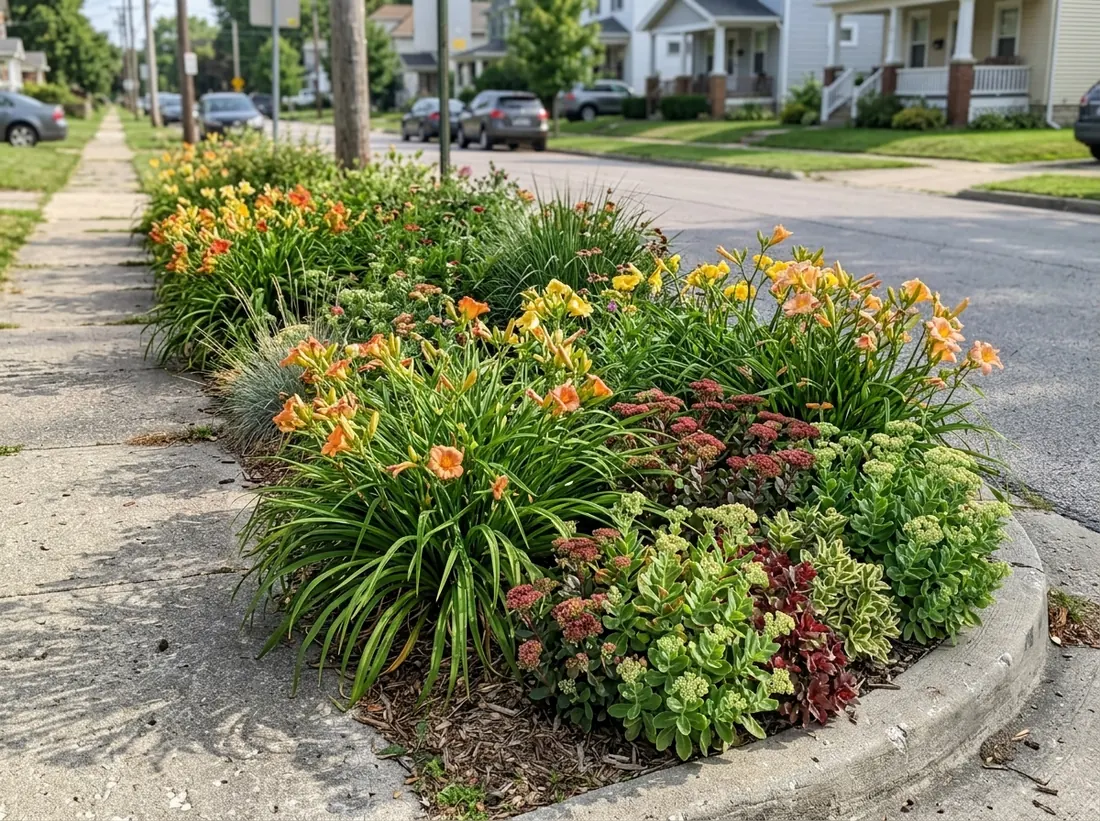
If your property has an open strip along the road or sidewalk unrelated to the mailbox, fill it with a low, tough planting like daylilies, sedum, or ornamental grasses that can handle road salt, foot traffic, and neglect. This turns an often-bare utility strip into an extension of your garden. Choose plants rated for your specific climate zone, since this strip usually gets more sun and heat exposure than beds closer to the house.
15. A Native Plant Front Bed
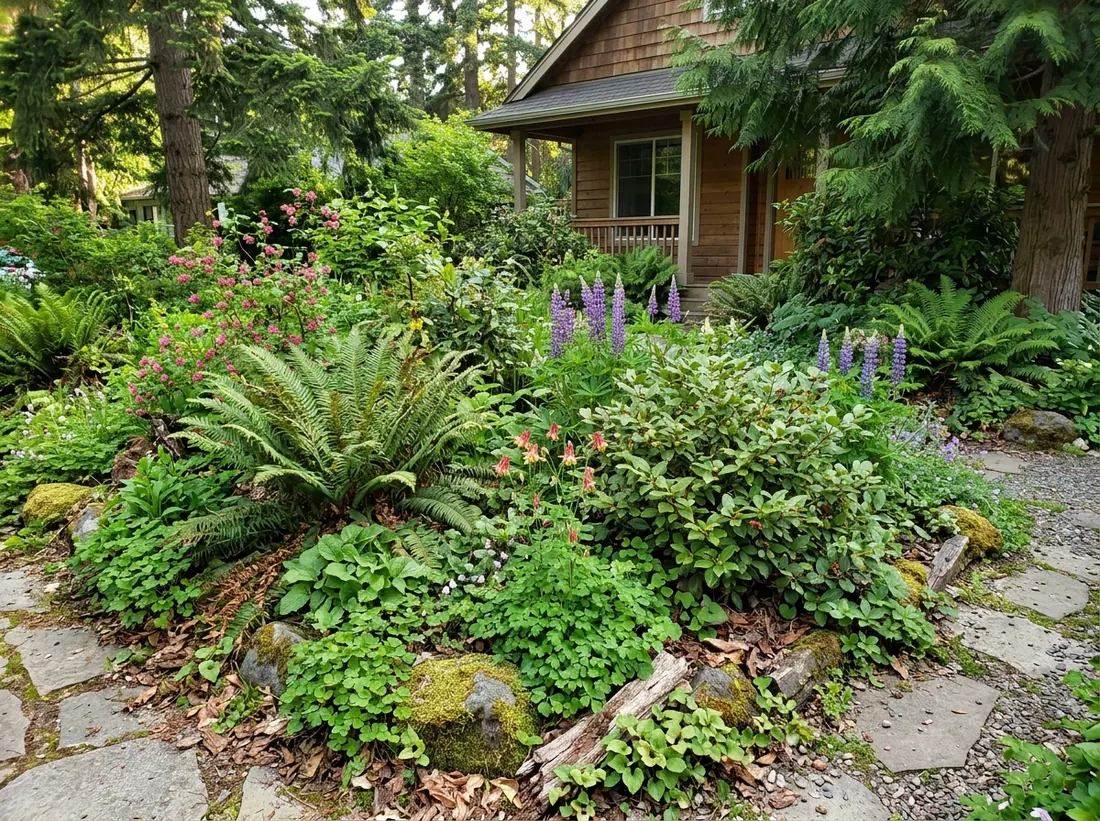
Fill a front bed with plants native to your specific region instead of imported ornamentals, which typically need less water, less fertilizer, and less pest control once established. Native plants also support local pollinators far more effectively than most nursery hybrids. Check with a local native plant nursery or extension office for species suited to your exact area.
16. A Two-Tone Mulch Border
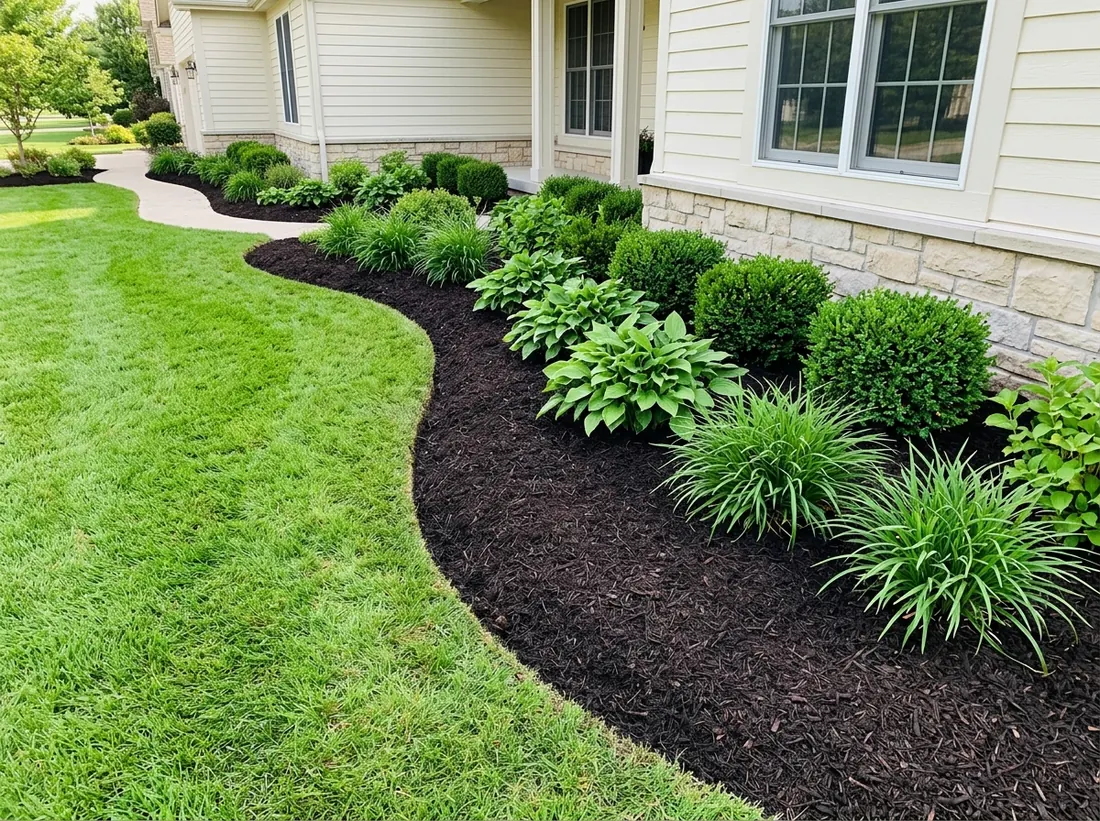
Define bed edges with a crisp mulch border in a color that contrasts with your home’s exterior, dark mulch against a light-colored house or a lighter bark mulch against a dark one. This simple, low-cost detail makes every bed’s edges read cleanly from the street. Refresh the mulch once a year to keep the contrast sharp.
17. A Vertical Green Wall Near the Entry
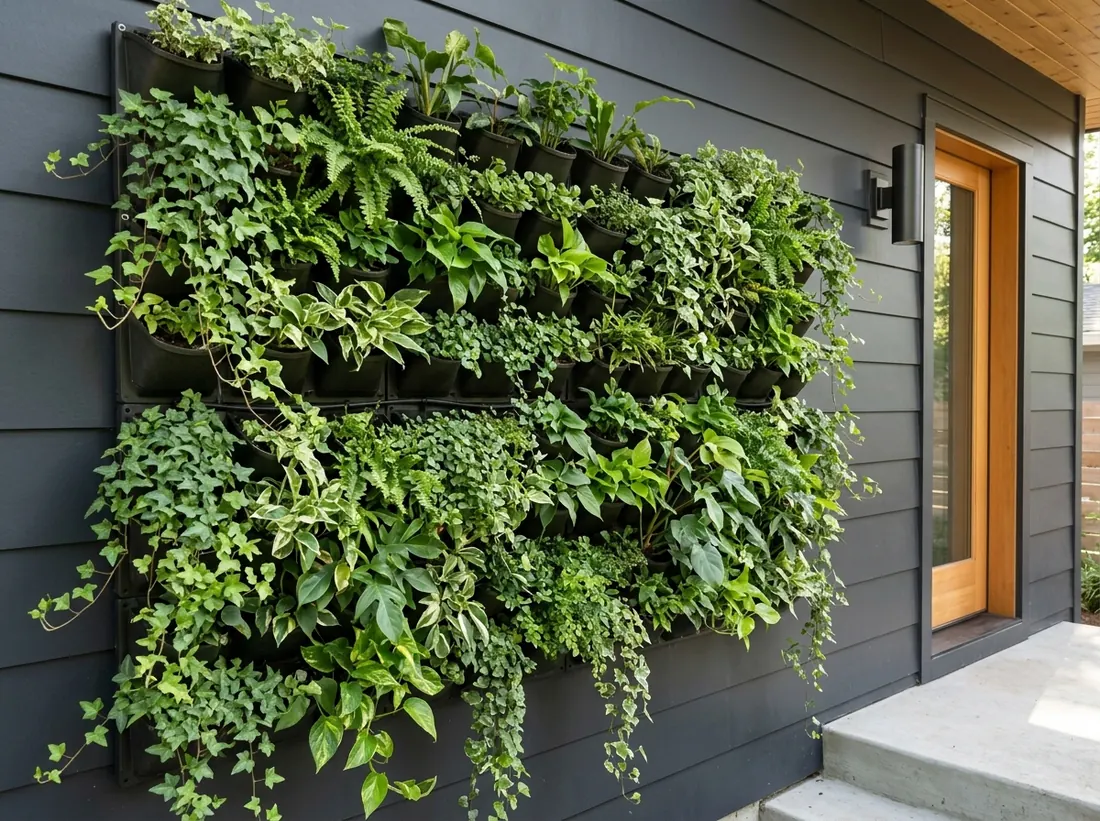
A modular vertical planter system mounted on a blank exterior wall near the entry adds a living, textured feature in a spot that would otherwise stay empty. Fill it with low-maintenance plants like ferns, sedum, or trailing ivy suited to the wall’s light exposure. This works particularly well on homes with limited ground-level bed space near the door.
18. A Raised Planting Bed Along a Retaining Wall
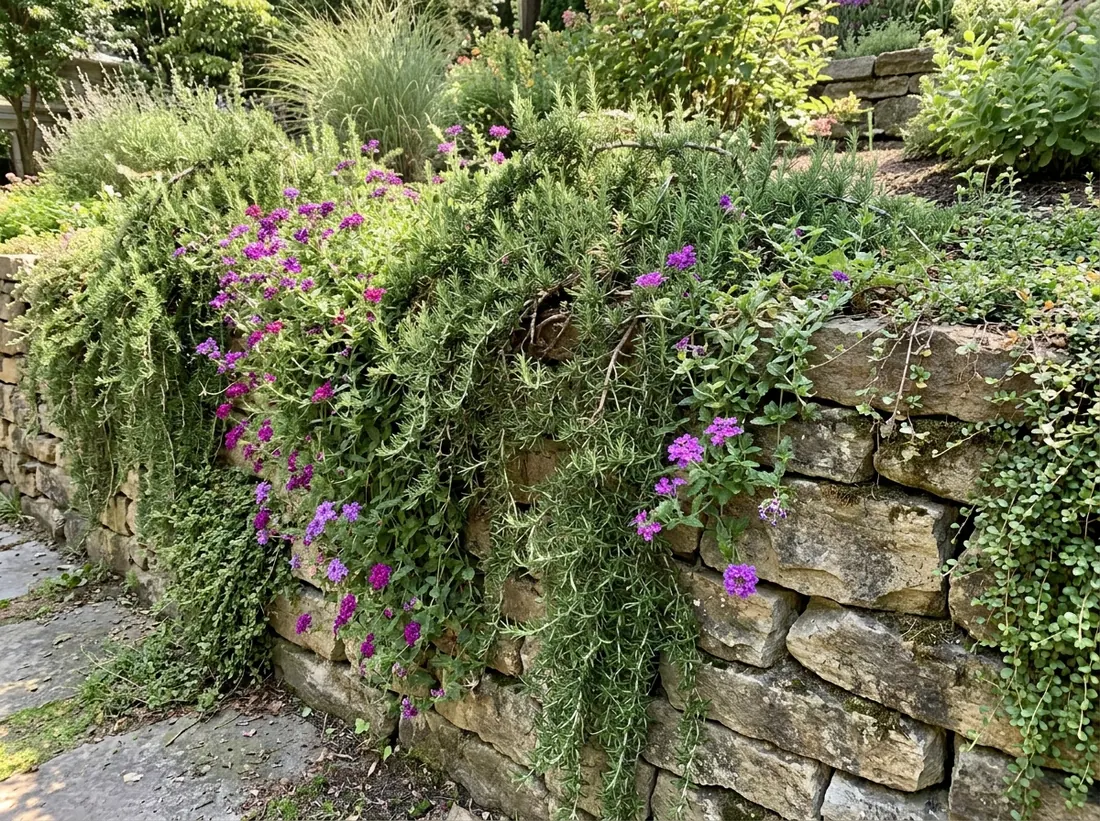
If your front yard has a retaining wall, build a raised bed along its top edge and fill it with cascading plants like trailing rosemary or verbena that spill over the wall’s face. This softens what would otherwise be a hard, purely structural feature. It also puts the planting at a height that’s easy to maintain without bending.
19. A Single Specimen Tree as the Centerpiece
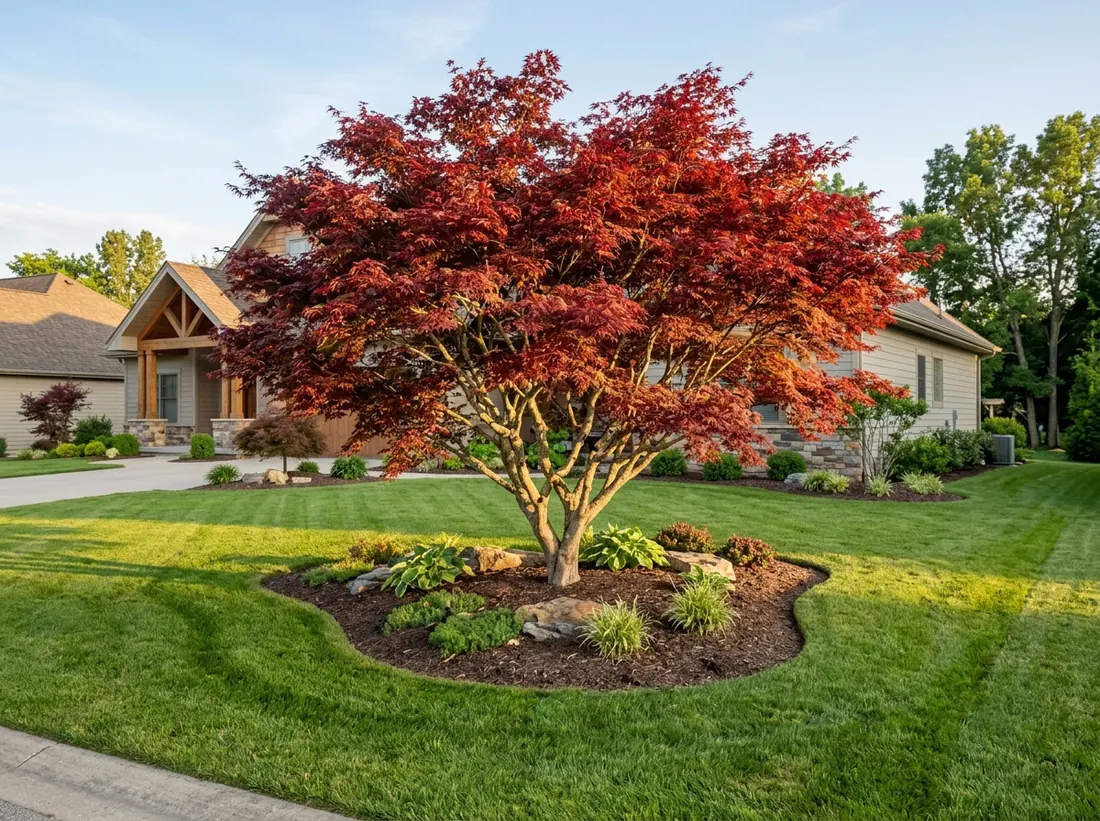
Plant one striking specimen tree, such as a Japanese maple or a flowering dogwood, in the center of the front lawn or just off to one side as a standalone feature. A single well-placed tree often does more for curb appeal than an entire bed of smaller plants. Choose a variety scaled to your yard’s actual size so it doesn’t overwhelm the space at maturity.
20. A Butterfly and Pollinator Strip
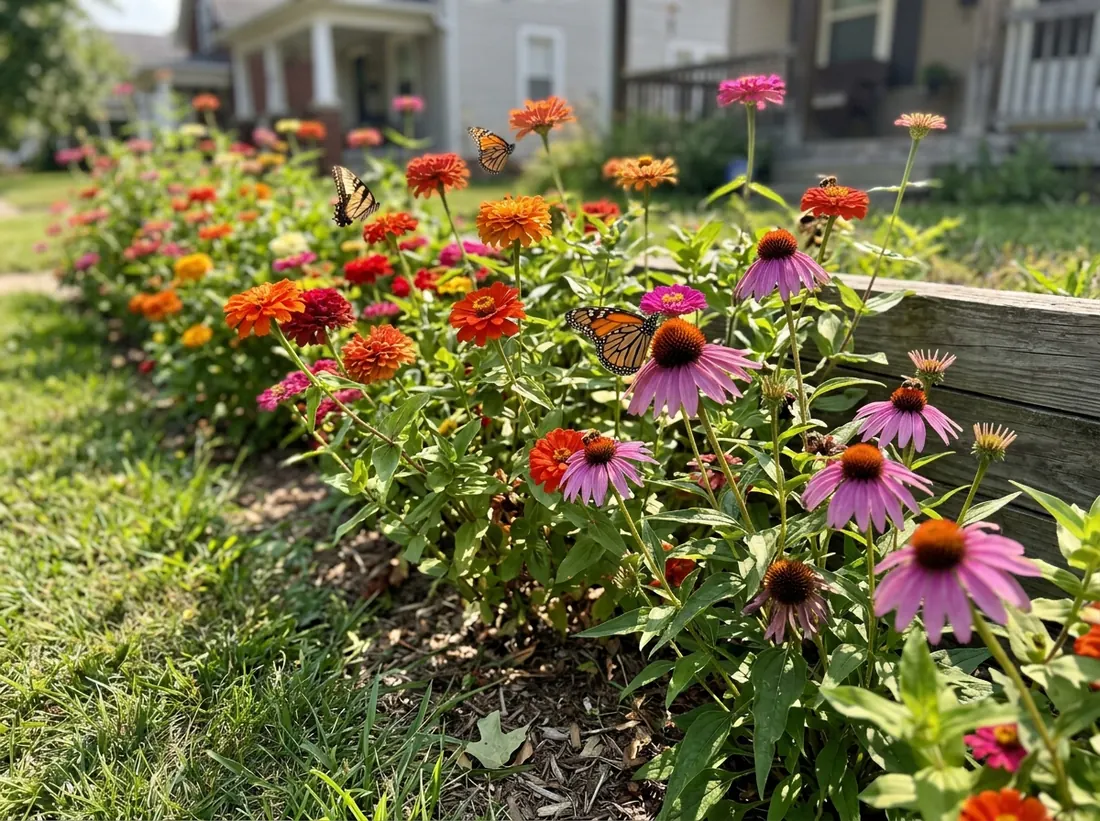
Dedicate one sunny strip of the front yard to nectar-rich flowers like zinnias, coneflower, and butterfly bush to draw pollinators right where guests walk past. This adds constant movement and color through the growing season that static shrubs can’t match. Group plants in odd-numbered clusters of three or five instead of single specimens for a fuller look.
21. A Themed Container Grouping by the Door
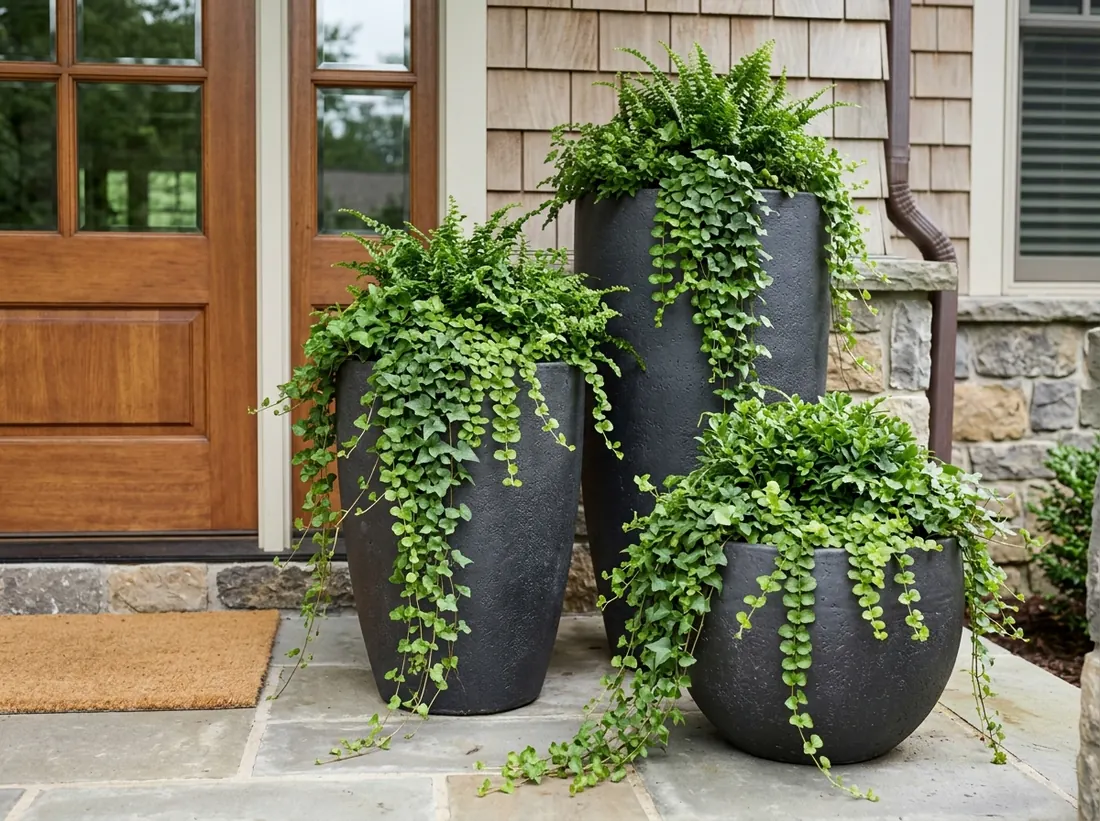
Cluster three containers of different heights, using a plant stand or overturned crate to vary levels, right beside the front door instead of spacing single pots evenly across the porch. Grouped containers at varied heights read as far more designed than the same pots spaced apart. Repeat one trailing plant across all three pots to tie the grouping together visually.
22. A Low Boxwood Knot or Parterre Pattern
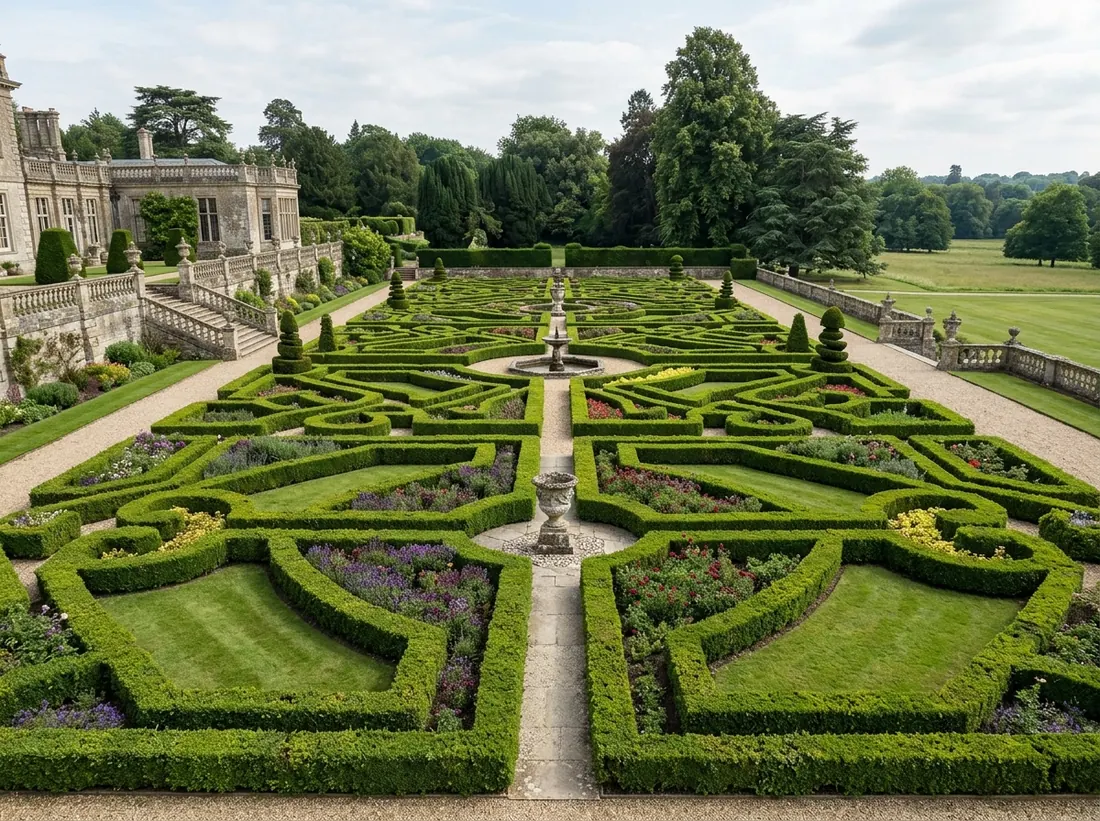
For a distinctive, formal look, lay out a small knot garden or parterre pattern using low boxwood hedging in a geometric shape, filled with colorful annuals or gravel in the open sections. This is a more involved project but creates a genuinely memorable front bed unlike anything a neighbor’s yard likely has. Keep the pattern simple for a first attempt, since intricate knots need frequent, precise trimming to hold their shape.
23. A Fragrant Planting Along the Entry Path
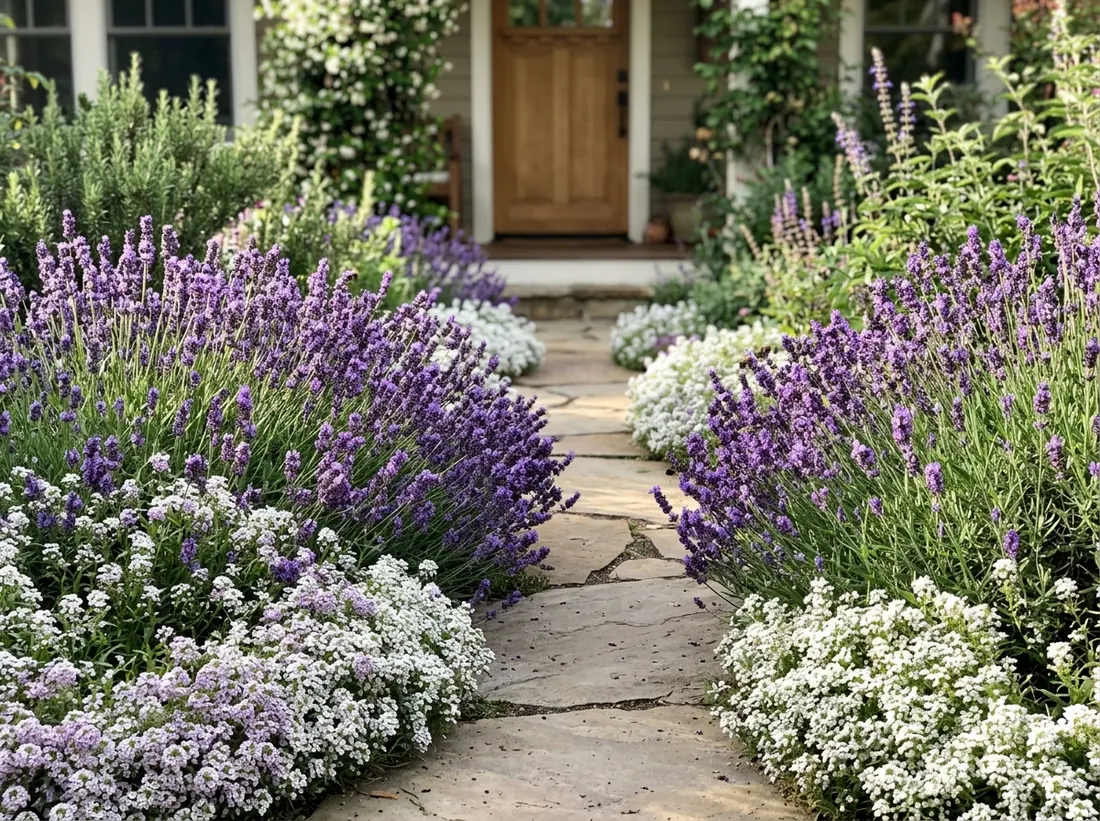
Plant fragrant shrubs or perennials like lavender, gardenia, or sweet alyssum directly alongside the path guests walk to reach your door, so the scent releases as they brush past. This adds a sensory detail that a purely visual planting scheme misses entirely. Choose fragrance plants suited to your climate’s humidity level, since some, like gardenia, struggle in dry heat.
24. A Bold Single-Species Mass Planting
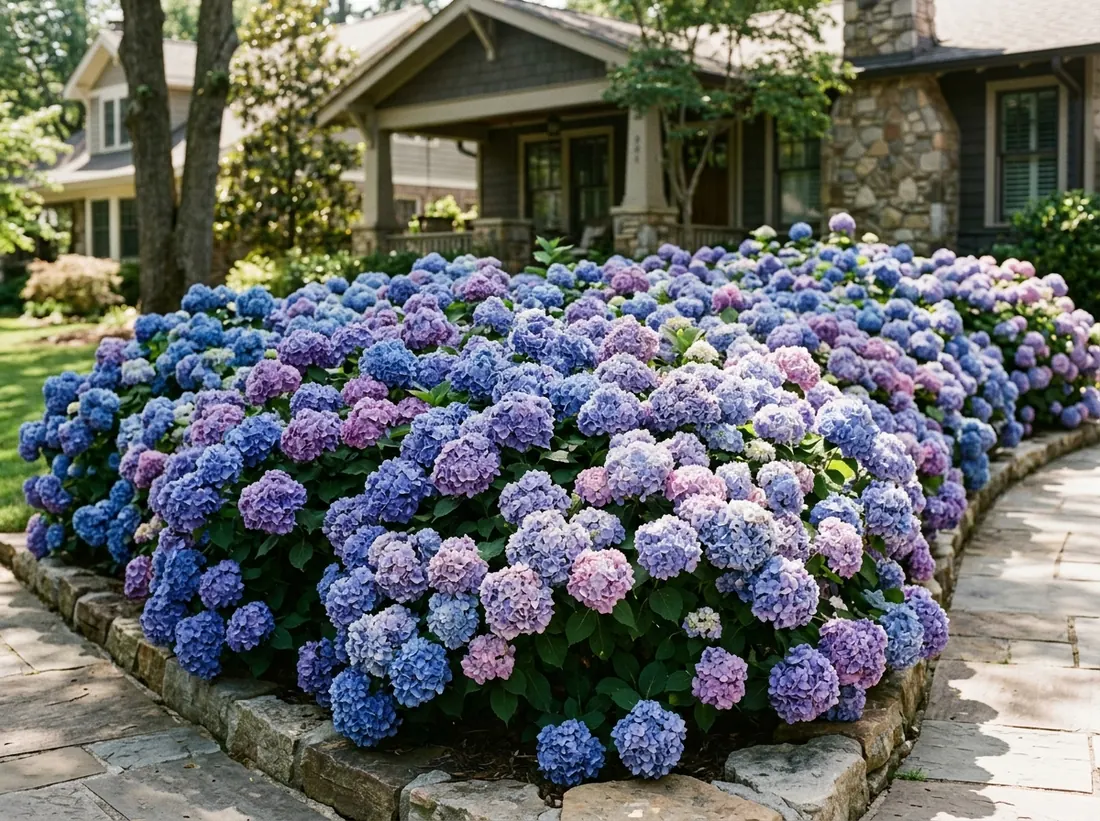
Instead of mixing many plant types, fill an entire front bed with one flowering species, like a mass of hydrangeas or a solid run of daylilies, for a bold, unified look. Mass plantings read as more intentional and higher-impact from the street than a mixed bed of the same total plant count. This approach also simplifies care, since every plant in the bed has identical water and light needs.
25. A Framed View From the Street
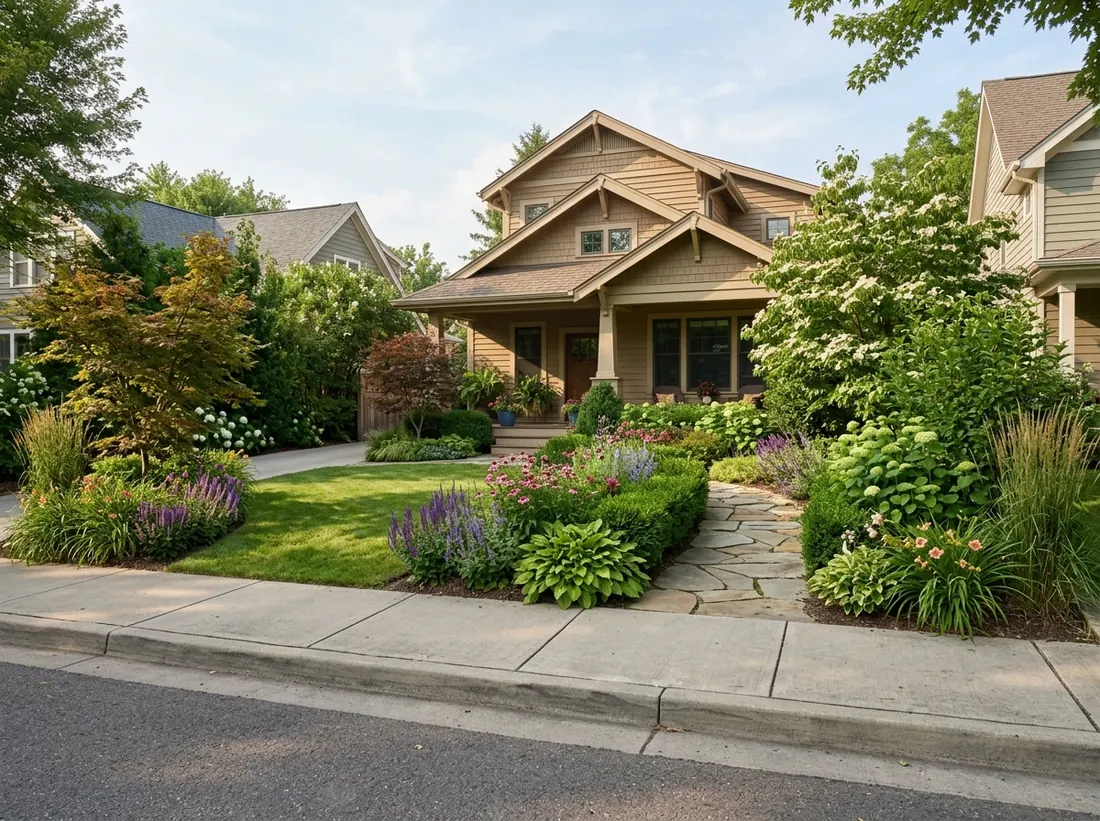
Step back to the sidewalk or curb periodically while planning your front yard and design the layout as a framed view from that vantage point, with taller plants at the edges and lower plants at the center. Most people plan a front yard while standing in it, which misses how the whole scene reads from where guests actually first see it. This single habit catches gaps and imbalances that are invisible up close.
Conclusion
A front yard that genuinely wows guests usually comes down to a handful of intentional choices instead of a long list of scattered additions: a clear color scheme, layered beds, and a few structural elements that give the space shape year-round. Pick two or three ideas from this list that fit your home’s style and your climate, instead of trying to add everything at once. Small, consistent upgrades made over a season or two tend to look more polished than a yard redone all in a single weekend.
Frequently Asked Questions
What is the cheapest way to improve front-of-house curb appeal?
Fresh mulch with a defined, crisp edge along existing beds is the cheapest way to noticeably improve curb appeal. It sharpens the look of a yard within a single afternoon and costs far less than adding new plants or hardscaping to beds you already have. Trimming overgrown shrubs back to a clean, intentional shape is the next lowest-cost, highest-impact fix, since overgrowth is usually what makes an otherwise decent yard look neglected.
How do I make my front yard low-maintenance but still attractive?
Choose drought-tolerant, structural plants like ornamental grasses, dwarf conifers, and native perennials, and group them by identical water needs so care stays simple instead of juggling different watering schedules. A xeriscape or gravel garden style cuts both watering and mowing time significantly once plants are established. Mulch beds heavily to reduce weeding, which is usually the most time-consuming part of yard upkeep for most homeowners.
What plants work best for front-of-house beds in full sun?
Lavender, ornamental grasses, coneflower, and salvia all handle full sun well and need relatively little water once their root systems are established. These also tend to bloom for a long stretch of the growing season instead of a brief window, which keeps a bed looking good for months instead of just weeks. Match specific varieties to your climate zone, since full-sun tolerance and bloom timing both vary by region and heat level.
How do I design a front yard that matches my home’s style?
Match plant shapes and layout formality to your home’s architecture: clipped hedges and symmetry for traditional or colonial homes, loose cottage beds for older or craftsman-style homes, and structural gravel or grasses for modern homes. Consistency between the house style and planting style is what makes a front yard look cohesive instead of mismatched, even when the individual plants themselves are fairly ordinary choices.
Do front yard upgrades actually increase home value?
Well-maintained curb appeal generally makes a strong first impression on buyers and can influence how a home is perceived before they even step inside. Foundation plantings, a defined walkway, and healthy lawn or bed edges tend to matter more to buyers than one expensive individual feature. Simple, well-kept basics usually outperform a single costly addition, since neglect anywhere in the front yard tends to raise questions about the rest of the property too.