
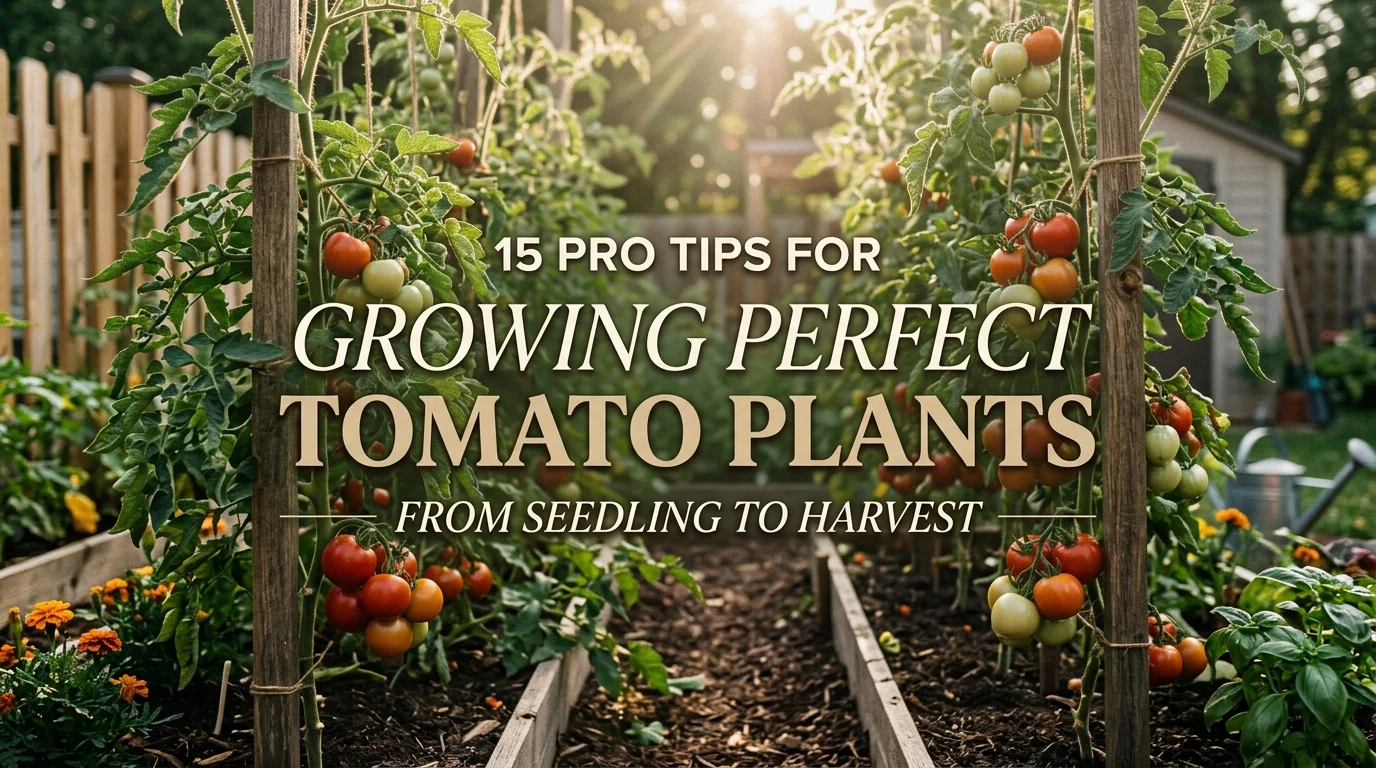
15 Tomato Plants Growing Tips That Actually Work
Tomato plants can look healthy all spring and then let you down right when the fruit should be coming in: cracked skins, yellow leaves, blossoms that drop before they ever turn into a tomato. I’ve grown enough tomatoes to know that most of these problems trace back to a handful of habits, not bad luck or a weak variety. Get the basics right, sunlight, soil, watering, and support, and the rest of the season gets a lot easier to manage. This guide walks through 15 tomato plants growing tips that cover the whole process, from picking a planting date and fixing leggy seedlings to staking, pruning, feeding, and knowing when a tomato is actually ready to pick. Some of these tips take five minutes to apply. Others are habits you will repeat every week through the growing season. Either way, they add up to sturdier plants, fewer split or rotten fruit, and a longer harvest. Here is where to start.
1. Time Your Planting to Your Last Frost Date
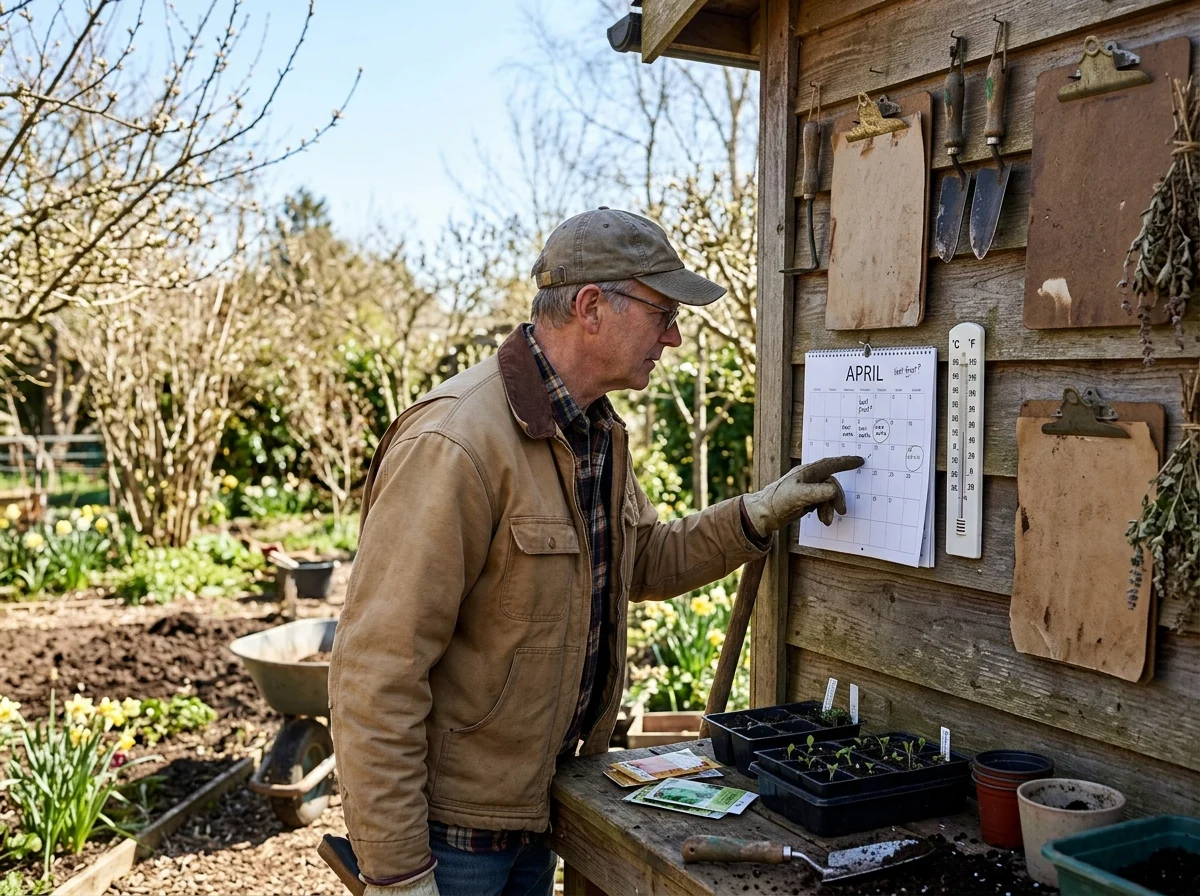
Tomatoes are frost-sensitive, so timing your planting to your local last frost date matters more than any calendar date you find online. In most temperate climates, that means waiting until night temperatures stay above 50°F (10°C) before moving seedlings outside, which can be anywhere from early April to early June depending on where you garden. Planting too early stunts growth and makes plants more likely to develop problems later, even if a late frost never actually arrives.
2. Give Plants 6 to 8 Hours of Direct Sun
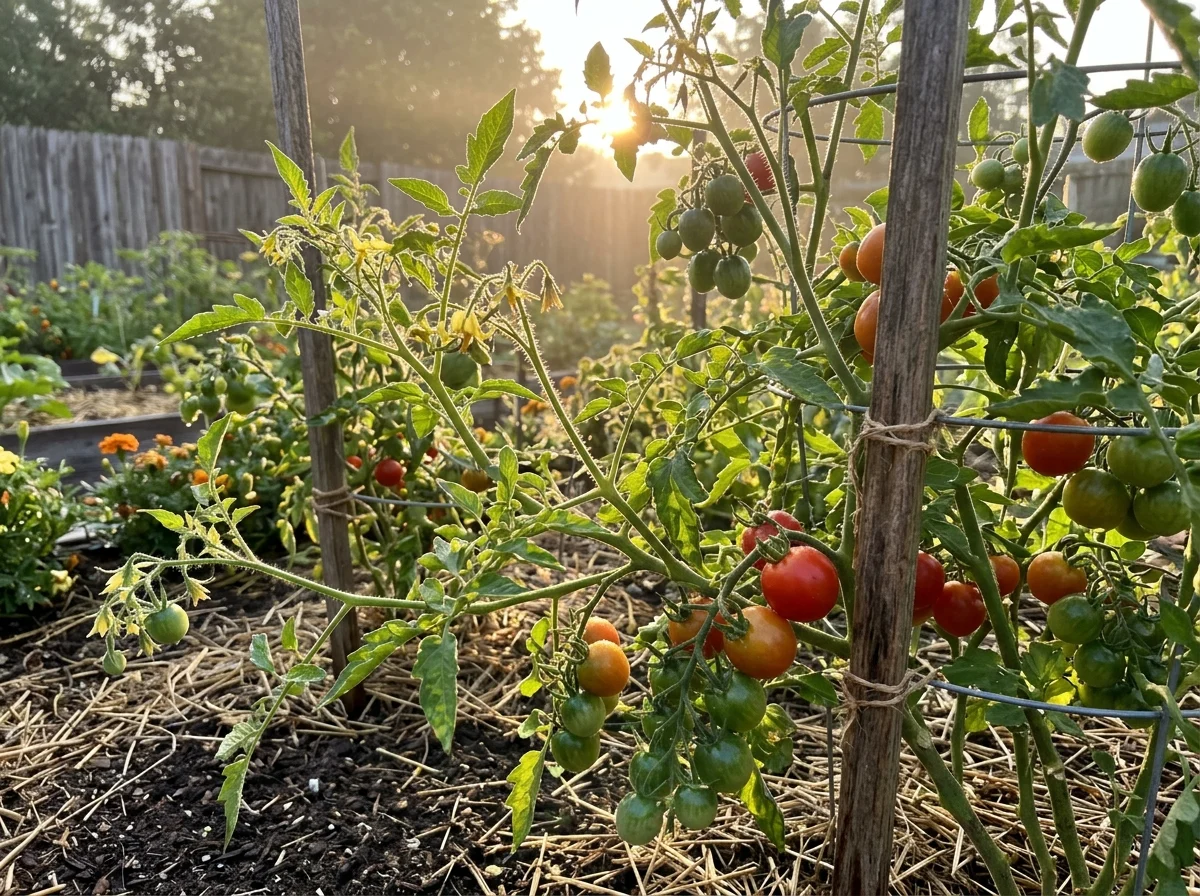
Give tomato plants at least 6 to 8 hours of direct sun every day. Less light produces tall, thin plants with fewer flowers and smaller fruit. A spot that gets full morning sun and only light afternoon shade is usually still enough, but deep shade for more than a few hours will noticeably cut your harvest.
3. Build Rich, Well-Draining Soil
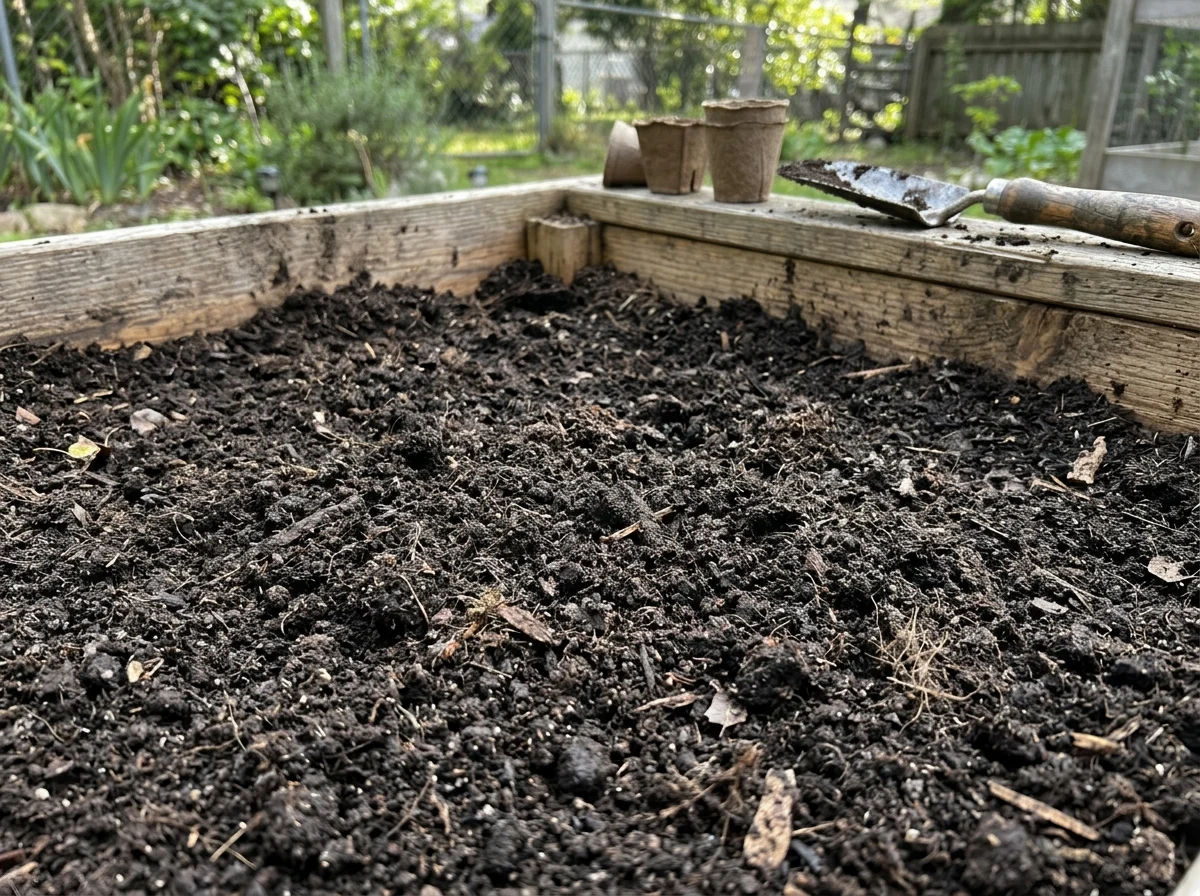
Tomatoes grow best in loose, well-draining soil with a pH between 6.2 and 6.8. Work a few inches of compost or aged manure into the bed before planting, since tomatoes are heavy feeders and thin soil runs out of nutrients fast. Raised beds or mounded rows help in areas with heavy clay, since standing water around the roots leads to rot and disease.
4. Space Plants 24 to 36 Inches Apart
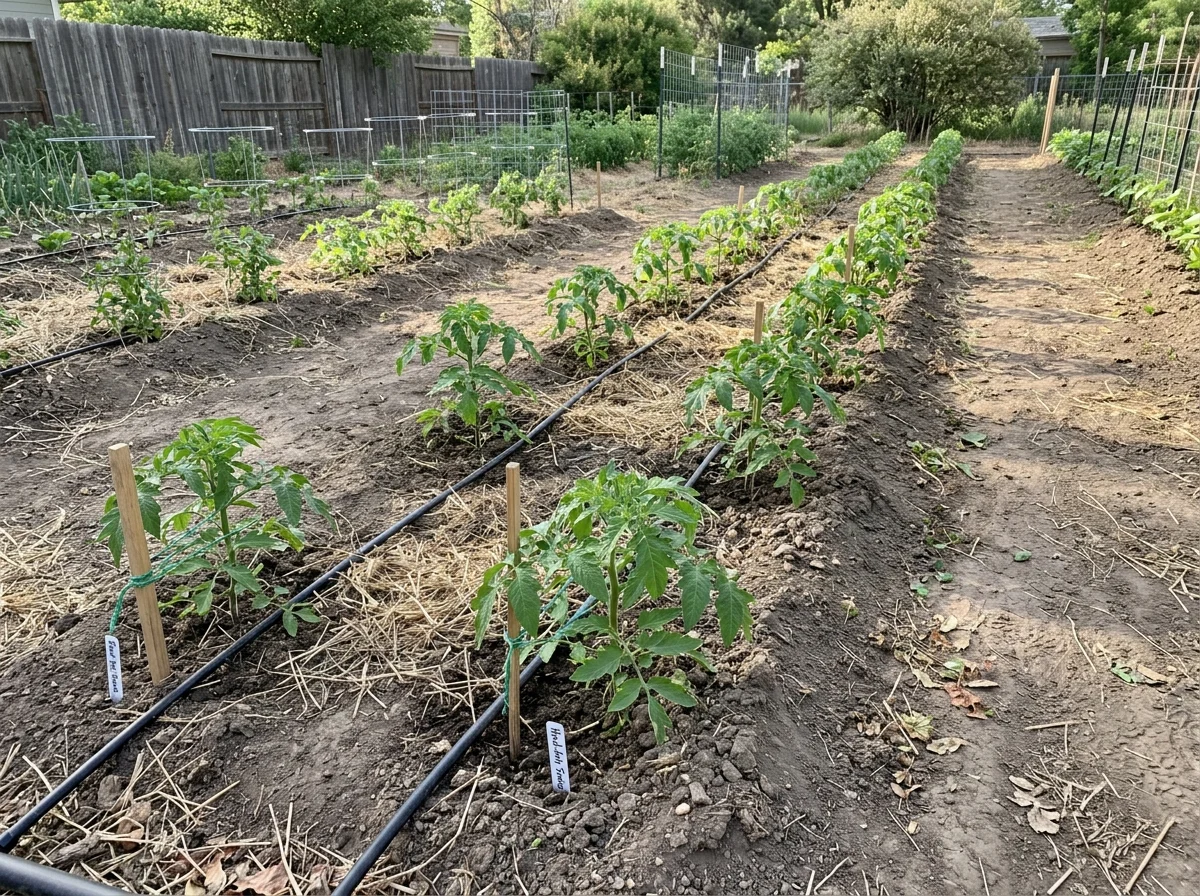
Space tomato plants 24 to 36 inches apart, with rows about 3 feet apart if you are growing more than one. Crowded plants compete for light and airflow, which raises the risk of fungal disease and makes pruning and staking harder later. Determinate varieties can sit slightly closer than sprawling indeterminate types.
5. Fix Leggy Seedlings Before You Transplant
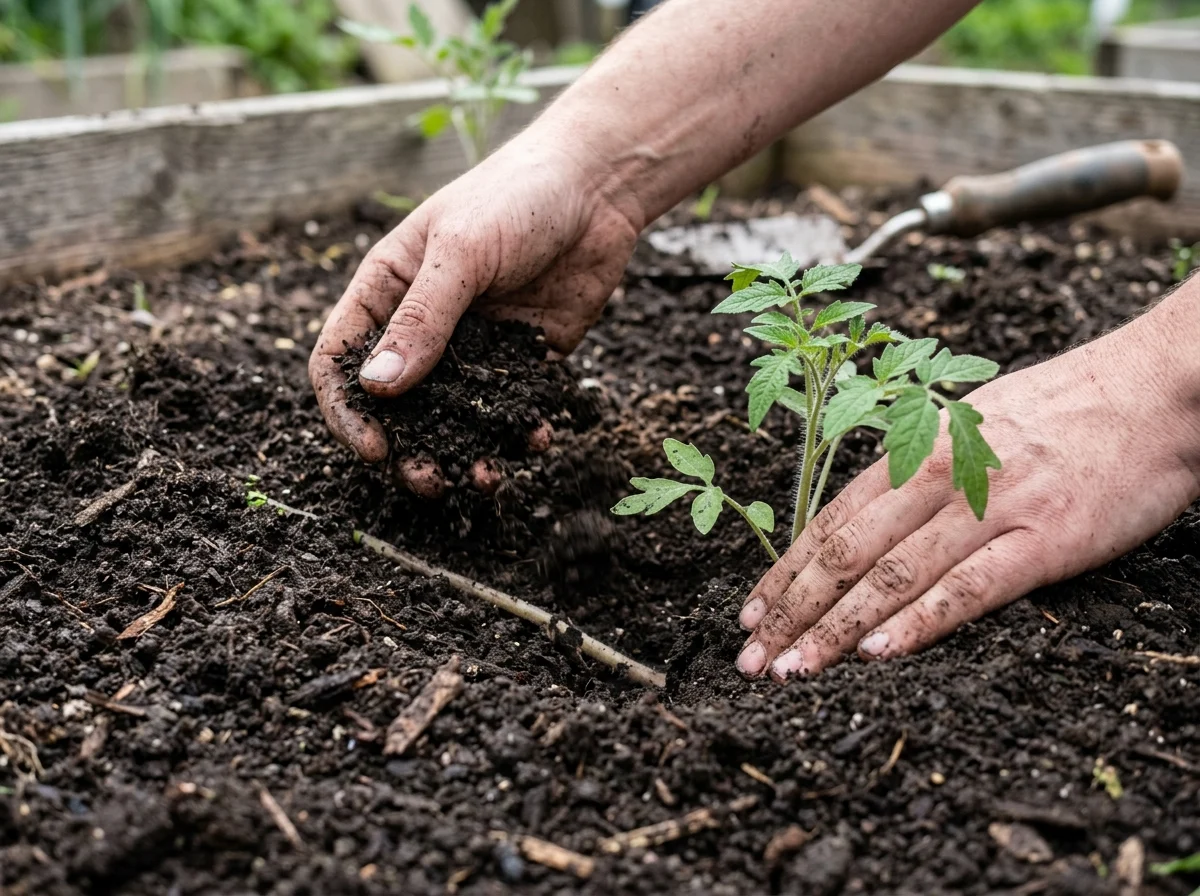
A leggy seedling, tall, pale, and thin-stemmed from too little light, is not a lost cause. Tomatoes are one of the few plants that root along a buried stem, so plant a leggy seedling deeper than it grew in its pot, right up to the first set of true leaves, or lay it sideways in a shallow trench with the top curved upward. Either method grows a stronger root system than trying to prop the seedling up straight.
6. Water Deeply and Mulch to Hold Moisture
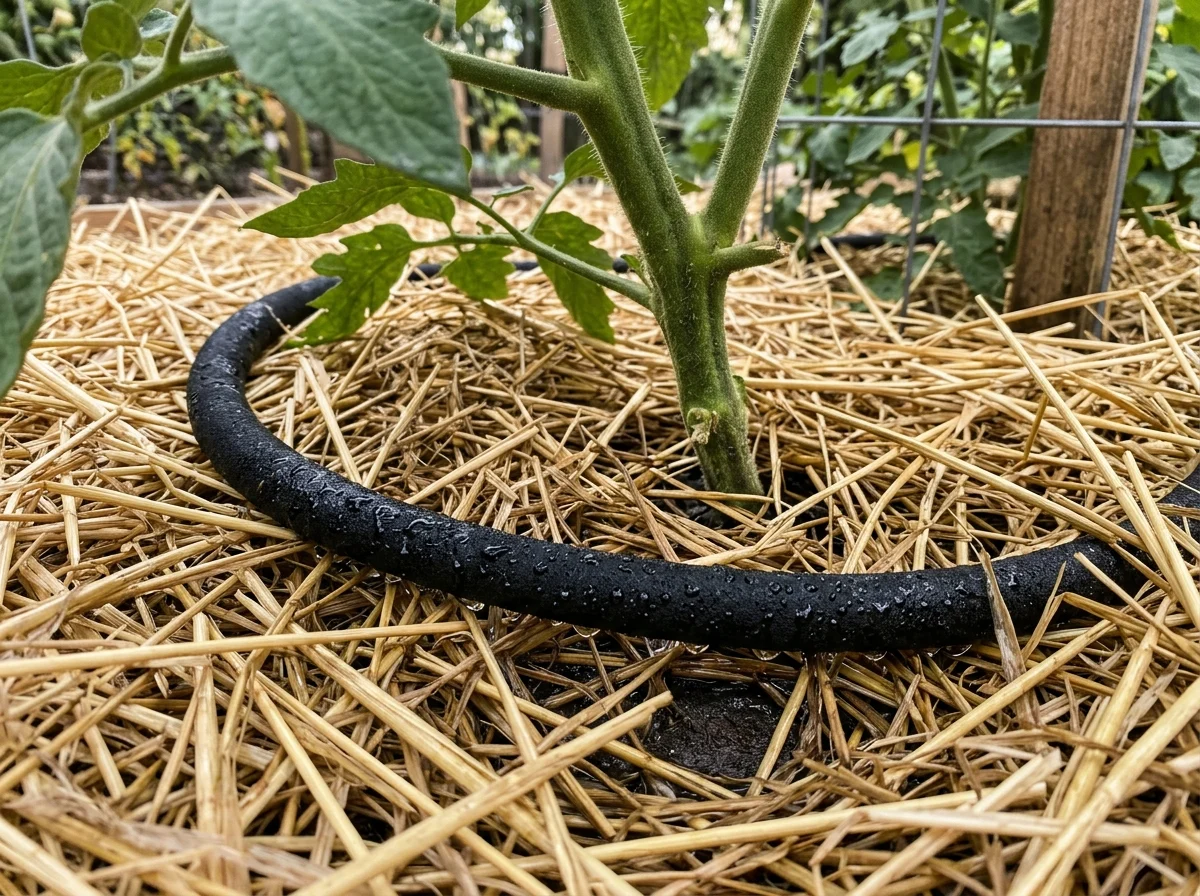
Tomato plants need about 1 to 2 inches of water per week, applied deeply and consistently rather than in light daily sprinkles. Shallow watering encourages roots to stay near the surface, which makes plants more sensitive to heat and drought. A 2 to 3 inch layer of mulch (straw, shredded leaves, or untreated grass clippings) holds moisture in the soil, keeps weeds down, and stops soil from splashing onto the lower leaves where disease usually starts.
7. Feed Tomato Plants in Stages
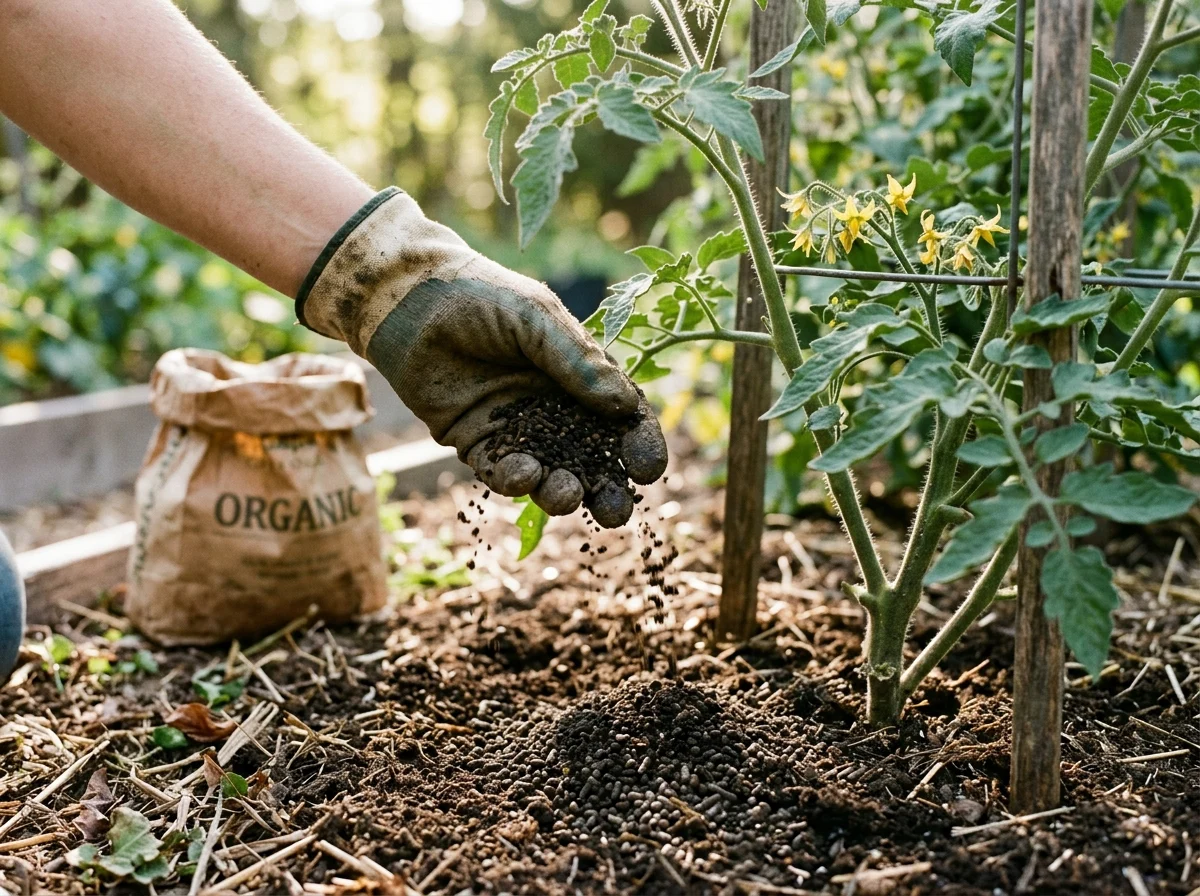
Feed tomato plants in stages instead of one heavy dose. Mix a starter fertilizer with some phosphorus into the soil at planting time to support root growth, then switch to a fertilizer lower in nitrogen and higher in potassium once flowers appear. Too much nitrogen late in the season pushes out leafy growth at the expense of fruit, giving you a bushy plant with disappointing yields.
8. Grow Tomato Plants in Containers
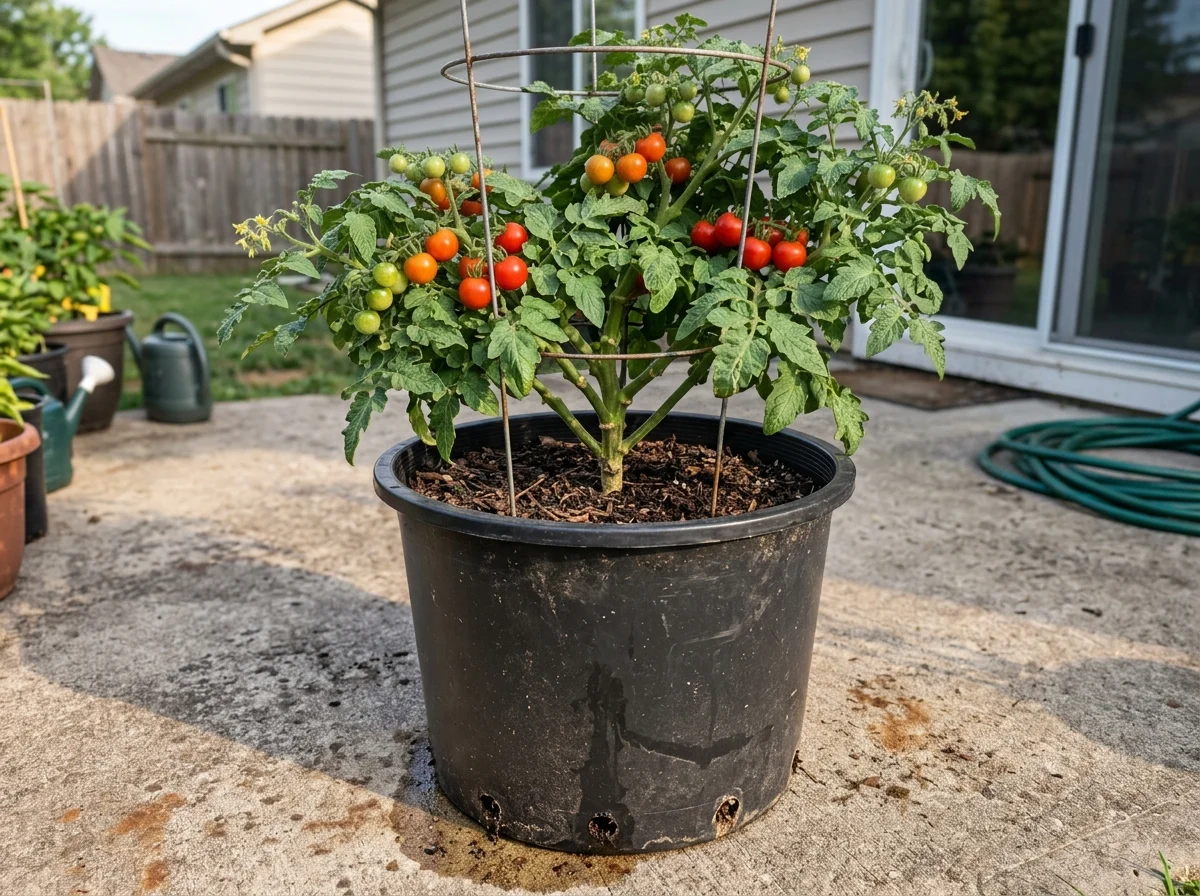
Tomatoes grow well in containers if you give the roots enough room. Use a pot that holds at least 5 gallons of soil, more for larger indeterminate varieties, and choose a container with real drainage holes. Container soil dries out faster than garden beds, so check it daily in warm weather and water whenever the top inch feels dry. Compact or patio varieties tend to perform better in pots than tall, sprawling ones.
9. Stake or Cage Plants Early
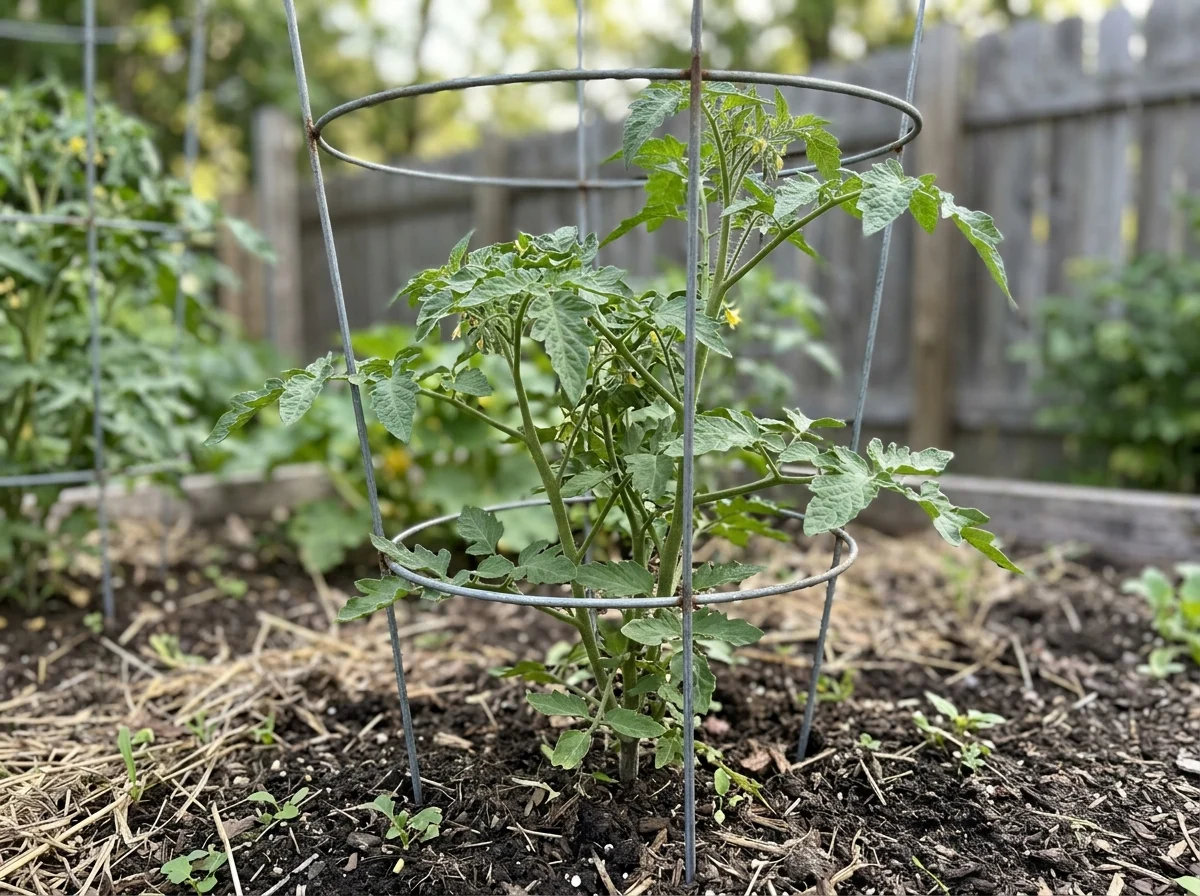
Stake or cage tomato plants early, within a couple of weeks of transplanting, before the root system spreads out and before the plant sprawls across the ground. A sturdy cage, stake, or trellis keeps fruit off the soil, improves airflow, and makes the plant much easier to prune and harvest. Driving a stake in after the plant is already large risks damaging roots you cannot see.
10. Pinch Off Suckers on Indeterminate Varieties
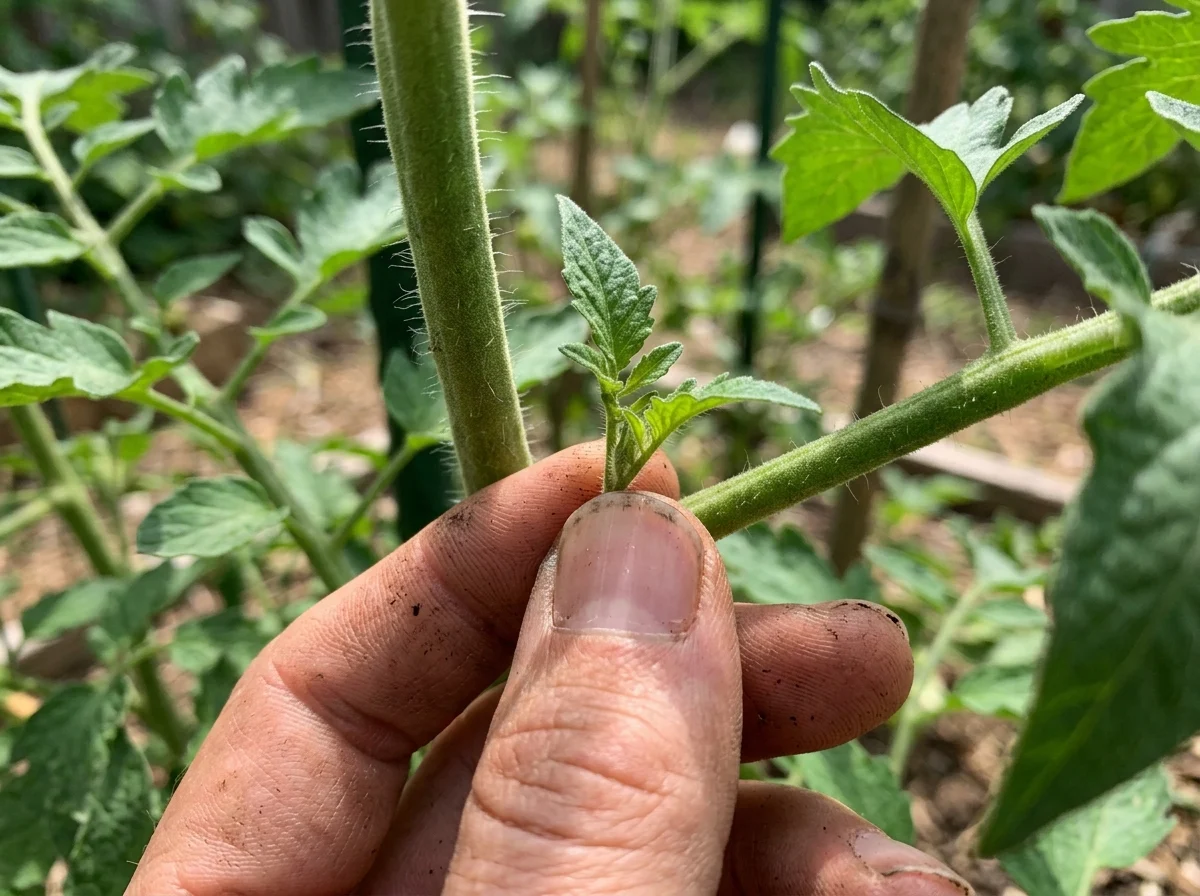
Pinch off suckers, the small shoots that grow in the joint between the main stem and a branch, on indeterminate tomato varieties to keep growth focused on fewer, sturdier stems. Determinate varieties need little to no pruning, since removing too much cuts into their fixed fruit production. On any variety, trim away the lowest leaves once the plant is established so nothing touches the soil, which keeps air moving through the plant and lowers the chance of fungal disease.
11. Prevent Blossom End Rot With Consistent Watering
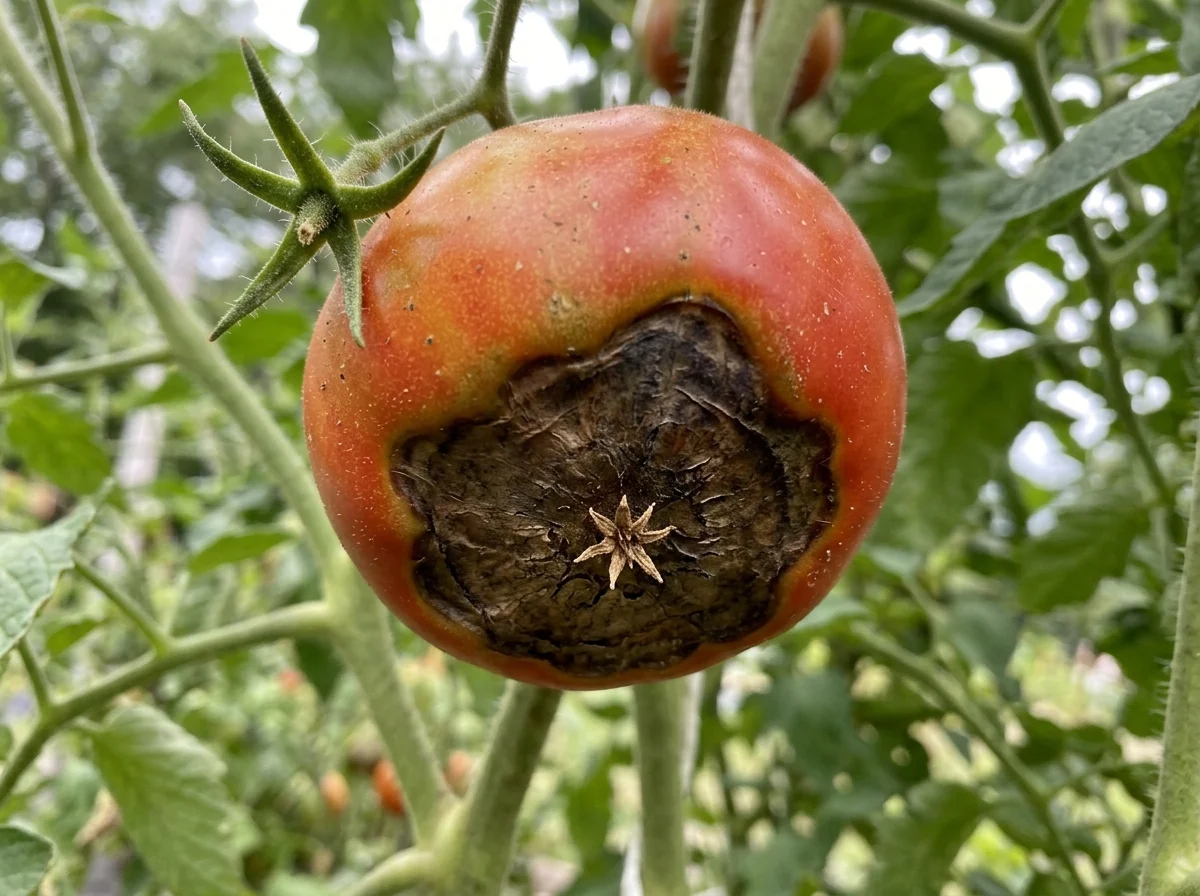
Blossom end rot shows up as a flat, leathery brown patch on the bottom of the fruit, and it comes from inconsistent watering rather than a soil disease. Uneven moisture interrupts how the plant moves calcium into developing fruit, even when there is enough calcium in the soil. Watering on a regular schedule and mulching to even out soil moisture fixes most cases within a couple of weeks.
12. Reduce Cracking With Steady Soil Moisture
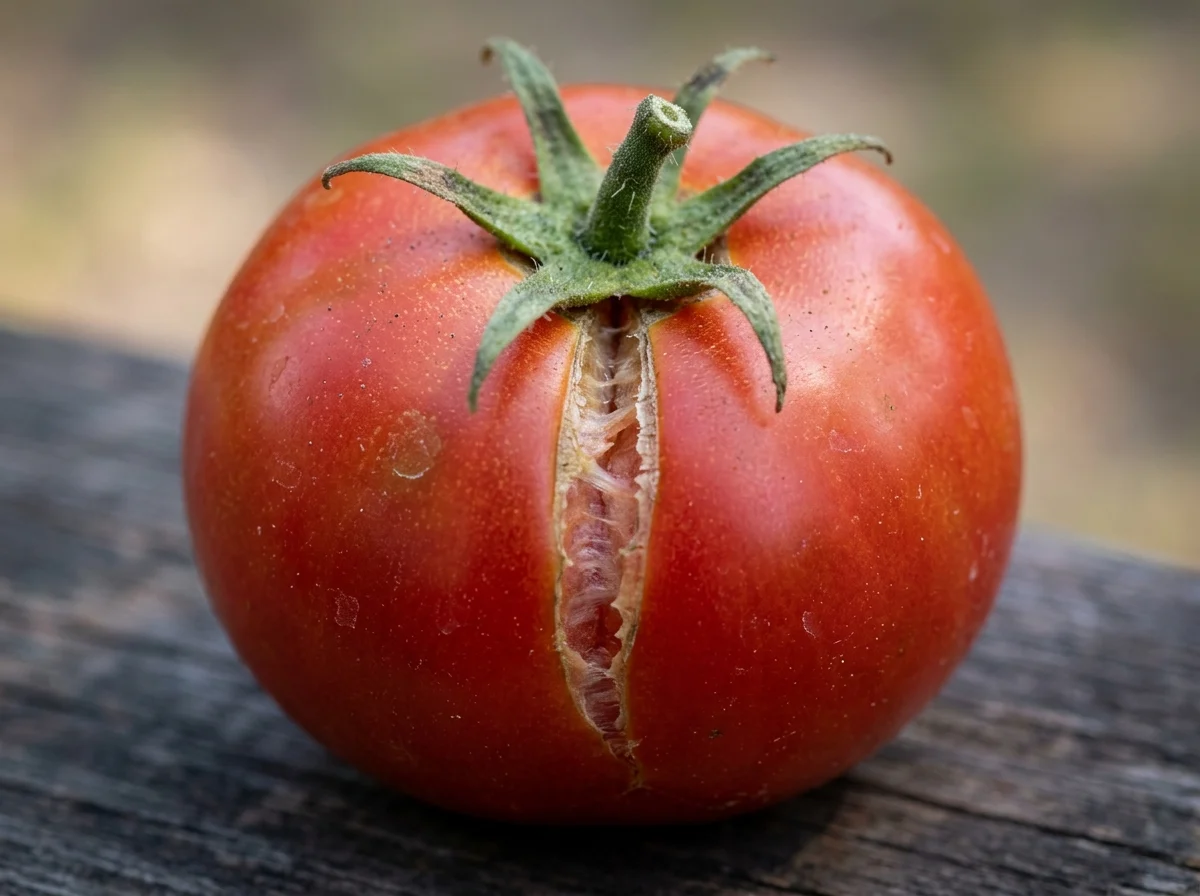
Cracked or split tomatoes happen when a dry spell is followed by heavy watering or rain, and the fruit takes in water faster than the skin can stretch. Keeping soil moisture steady (mulch helps here too) reduces cracking, and picking fruit as soon as it ripens instead of leaving it on the vine during wet weather limits how much damage you see.
13. Read What Yellowing Leaves Are Telling You
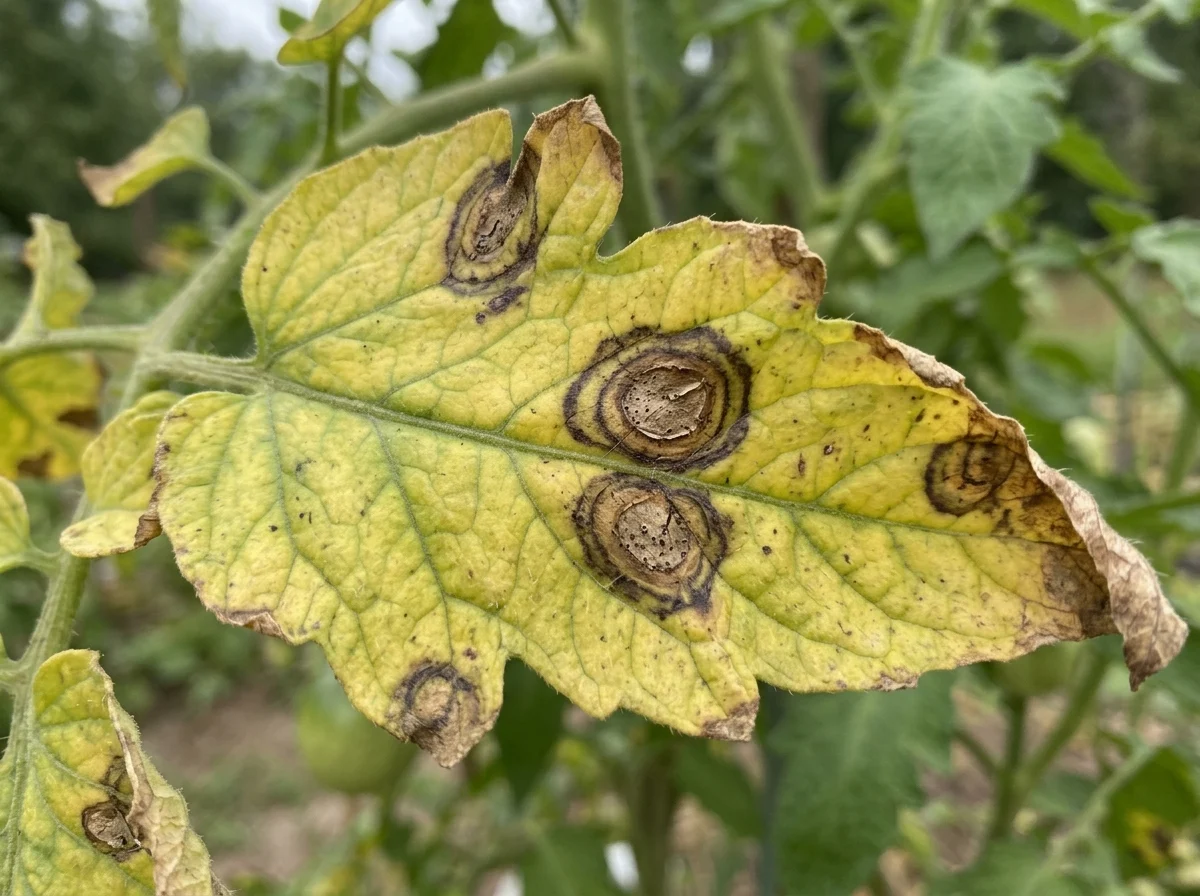
Yellow leaves usually point to one of three causes: a nitrogen shortage, overwatering, or early blight. Nitrogen deficiency tends to yellow the older, lower leaves first while new growth stays green, and a light feeding usually corrects it within a week or two. Overwatering causes similar yellowing along with soft, wilting stems, so let the soil dry out slightly between waterings. Early blight shows up as yellow leaves with dark concentric rings, and those leaves should be removed and thrown out, not composted, to slow the spread.
14. Watch for Hornworms, Aphids, and Whiteflies
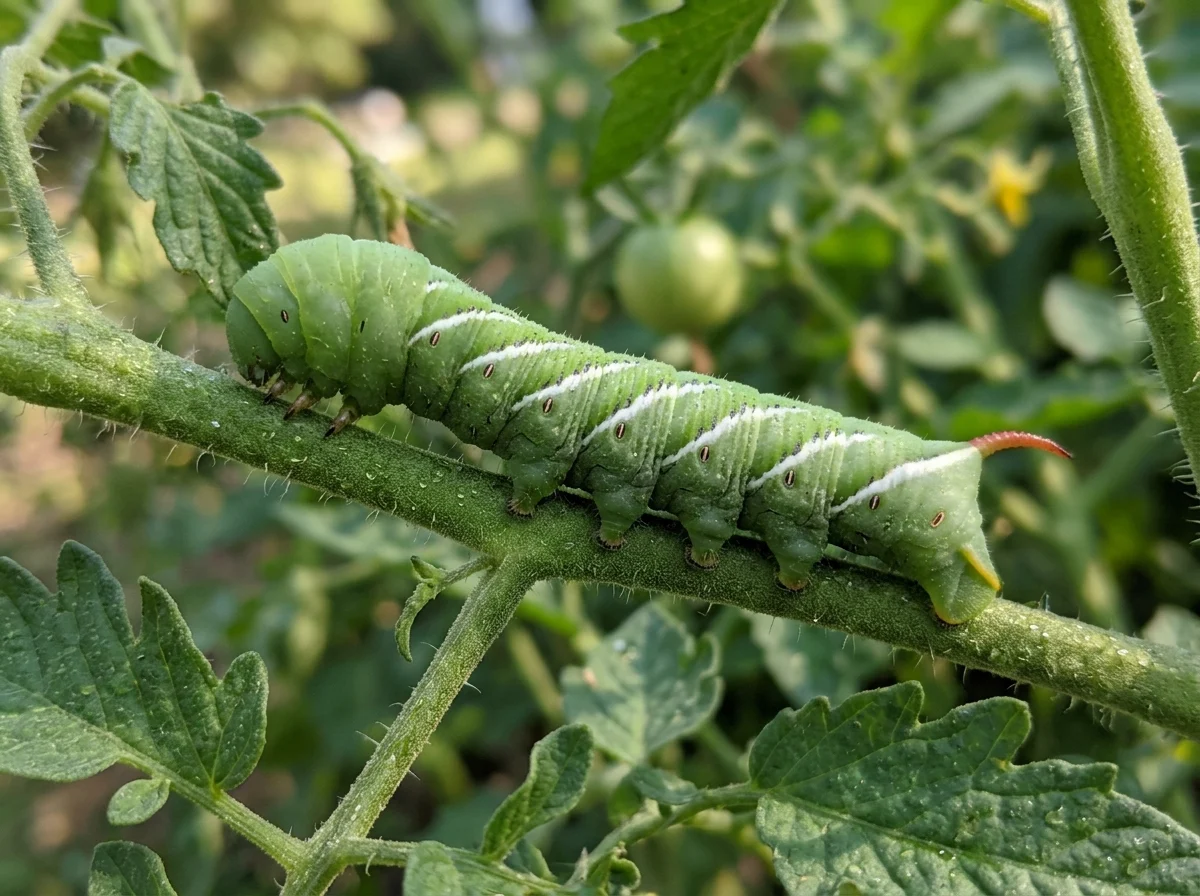
Watch for tomato hornworms, aphids, and whiteflies through the growing season. Hornworms are large and easy to spot once you know their pattern of chewed leaves and dark droppings, and picking them off by hand works well for small gardens. Aphids and whiteflies cluster on the undersides of leaves and usually respond to a strong water spray or insecticidal soap. Checking plants every few days catches these problems while they are still small and easy to manage.
15. Pick Tomatoes at Full Color and the Right Firmness
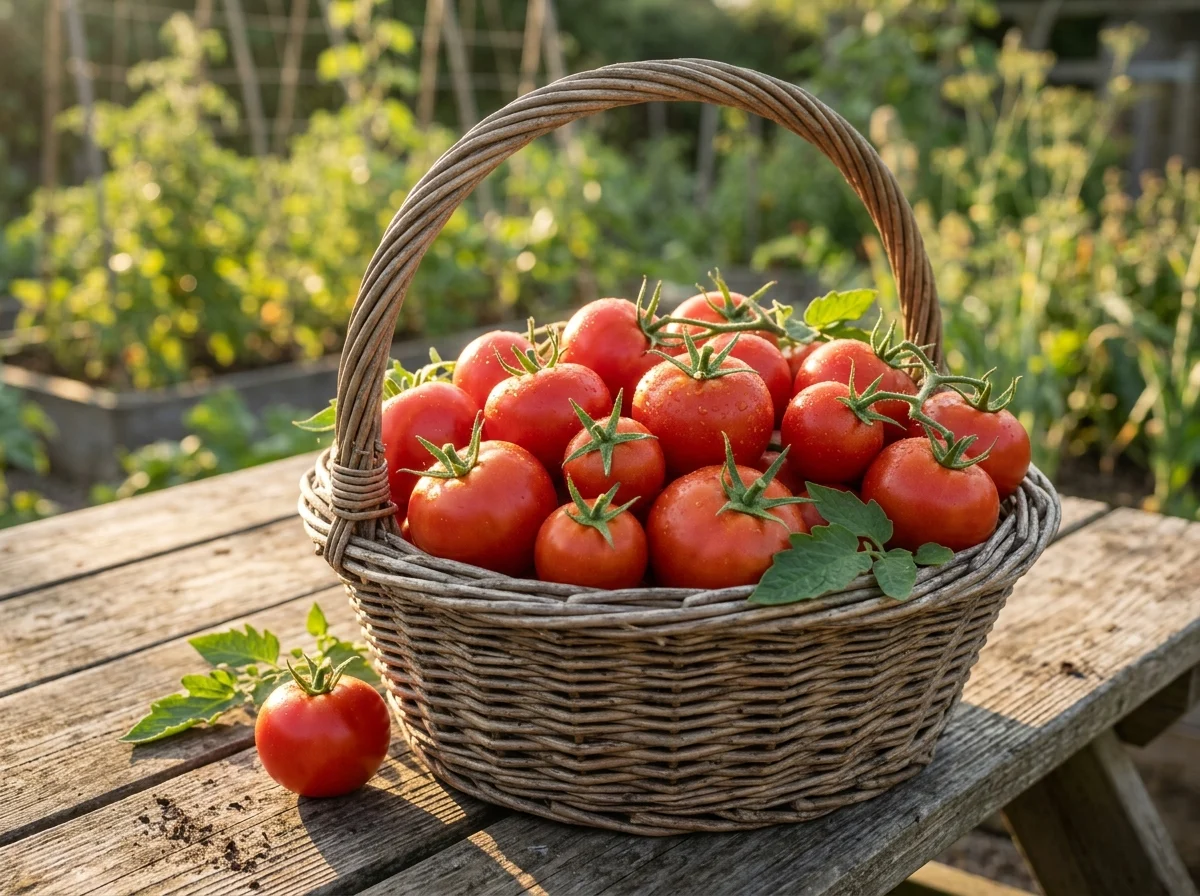
Pick tomatoes once they reach full color for their variety and give slightly under gentle pressure, rather than waiting for them to soften on the vine. Most varieties take 60 to 85 days from transplanting to first harvest, though the exact number depends on the variety and your local growing season. Picking in the morning, when fruit is cool and firmest, helps tomatoes keep longer after harvest. If frost is coming and green tomatoes remain, pick them and ripen indoors on a countertop out of direct sun rather than losing the crop.
Conclusion
Most tomato problems trace back to a few basics: enough sun, steady watering, decent soil, and support that goes in early rather than late. None of these 15 tips require special equipment or a huge time investment, just consistency across the season. Start with the ones that match whatever your plants are dealing with right now, whether that is leggy seedlings, yellow leaves, or fruit that keeps splitting, and build the rest of these habits in as the season goes on. A little attention early usually means a much bigger, healthier harvest by late summer.
Frequently Asked Questions
How often should I water tomato plants?
Water tomato plants deeply about 1 to 2 inches per week, adjusting up during hot, dry stretches and down during rainy weeks. It is better to water deeply two or three times a week than to sprinkle the surface daily, since deep watering encourages roots to grow further down where moisture stays more stable. Containers usually need daily watering in summer heat because they dry out much faster than garden soil.
Why are my tomato plants leggy?
Tomato plants get leggy when seedlings do not receive enough direct light, so they stretch upward searching for it instead of growing sturdy stems. This happens most often with seedlings started indoors near a window rather than under strong grow lights. You can still save leggy seedlings by planting them deeper than they grew in their pot, since tomatoes root along a buried stem and will grow a stronger base below the soil line.
How do I stop blossom end rot on tomatoes?
Stop blossom end rot by watering on a consistent schedule instead of letting the soil dry out and then soaking it. The brown patch on the fruit bottom comes from inconsistent moisture interrupting calcium movement into the fruit, not usually from a lack of calcium in the soil itself. Mulching around the base and watering deeply once or twice a week, rather than lightly every day, usually clears it up within a couple of weeks.
Should I prune tomato suckers?
Prune suckers on indeterminate tomato varieties, since removing the shoots that grow between the main stem and branches keeps growth focused on fewer, sturdier stems with better airflow. Determinate varieties need little pruning because they have a fixed, bushier growth habit, and cutting too much reduces their fruit set. Pinch suckers off by hand while they are still small, under 2 to 3 inches, to avoid leaving a large wound on the plant.
How do I know when a tomato is ready to harvest?
A tomato is ready to harvest once it reaches full color for its variety and gives slightly under gentle pressure. Most varieties take 60 to 85 days from transplanting to the first ripe fruit, though the exact timing depends on variety and climate. Picking in the cooler morning hours keeps the fruit firmer for longer after harvest, and slightly underripe tomatoes will continue ripening well on a countertop.
Can tomato plants grow in containers?
Yes, tomato plants grow well in containers as long as the pot holds at least 5 gallons of soil and has drainage holes. Compact or patio varieties tend to do better in containers than large, sprawling indeterminate types, which need more room for their root systems. Container soil dries out faster than garden beds, so check moisture daily during warm weather rather than relying on a fixed watering schedule.