
15 Dish Gardening Ideas for Every Home
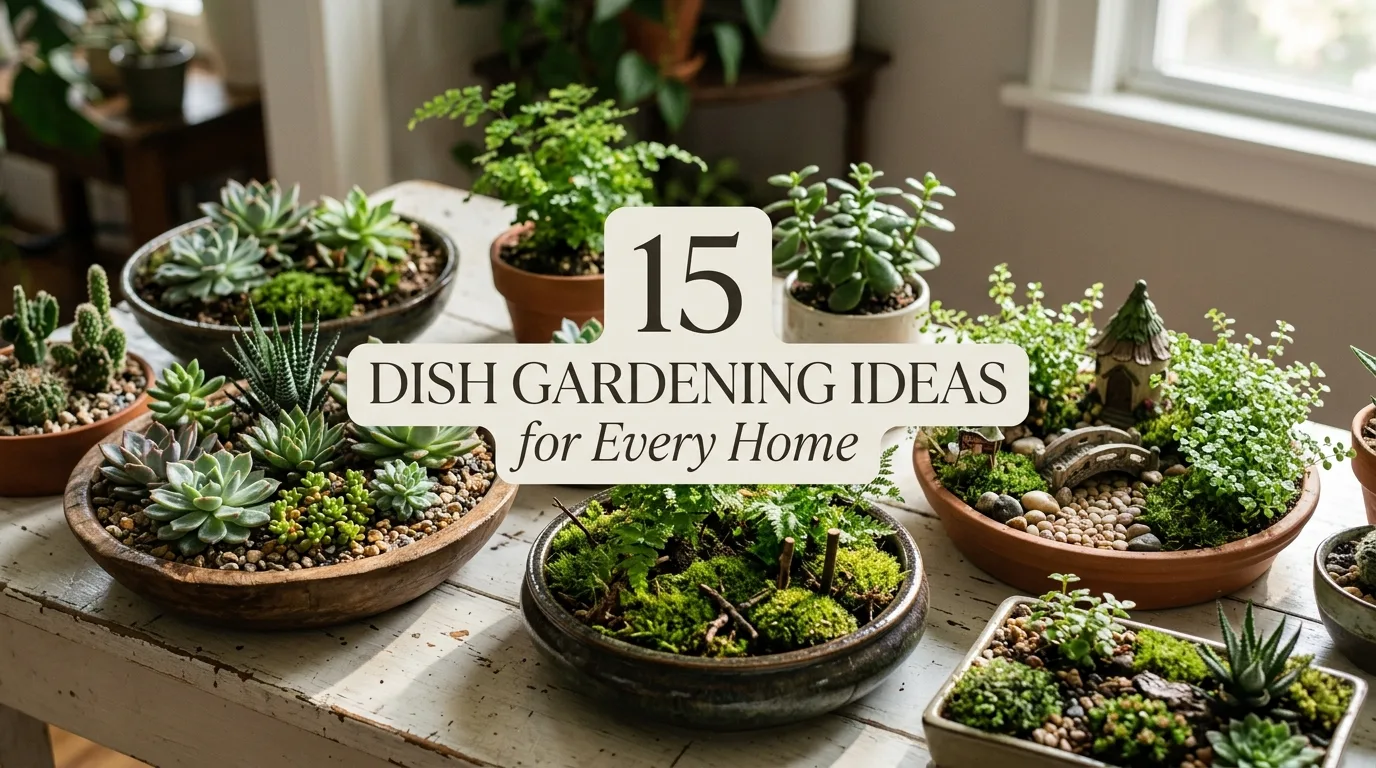
There’s something satisfying about holding an entire little garden in two hands, a shallow bowl of tiny succulents, a moss-covered dish that looks like a forest floor, or a fairy garden your kids check on every morning. Dish gardening ideas give you that miniature growing experience without needing a yard, a balcony, or even much of a windowsill, since the whole arrangement lives in one shallow container you can set on a desk, a coffee table, or a kitchen counter. I’ve found that the appeal isn’t just the small size; it’s how much personality you can pack into one dish once you start mixing textures, heights, and plant types together. This is different from a regular houseplant in a pot, since a dish garden is usually a shallow, wide container holding several small plants arranged together as one composed scene. This guide covers fifteen dish garden styles, from classic succulent arrangements to moss dishes, fairy gardens, and mini herb setups, so you can pick a style that fits your light, your space, and how much upkeep you actually want. Start with the style most people try first: succulents.
1. Succulent Dish Garden in a Shallow Bowl
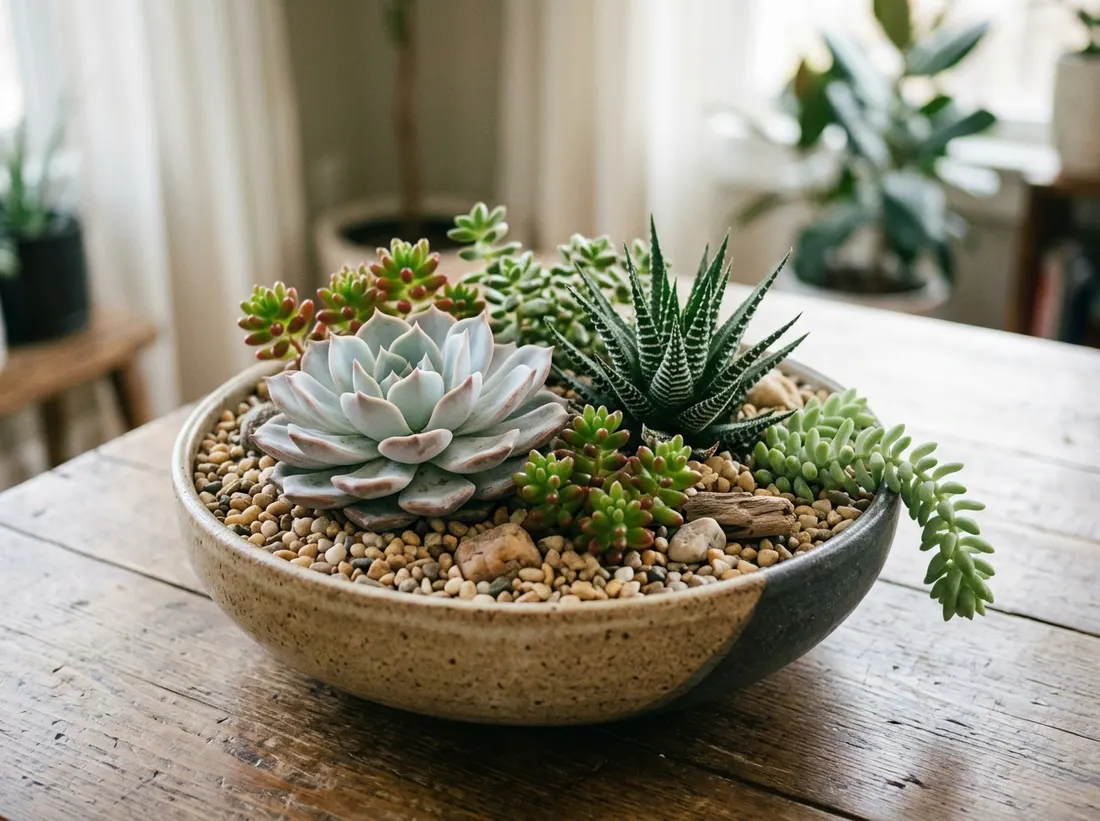
A shallow bowl planted with three to five different succulent varieties, echeveria, sedum, and haworthia work well together, makes one of the easiest dish gardens to keep alive since succulents tolerate the shallow soil depth and infrequent watering a dish container requires. Use a fast-draining cactus and succulent soil mix, and choose a dish with drainage holes if possible, or add a bottom layer of gravel if it doesn’t. Place it in bright, indirect light or a few hours of direct morning sun, and water only when the soil is fully dry, roughly every 1 to 2 weeks indoors.
2. Cactus Dish Garden for a Sunny Windowsill
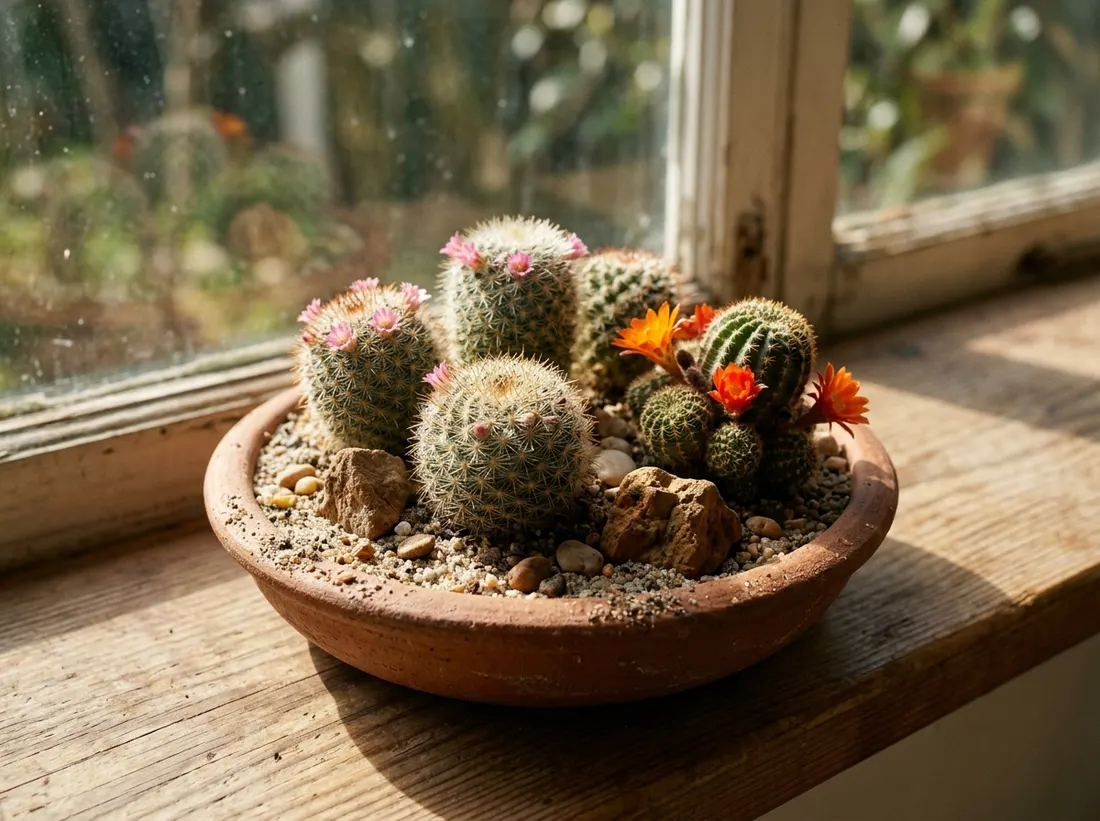
Small cacti, like mammillaria, echinocactus, and rebutia varieties, suit a dish garden placed in your brightest, sunniest window, since most cacti need several hours of direct sun to stay compact and avoid stretching toward the light. Use gloves or folded paper to handle spiny varieties during planting, and space plants with a little room between them so their eventual mature width doesn’t crowd the dish. Water sparingly, letting the soil dry out completely between waterings, and cut back watering further in winter when cacti go semi-dormant.
3. Fairy Garden Dish for Kids and Whimsy
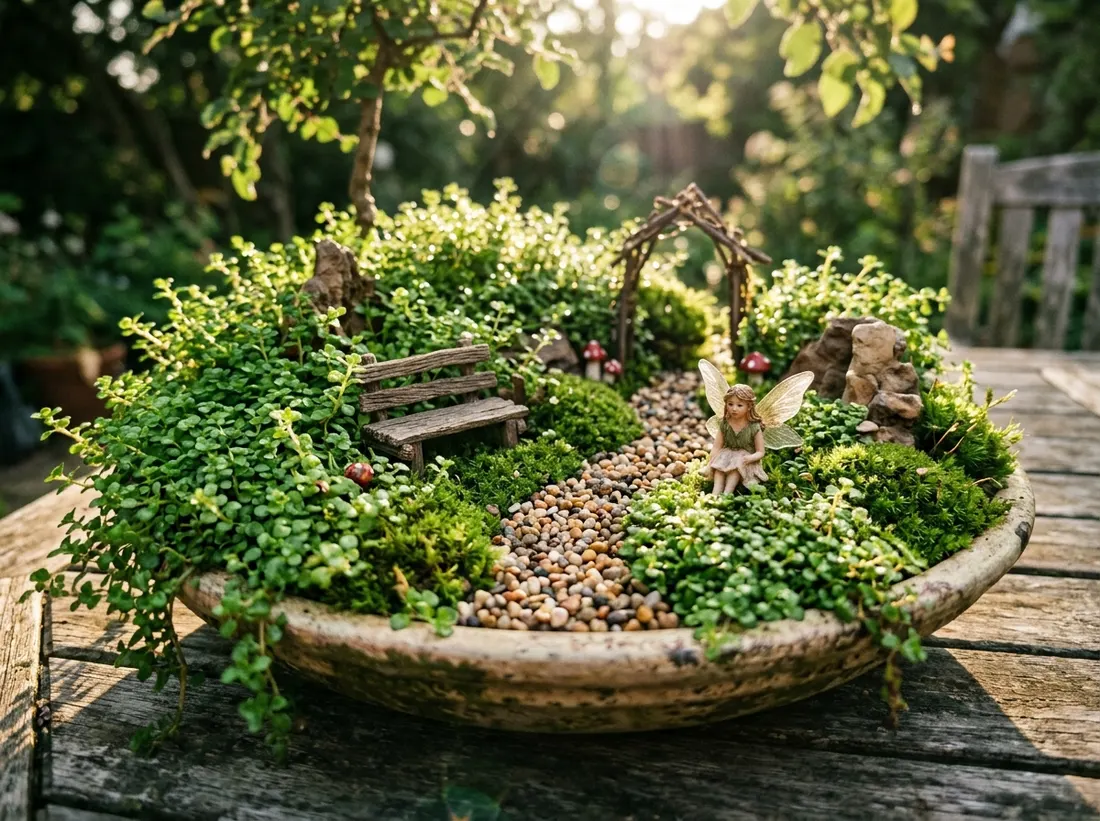
A fairy garden dish combines small plants, miniature moss, and tiny decorative accessories, a little bench, a pebble path, a small figurine, into a scene-like arrangement that kids especially enjoy building and tending. Choose slow-growing, compact plants like baby’s tears, miniature ferns, or small mosses that won’t quickly outgrow the tiny scale of the accessories. Keep the soil consistently moist but not soggy, since the small plants typically used here prefer more humidity than a succulent or cactus dish does.
4. Moss Dish Garden for Low Light
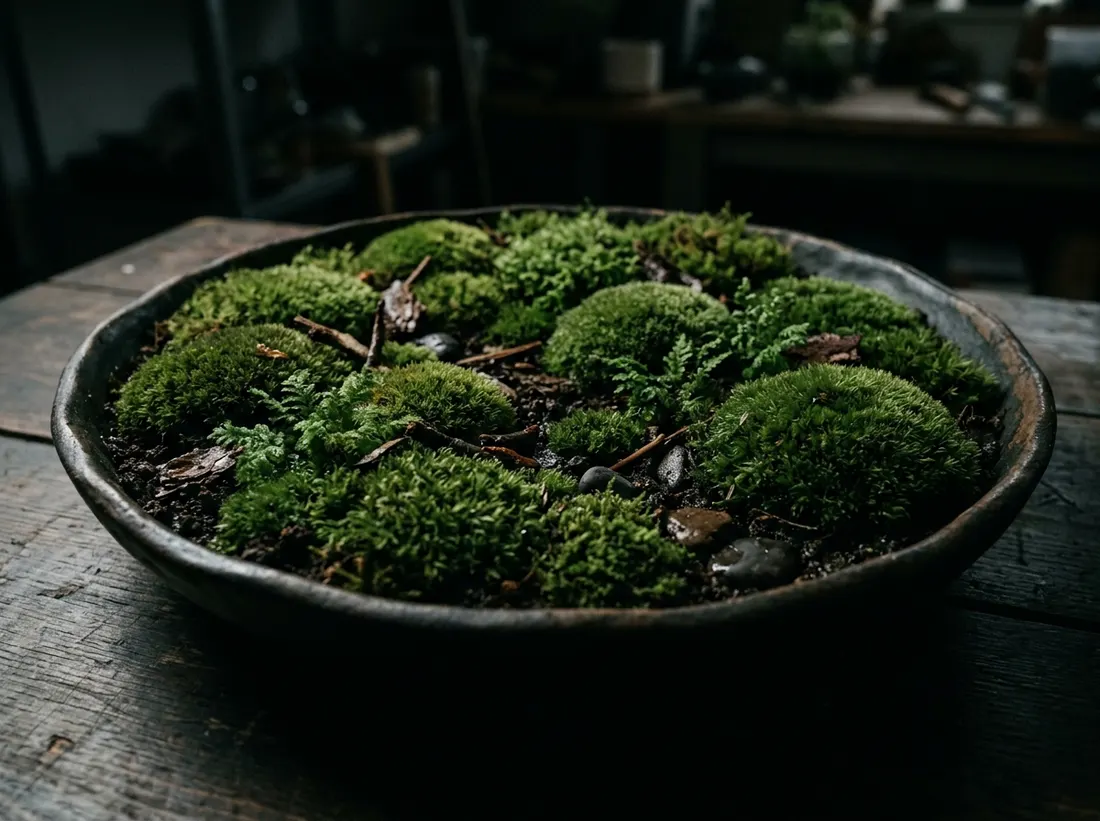
A moss dish garden works in spots too dim for flowering plants or succulents, since most moss varieties thrive in low, indirect light and actually struggle in direct sun. Layer different moss types, cushion moss for texture, sheet moss for a smooth green base, over a bed of damp soil, and mist regularly to keep the moss from drying out and browning. This is one of the lowest-maintenance dish gardens once established, since moss needs no fertilizing and very little active care beyond consistent humidity.
5. Mini Herb Dish Garden for the Kitchen
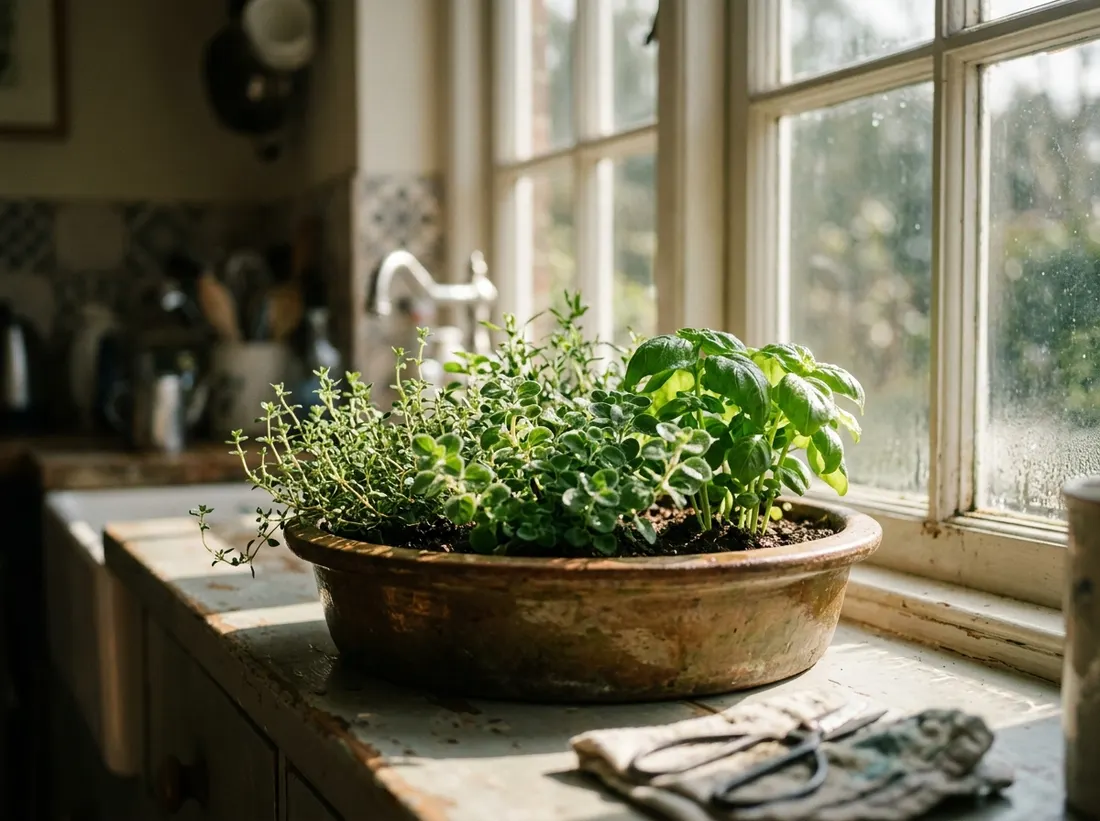
A shallow dish planted with compact herbs, thyme, oregano, and a small basil variety, kept on a kitchen windowsill puts fresh seasoning within arm’s reach while cooking. Herbs in a shared dish need at least 4 to 6 hours of sunlight, so a south or west-facing window works best. Because herbs in a communal dish compete for the same limited soil, snip regularly rather than letting any one plant take over, and expect to refresh or replace the dish every season or two as roots fill the shallow space.
6. Air Plant Dish Garden Without Soil
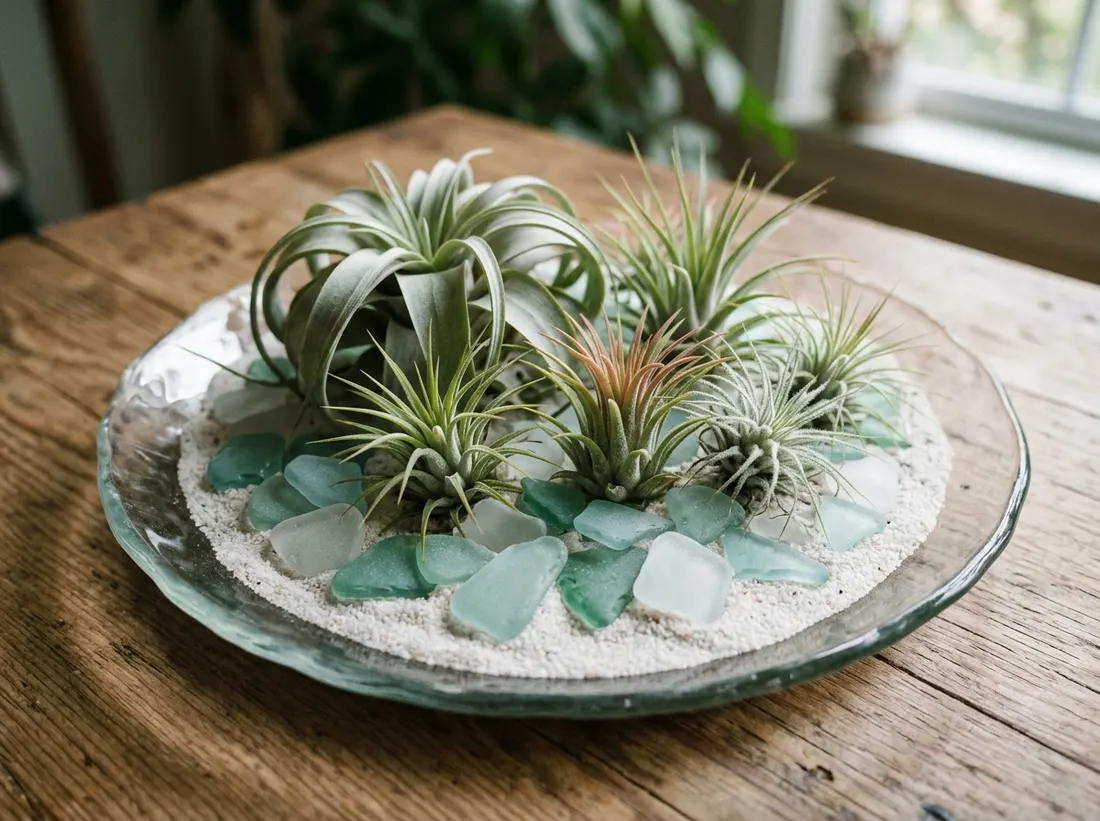
Air plants, or tillandsia, don’t need soil at all, so a dish garden built around them typically uses a shallow bed of decorative sand, small stones, or dried moss purely for visual texture, not as a growing medium. Mist air plants two to three times a week, or soak them briefly in water once a week, then let them dry fully before returning them to the dish, since sitting in trapped moisture causes rot. This style suits a bright spot without direct sun exposure.
7. Alpine and Rock Garden Dish
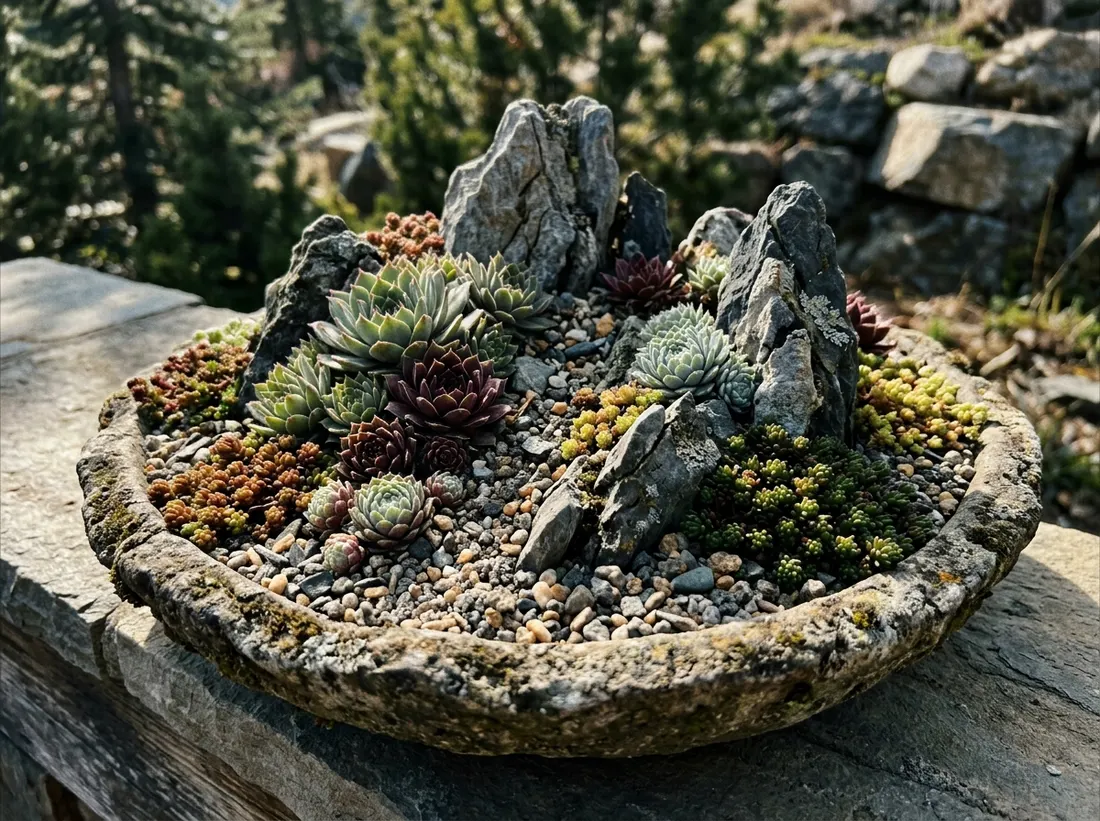
An alpine dish garden mimics a high-mountain rock garden in miniature, using small, cold-hardy plants like sedum, sempervivum (hens and chicks), and dwarf alpine varieties arranged among decorative rocks and gravel. These plants prefer excellent drainage and can handle more direct sun and less frequent watering than most dish garden styles. This is a good option for a spot that gets strong afternoon sun where softer, more delicate plants would struggle or scorch.
8. Zen Sand and Succulent Dish Garden
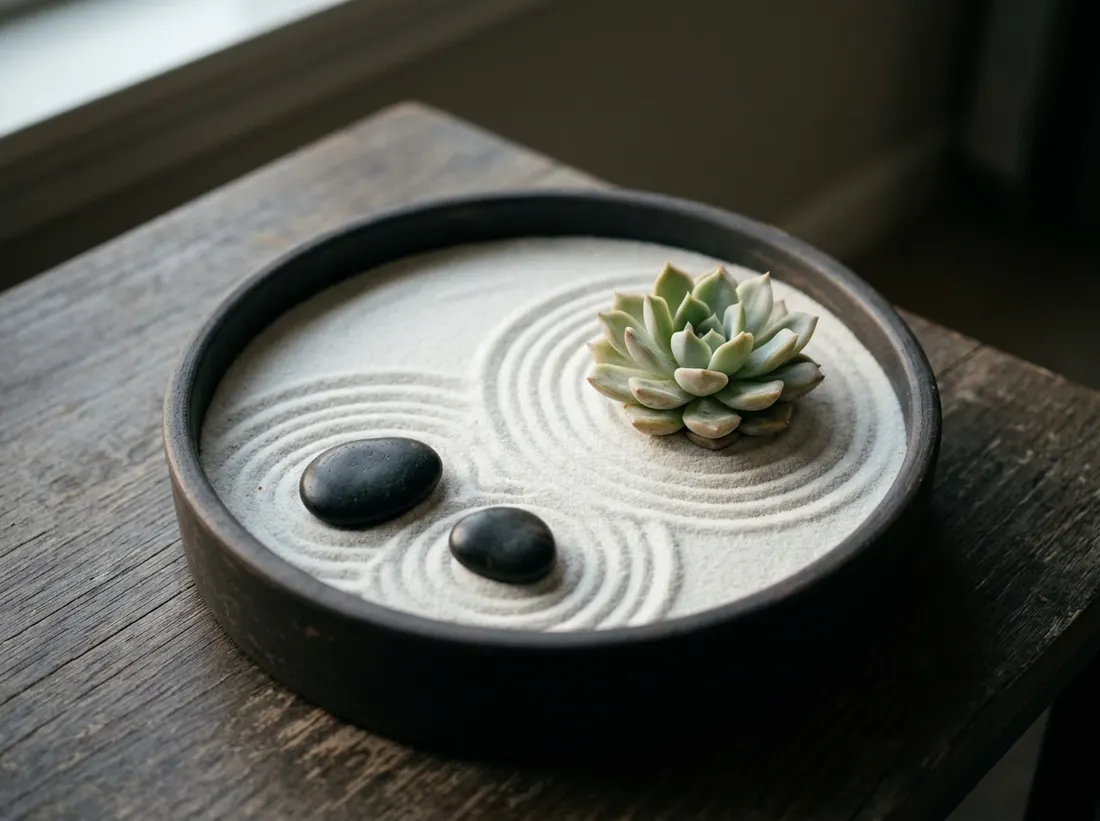
Combining a few small succulents with raked sand and a couple of smooth stones creates a calm, minimal dish garden inspired by Japanese zen gardens, often kept on a desk as a small, tactile centerpiece. Use only one or two plant varieties here so the sand and stone patterns stay the visual focus rather than competing with a crowded planting. This style needs the same light and watering care as a standard succulent dish, just with a much sparser, more deliberate layout.
9. Terrarium-Style Closed Dish Garden
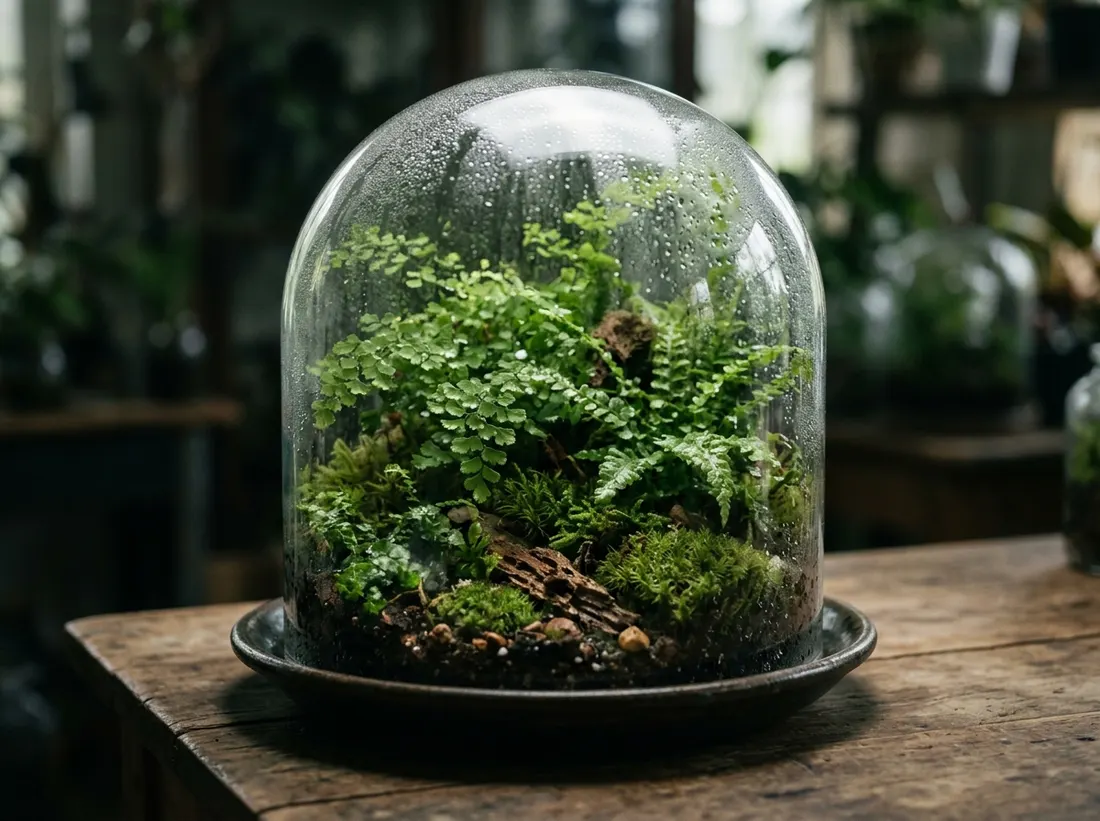
A closed or partially closed dish garden, covered with a glass dome or cloche, creates a humid, self-contained environment that suits moisture-loving plants like ferns, small ivies, and mosses. The enclosed environment recycles its own moisture, so watering needs drop significantly compared to an open dish, sometimes to once every few weeks. Keep this style out of direct sun, since heat builds up quickly under glass and can cook the plants inside on a sunny afternoon.
10. Seasonal Flowering Dish Garden
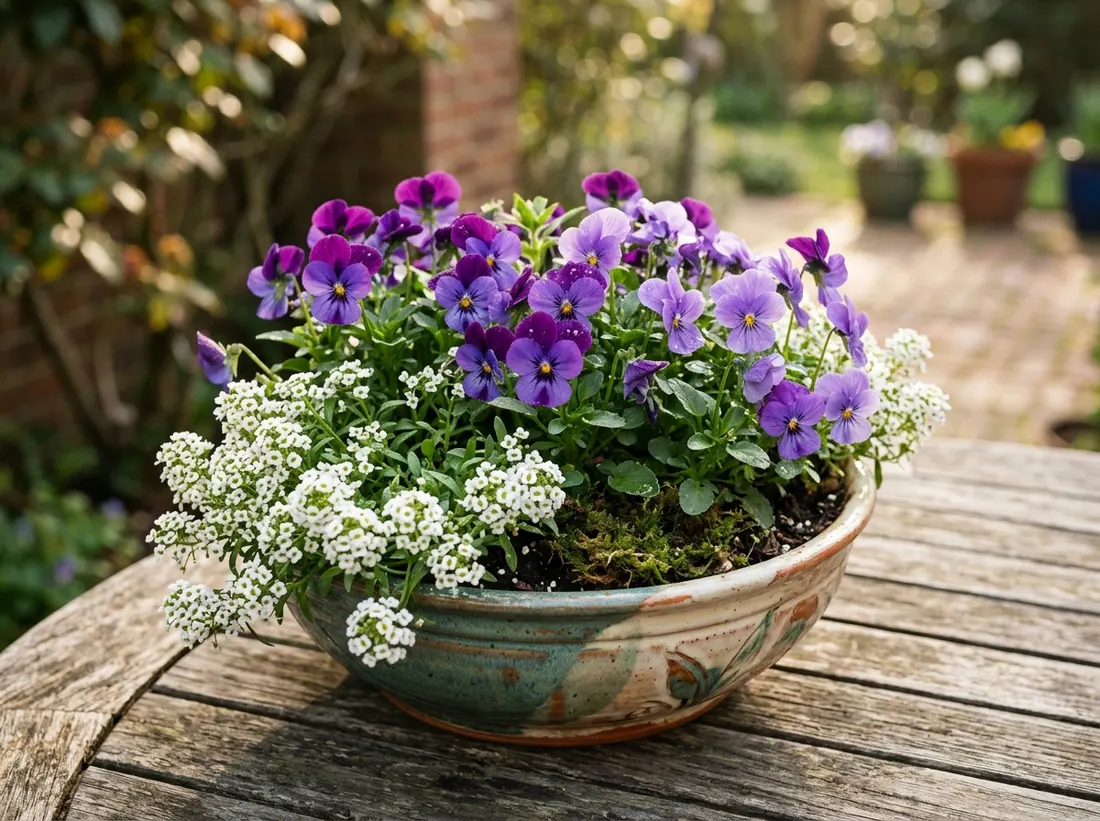
A dish planted with small flowering annuals, miniature violas, dwarf marigolds, or alyssum, adds seasonal color to a porch table or entryway and can be swapped out every few months as flowers fade. Because flowering plants use more energy than succulents or moss, this style needs richer soil and more frequent watering, typically every few days depending on heat and container size. Treat this as a rotating, temporary display instead of a permanent fixture.
11. Bonsai-Style Mini Tree Dish Garden
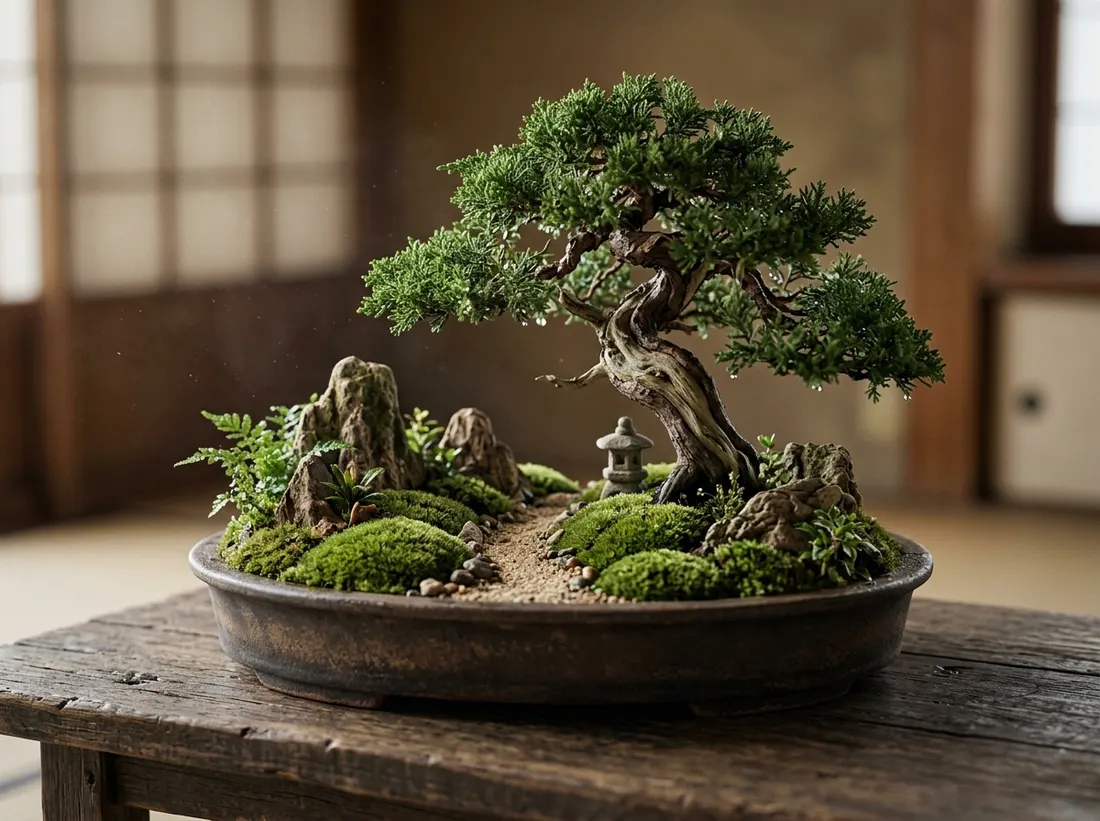
A single small tree, like a dwarf juniper, ficus, or jade plant pruned into a tree-like shape, planted in a shallow dish creates a bonsai-inspired centerpiece that reads as a miniature landscape more than a plant collection. This style takes more patience than others here, since shaping a tree-like form happens gradually through pruning over months or years. Place it in bright, consistent light and water when the top inch of soil dries out, adjusting based on the specific tree species.
12. Tropical Foliage Dish Garden
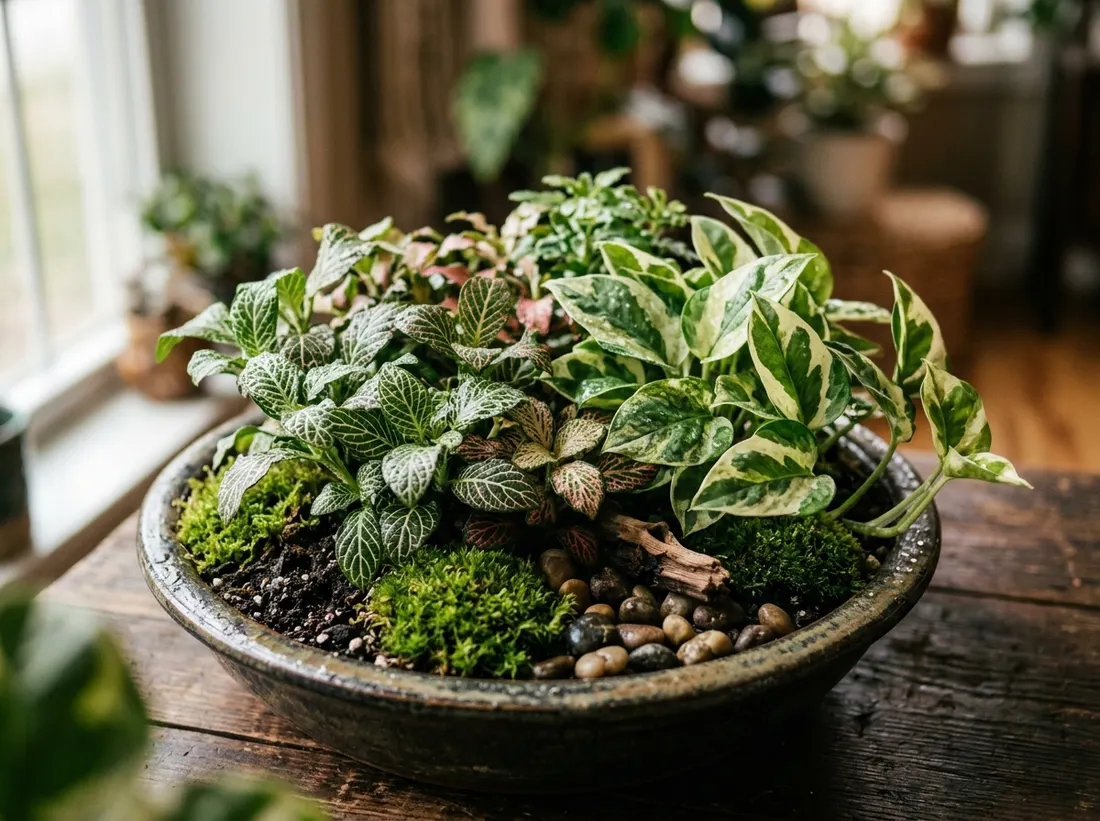
Small tropical plants, like pothos cuttings, miniature peace lily, or nerve plant, arranged in a dish garden bring lush green texture to a home without the sculptural, dry look of a succulent arrangement. These plants prefer higher humidity and more consistent moisture than succulents or cacti, so this style suits a bathroom or kitchen where ambient humidity runs higher. Keep soil evenly moist and avoid direct hot sun, which can scorch thinner tropical leaves.
13. Desert Mixed Dish Garden
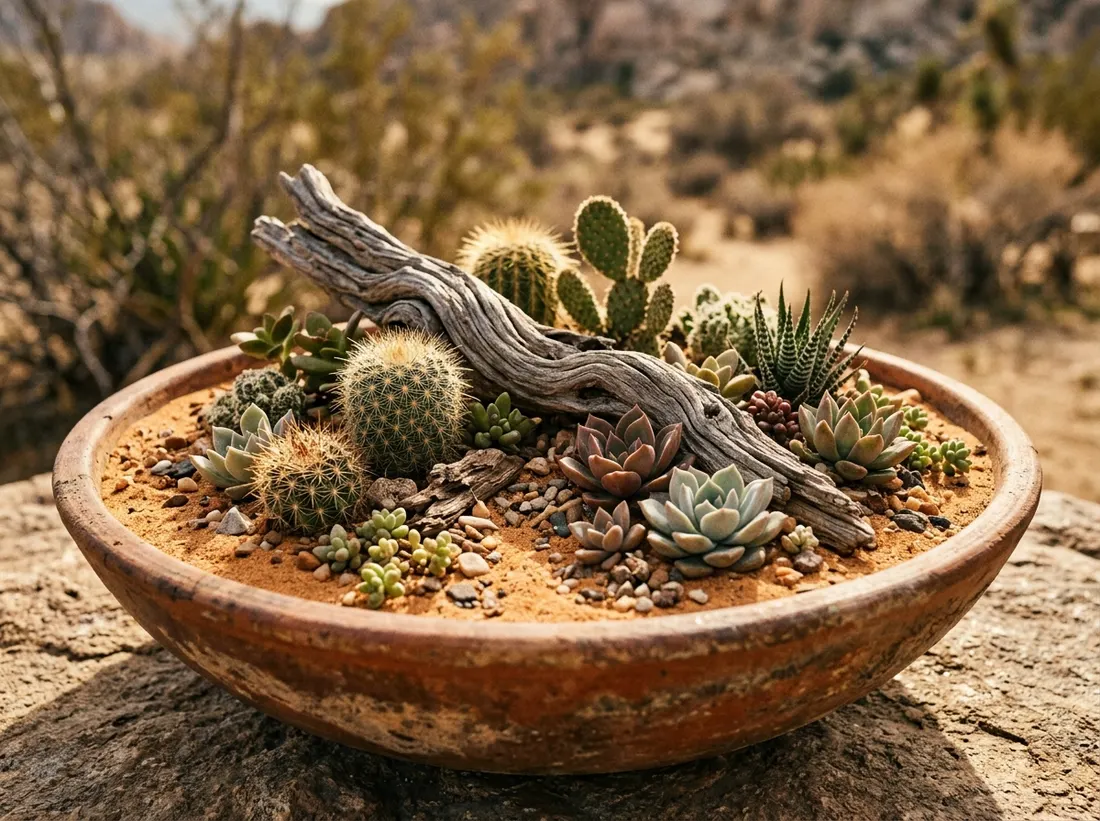
Combining succulents, small cacti, and decorative sand into one dish creates a full desert-landscape look, often finished with a few small rocks or a piece of driftwood for scale and visual interest. Stick to plants with matching water needs, since mixing a thirsty plant into a true desert-style dish leads to overwatering the drought-tolerant varieties around it. This style handles direct sun better than almost any other dish garden type, making it a good fit for a bright south-facing window.
14. Edible Microgreens Dish Garden
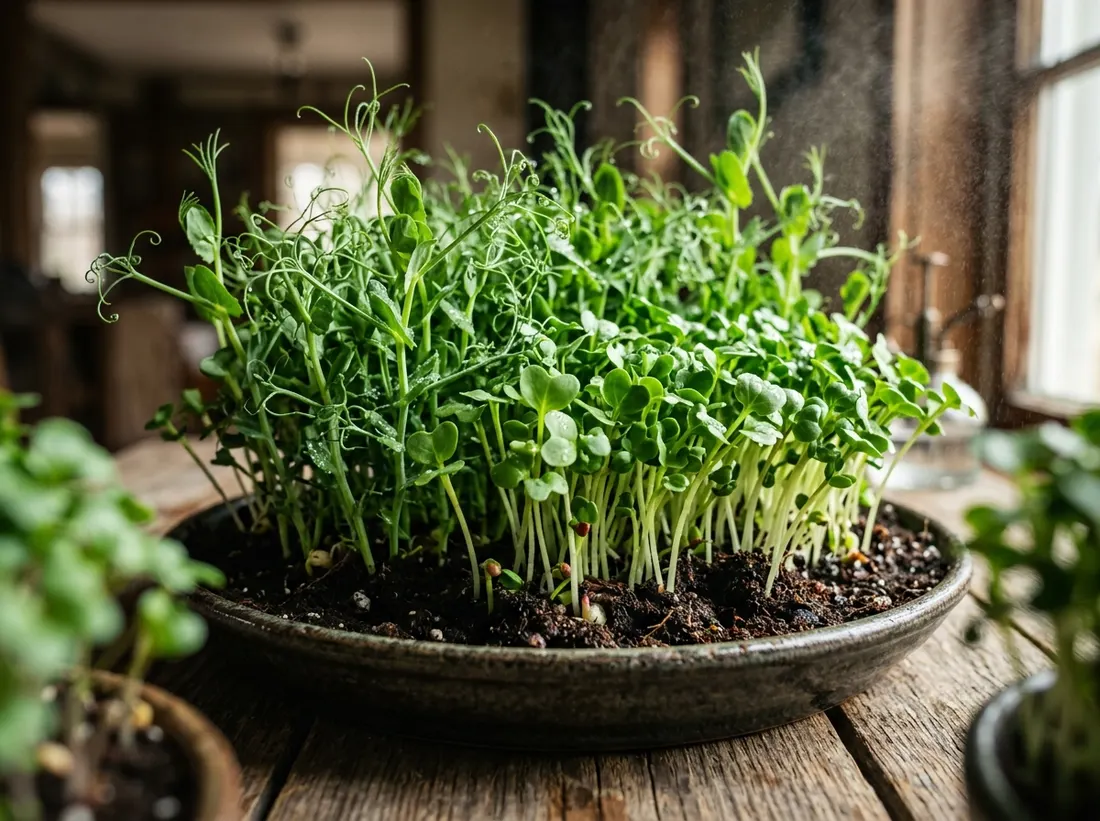
A shallow dish lined with a thin layer of soil and sown thickly with microgreen seeds, radish, pea shoots, or sunflower greens grow especially fast, gives you a harvestable dish garden ready to snip in 7 to 14 days. Keep the soil consistently moist since the shallow depth dries out quickly, and place the dish in bright light, though microgreens don’t need as many direct sun hours as a full-grown vegetable would. This is a short-lived dish garden meant to be replanted often, not kept as a permanent display.
15. Wedding or Gift Dish Garden Arrangement
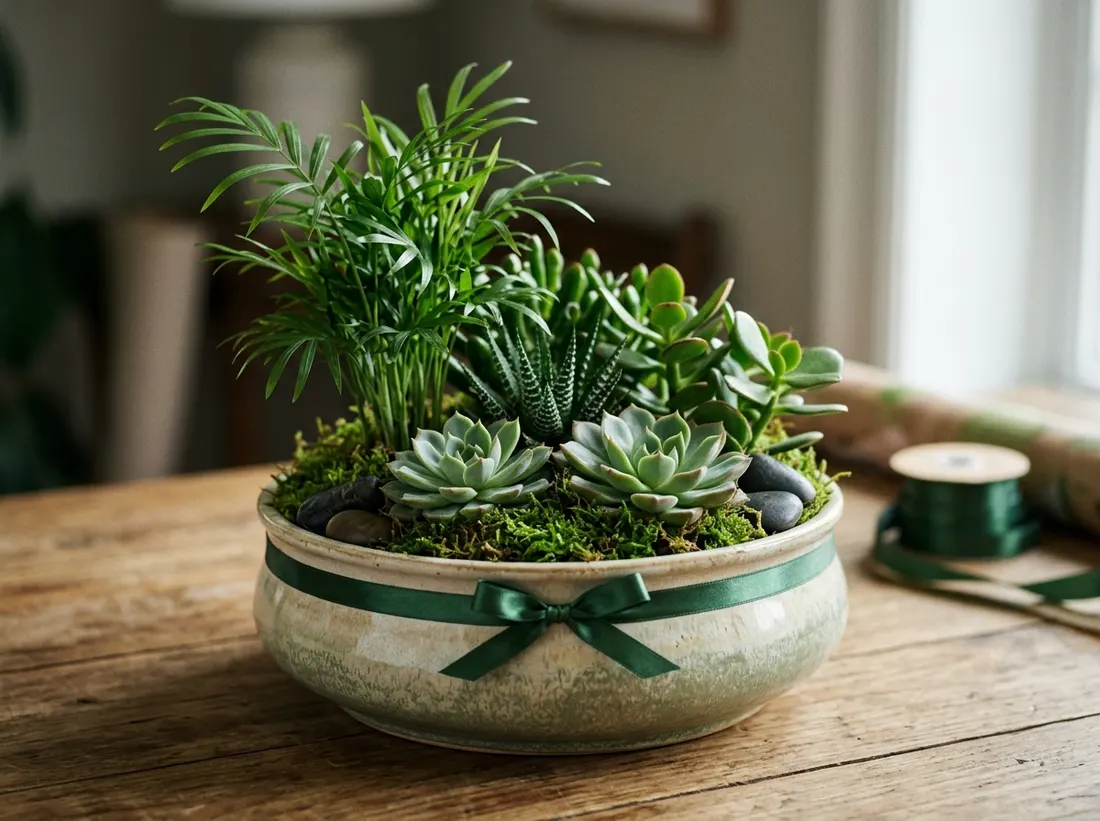
A dish garden made as a gift or event centerpiece typically combines a few easy, long-lasting plants, succulents or small palms, arranged with decorative moss and a ribbon or card tucked into the container. Choose low-maintenance plants for this style specifically, since the recipient may not have detailed care instructions on hand, and label the dish with basic watering guidance if you’re giving it as a gift. This is one of the more decorative, less functional dish garden styles, built mainly for visual impact and easy care.
Conclusion
Dish gardening ideas let you fit a real, tended garden into a single shallow container, whether that means a low-maintenance succulent bowl, a moody moss dish, or a fairy garden your kids help design. Matching the style to your light and how much care you actually want to give is the main decision, since a cactus dish and a closed terrarium have almost opposite watering needs. Pick one style to start with rather than trying every idea in this list at once, and let the small scale of a dish garden make it easy to experiment without much cost or commitment.
Frequently Asked Questions
What is a dish garden and how is it different from a regular potted plant?
A dish garden is a shallow, wide container holding several small plants arranged together as one composed miniature scene, unlike a single plant grown alone in a standard pot. The shallow depth and grouped planting are what set it apart, since a dish garden is designed to be viewed as a whole arrangement, not as individual plants. This makes dish gardens well suited to desks, tables, and windowsills where a taller potted plant wouldn’t fit as naturally.
How often should I water a dish garden?
Watering frequency depends entirely on the plant type: succulent and cactus dish gardens need water only every 1 to 2 weeks once the soil dries out completely, while moss, tropical foliage, and flowering dish gardens need consistent moisture every few days. Because a dish garden’s shallow container holds less soil than a standard pot, it dries out faster overall, so check moisture more often than you would for a deeper potted plant.
Can I mix succulents and other plants in the same dish garden?
You can, but only if the plants share similar water and light needs, since mixing a thirsty tropical plant with a drought-tolerant succulent leads to overwatering one or underwatering the other. Succulents pair well with cacti and other drought-tolerant varieties in one dish, while moisture-loving plants like ferns and small ivies pair better together in a separate arrangement. Matching needs first prevents the most common reason a mixed dish garden struggles.
Do dish gardens need drainage holes?
A dish garden with drainage holes is easier to keep healthy long-term, since excess water can escape instead of pooling around the roots. If your chosen dish has no holes, add a bottom layer of gravel or activated charcoal before adding soil, and water more carefully in smaller amounts to avoid waterlogging. Succulent and cactus dish gardens are especially sensitive to trapped moisture, so drainage matters even more for those styles than for moisture-loving plants.
How long do dish gardens typically last?
A well-maintained succulent, cactus, or moss dish garden can last a year or more with basic care, since these plants grow slowly and don’t quickly outgrow a shallow container. Flowering and microgreen dish gardens are shorter-lived by design, often replaced every few weeks to a few months as flowers fade or greens get harvested. Eventually, most dish gardens need repotting or replanting once roots fill the limited soil space.
What is the easiest dish garden idea for a beginner?
A succulent dish garden is generally the easiest starting point, since succulents tolerate shallow soil, infrequent watering, and the kind of minor neglect a first attempt often involves. A moss dish garden is a close second for low-light spaces, since it needs no fertilizing and forgives inconsistent care better than flowering or tropical styles. Starting with a small, hardy plant selection builds confidence before attempting a more delicate style like a terrarium or bonsai dish.