
21 Large Vegetable Garden Layout Ideas That Actually Work
Once a vegetable garden grows past a few raised beds, the rules change completely. What works for a small backyard plot, tight rows, hand watering, a single compost pile, stops working the moment you’re managing a quarter acre or more. I’ve found that the biggest mistake people make when scaling up is just repeating their small-garden layout at a larger size instead of rethinking it for equipment access, irrigation runs, and crop rotation across bigger zones. A large vegetable garden layout needs wider paths for a wheelbarrow or a small tiller, planning for windbreaks if your site is exposed, and a rotation plan that spans multiple beds or blocks rather than a single row swap each year. This list covers layout ideas built specifically for bigger plots, whether that’s a homestead, a rural half-acre, or a suburban yard where you’ve finally got the room to go big. Some of these ideas work together, others are alternative approaches to the same problem, so pick what fits your site, your equipment, and how much of this you’re managing solo.
1. Plan Wide Rows for Equipment Access
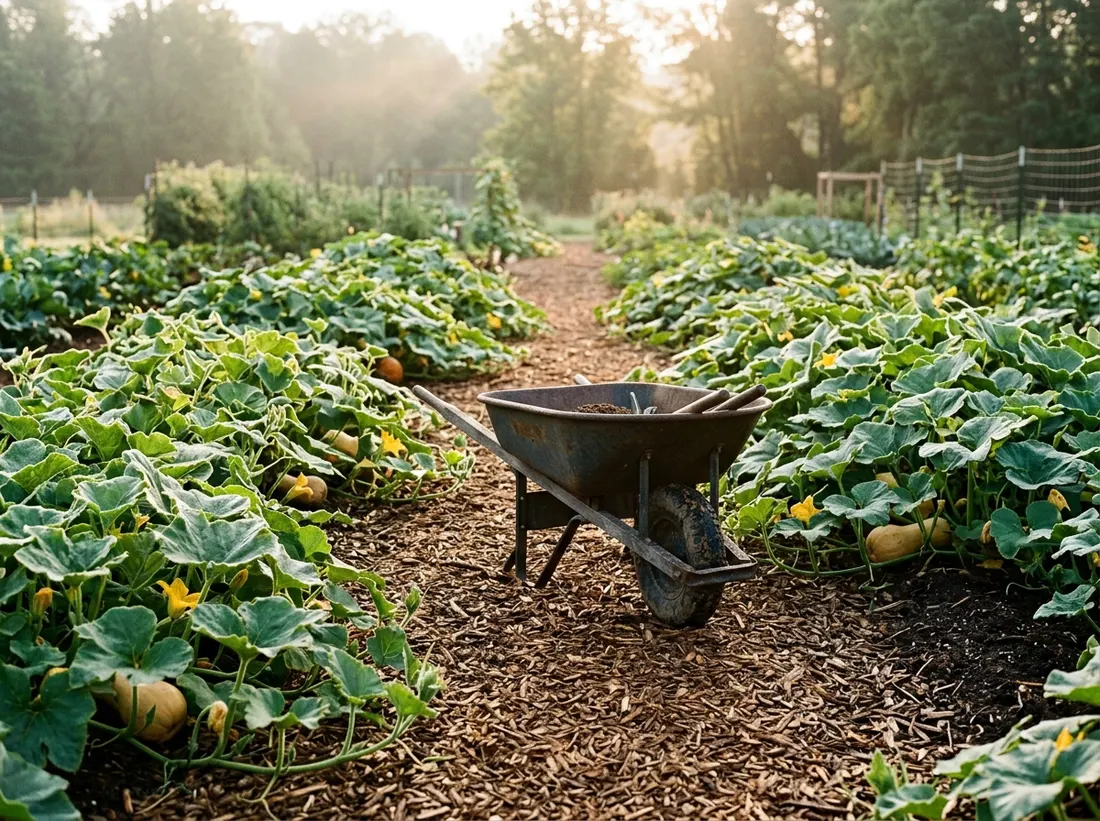
Rows spaced 36 to 48 inches apart, instead of the 18 to 24 inches typical of small gardens, leave enough room for a wheelbarrow, garden cart, or walk-behind tiller to pass without damaging plants. This spacing matters most for sprawling crops like squash, melons, and pumpkins, which need the extra width anyway once vines spread. Measure your equipment’s actual width before finalizing row spacing, since a cart that’s 30 inches wide needs more than a 30-inch path to turn.
2. Divide the Garden Into Rotation Zones
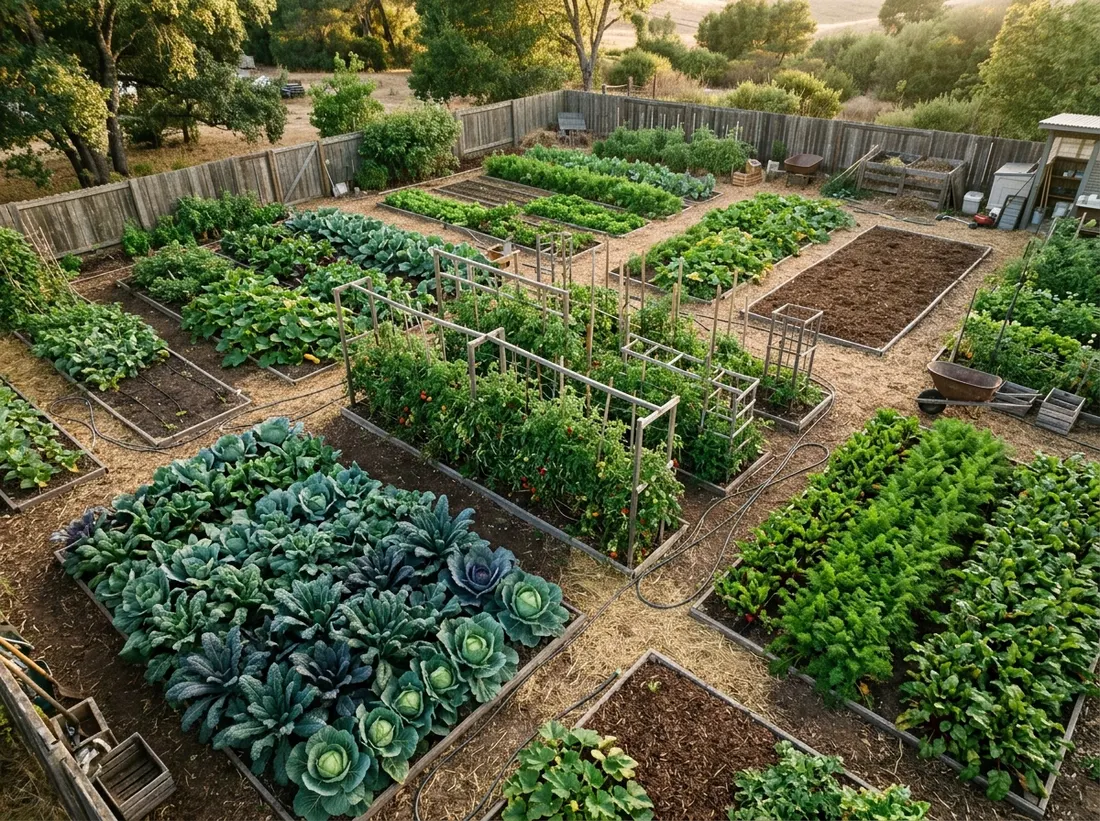
Split a large plot into four or more distinct zones, each rotating through a different crop family, brassicas, legumes, nightshades, roots, on a multi-year cycle. This breaks the disease and pest buildup that happens when the same family grows in the same soil year after year. Map the zones on paper or a simple spreadsheet before spring planting, and track which zone grew what the previous two to three years so the rotation stays accurate.
3. Build a Central Access Path Down the Middle
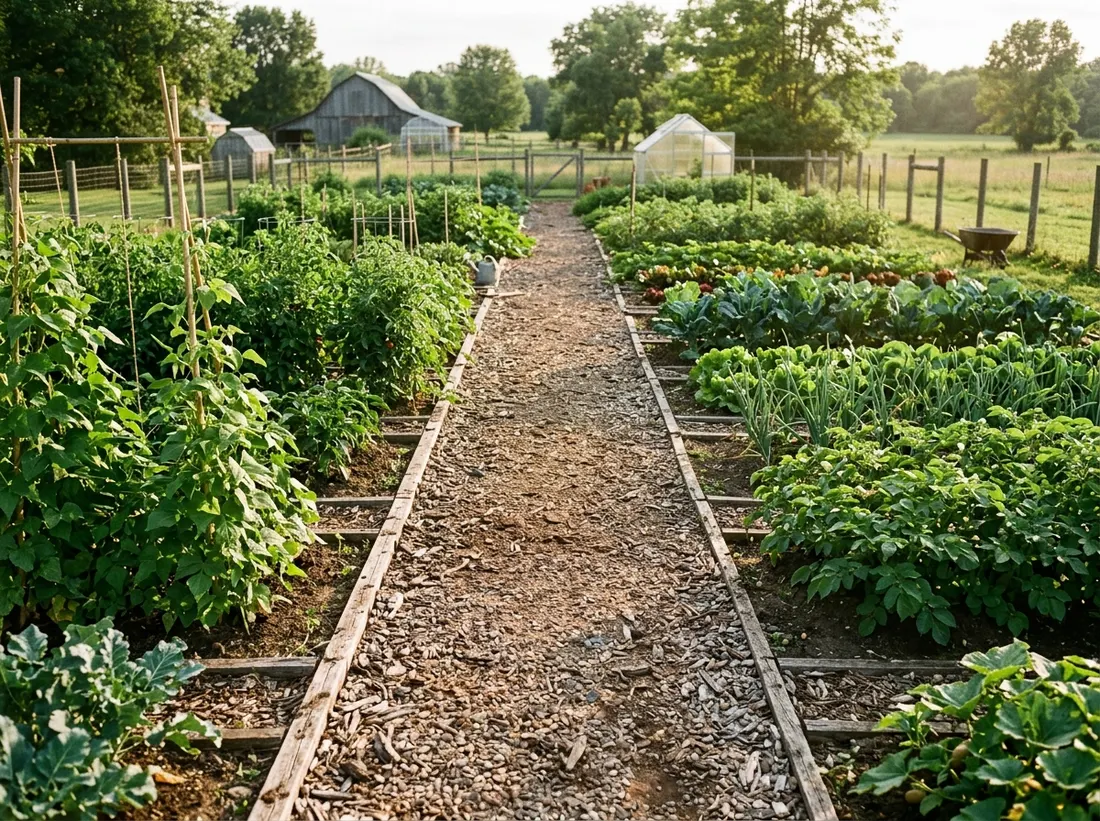
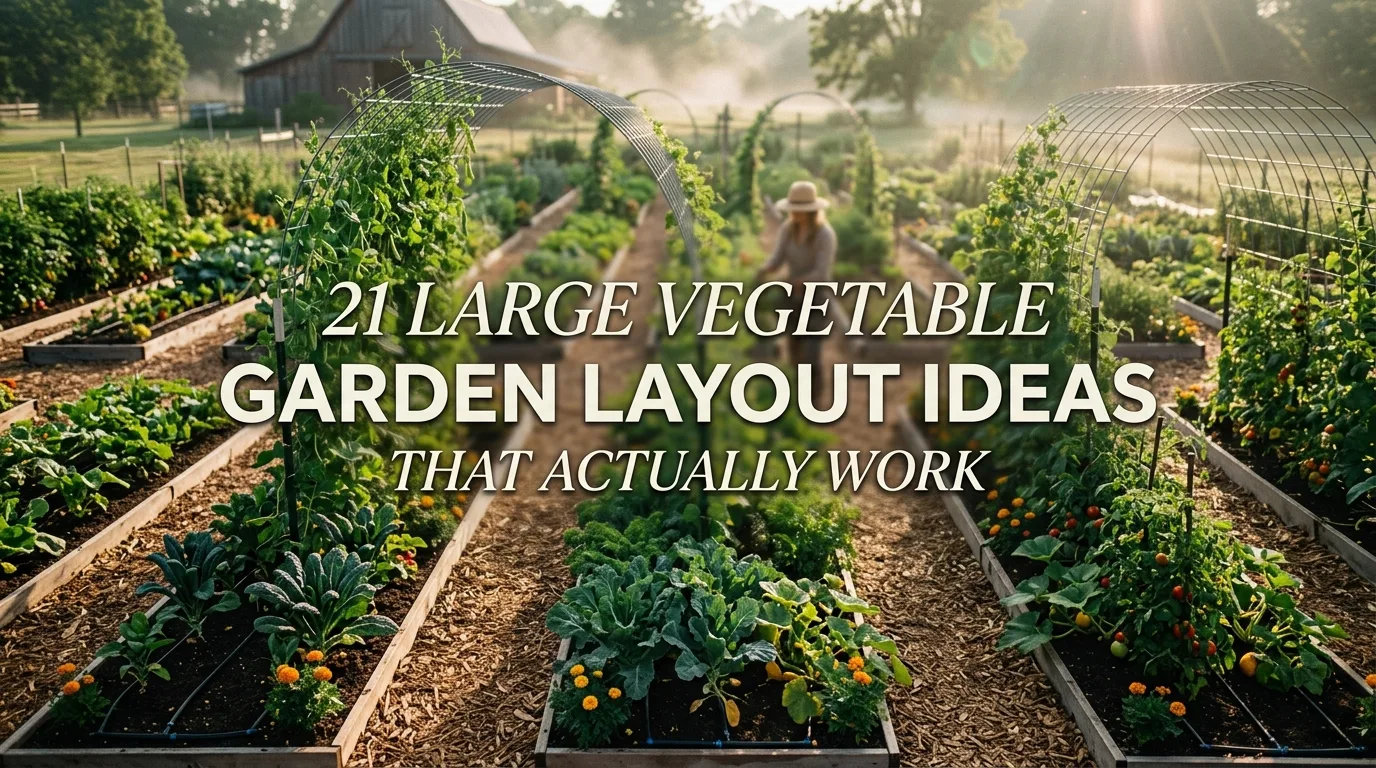
A single main path, at least four feet wide, running down the center of the garden gives you a direct route to every bed without cutting across planted rows. This central spine works well with beds or rows branching off perpendicular to it, similar to a comb pattern. Gravel, wood chips, or packed gravel dust all hold up well to repeated foot and cart traffic better than bare soil, which compacts and turns muddy.
4. Install Drip Irrigation Zones Instead of Hand Watering
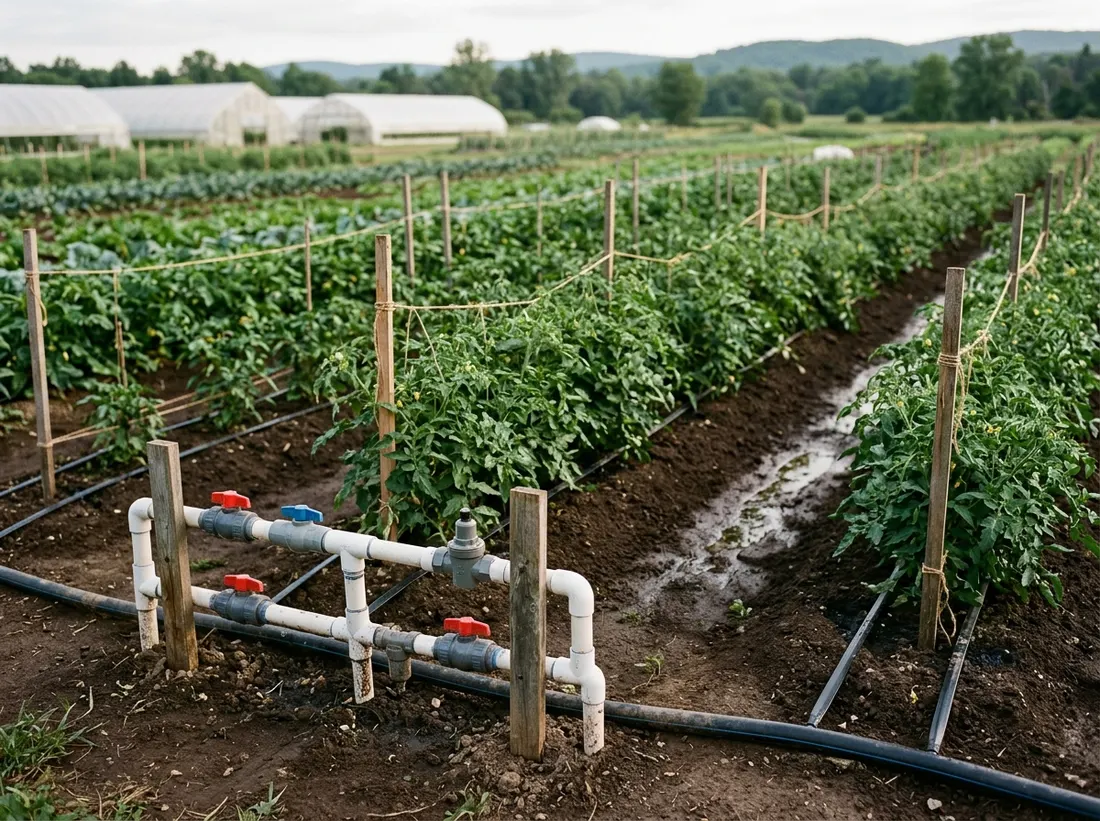
At scale, hand watering becomes unrealistic within a season or two. Lay drip tape or soaker hose along each row, grouped into zones you can run separately with timer-controlled valves, so heavy-water crops like squash and tomatoes get more frequent runs than drought-tolerant herbs or beans. A basic zoned system for a half-acre garden typically needs a pressure regulator, a filter, and a manifold to split the main line into individual zone valves.
5. Add a Windbreak Along the Exposed Side
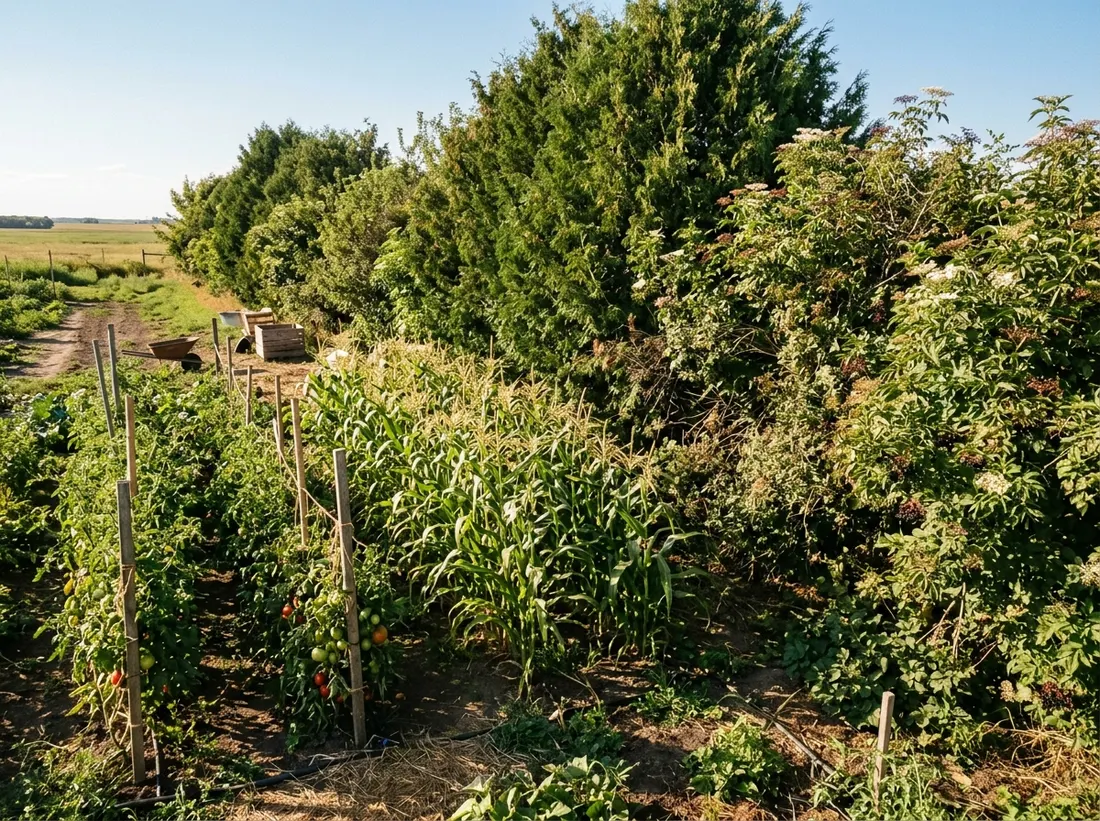
Exposed rural and suburban plots lose moisture faster and suffer more wind damage to tall crops like corn and staked tomatoes. A row of shrubs, a section of fencing, or even a temporary burlap screen on the prevailing wind side cuts wind speed for a distance roughly ten times the windbreak’s height. Plant a living windbreak, like a row of arborvitae or elderberry, at least a season ahead so it has time to establish before it needs to do its job.
6. Use Block Planting Instead of Single Rows
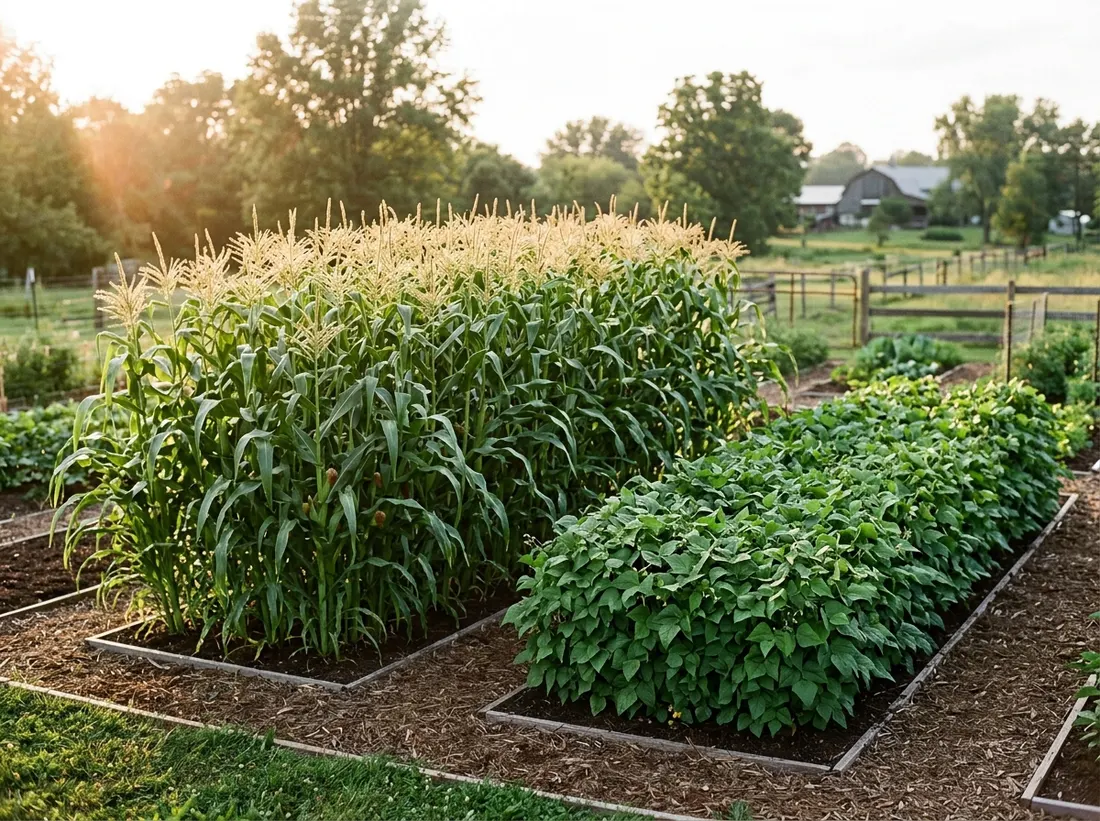
Rather than one long row per crop, group each vegetable into a rectangular block, several rows wide, that you plant and harvest as one unit. Blocks make crop rotation simpler to track, improve pollination for crops like corn that pollinate better in blocks than in thin rows, and let you run drip zones or row covers over a defined area instead of piecing together odd-shaped coverage.
7. Reserve a Section for Succession Planting
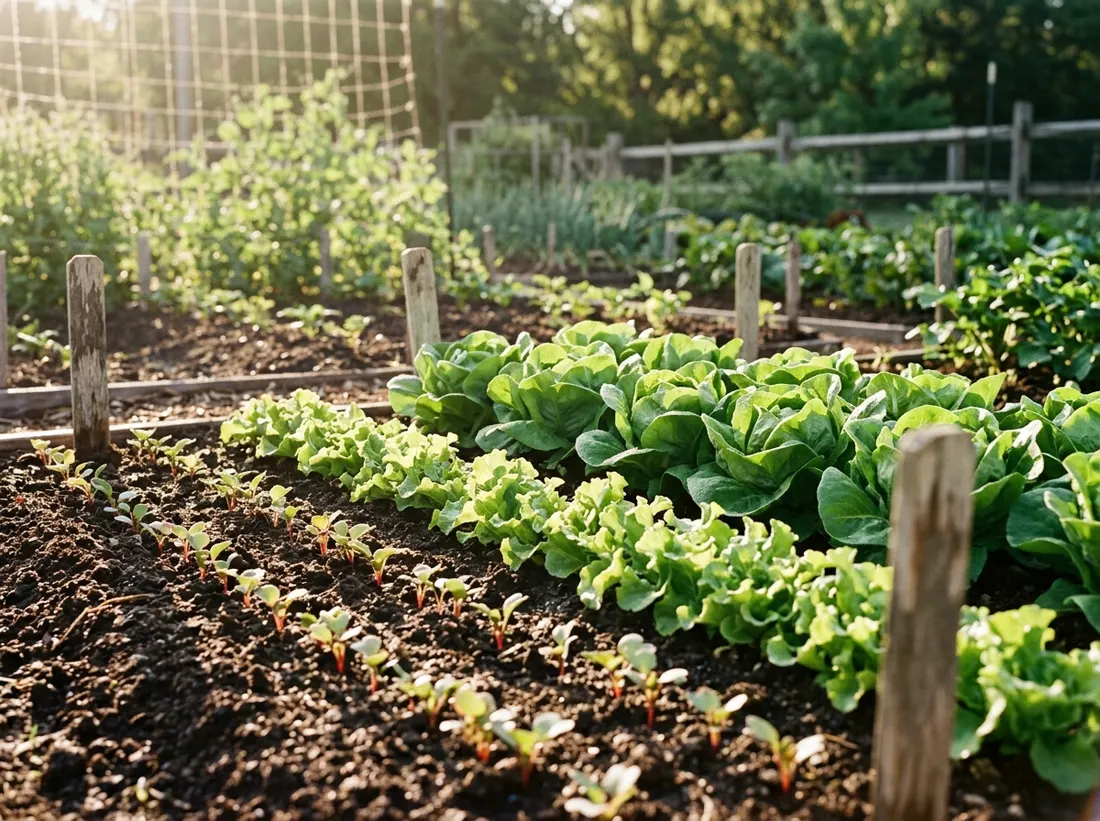
Dedicate one zone specifically to fast-maturing crops, like lettuce, radishes, bush beans, and spinach, that you replant every two to three weeks through the season. Keeping succession crops in one predictable area makes it easier to track what’s ready to pull and what needs reseeding, instead of hunting through a mixed bed for the next harvest window.
8. Plan Large-Scale Companion Planting Blocks
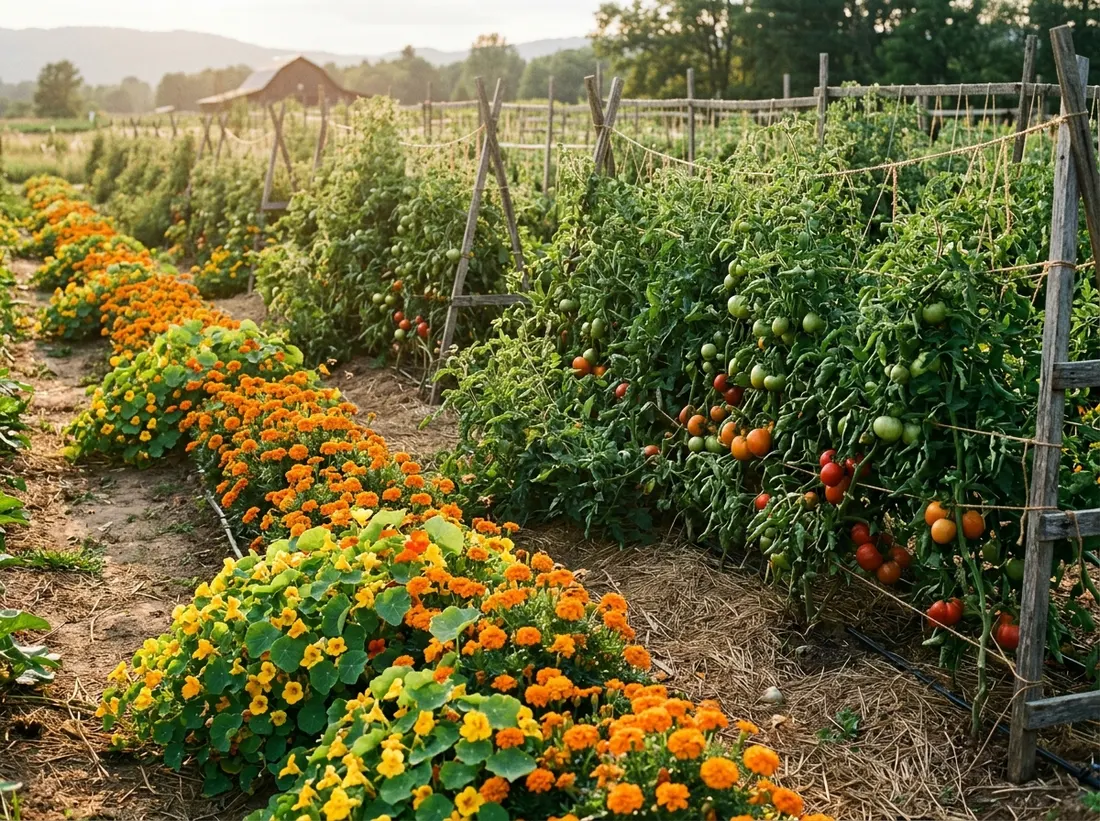
Companion planting works differently at scale than it does in a four-by-four raised bed. Instead of tucking a few marigolds between tomato plants, plant an entire border row of marigolds or nasturtiums along a block’s edge to draw pests away from the main crop. Interplant pollinator-friendly flowering rows, like zinnias or sunflowers, between vegetable blocks every 20 to 30 feet to support pollination across the whole garden rather than one bed at a time.
9. Group Perennial Crops in a Permanent Bed
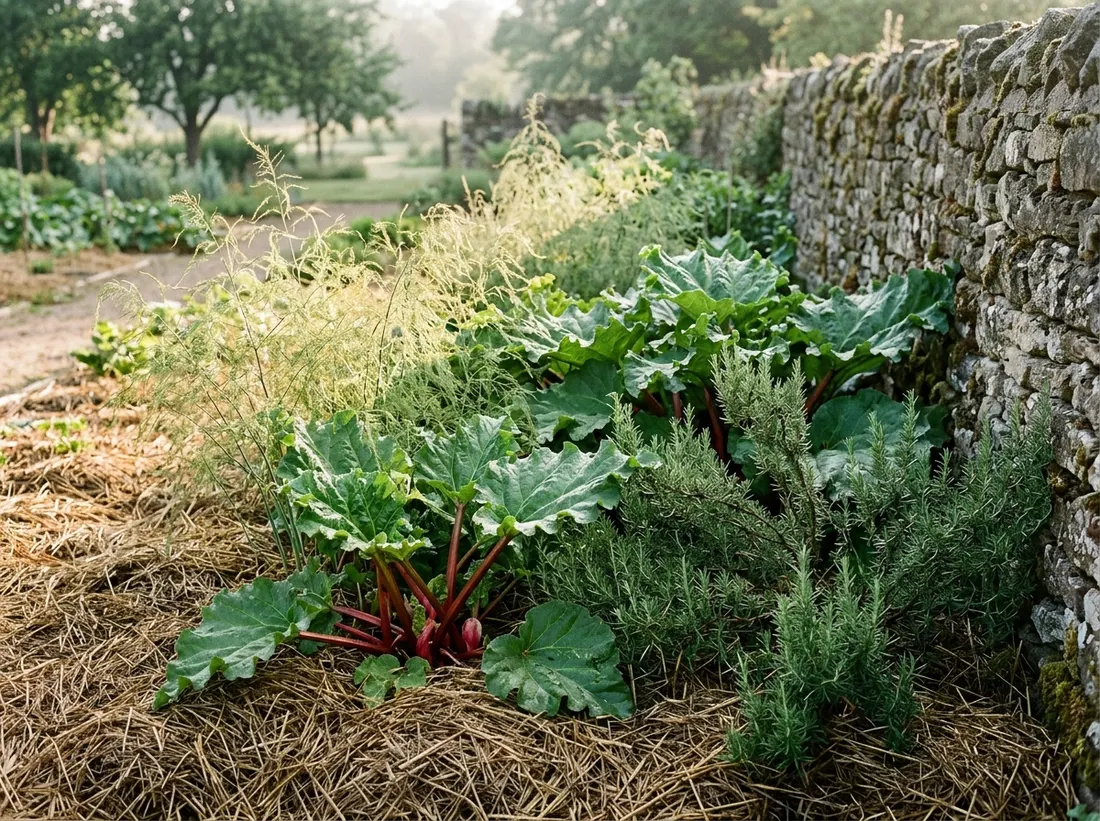
Asparagus, rhubarb, and perennial herbs need a spot that never gets tilled or rotated, since they stay productive in the same soil for years. Set aside a dedicated permanent bed, ideally along one edge of the garden where it won’t interfere with annual rotation zones, and mulch it heavily to cut down on the weeding these long-term beds otherwise demand.
10. Add a Trellis Row for Vining Crops
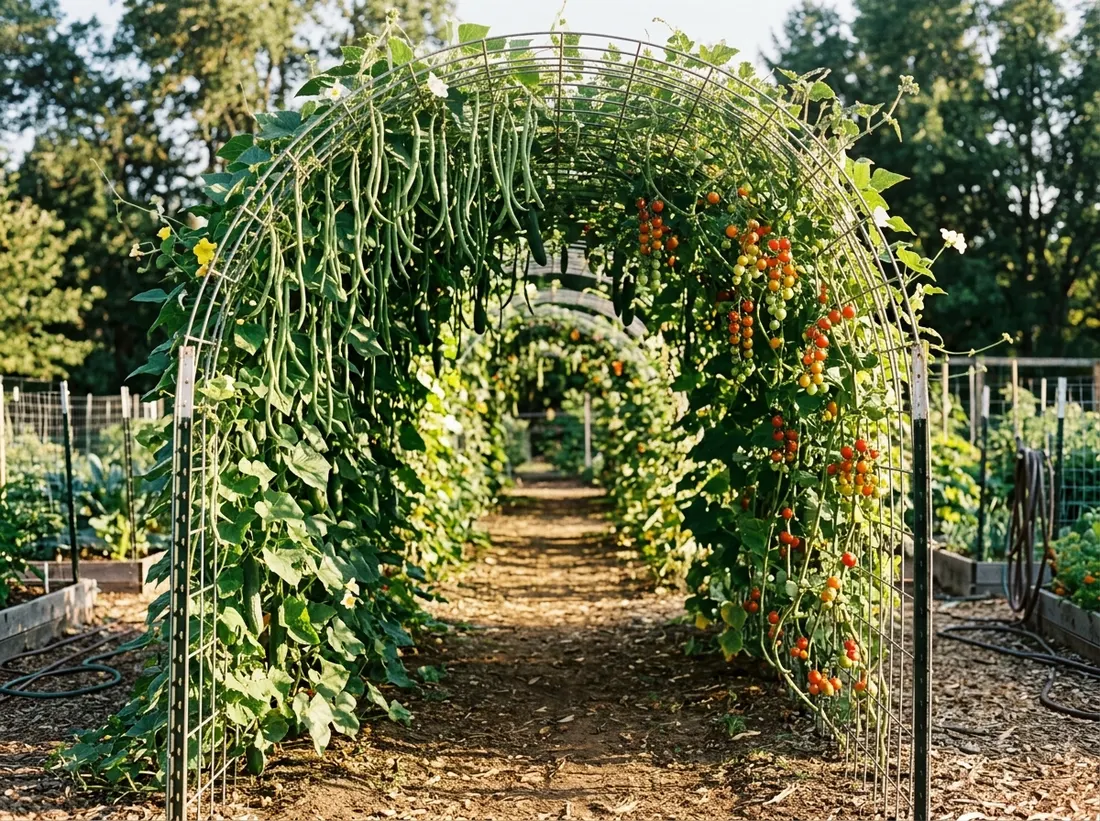
A single long trellis row, running north to south so it doesn’t shade neighboring crops for most of the day, handles pole beans, cucumbers, and indeterminate tomatoes without letting them sprawl across ground space you’d rather use for something else. Cattle panel arches or a simple wire-and-post trellis both work at scale and can span 20 feet or more in one continuous run, which is far more efficient to build than a dozen small individual trellises.
11. Set Up a Dedicated Composting Area
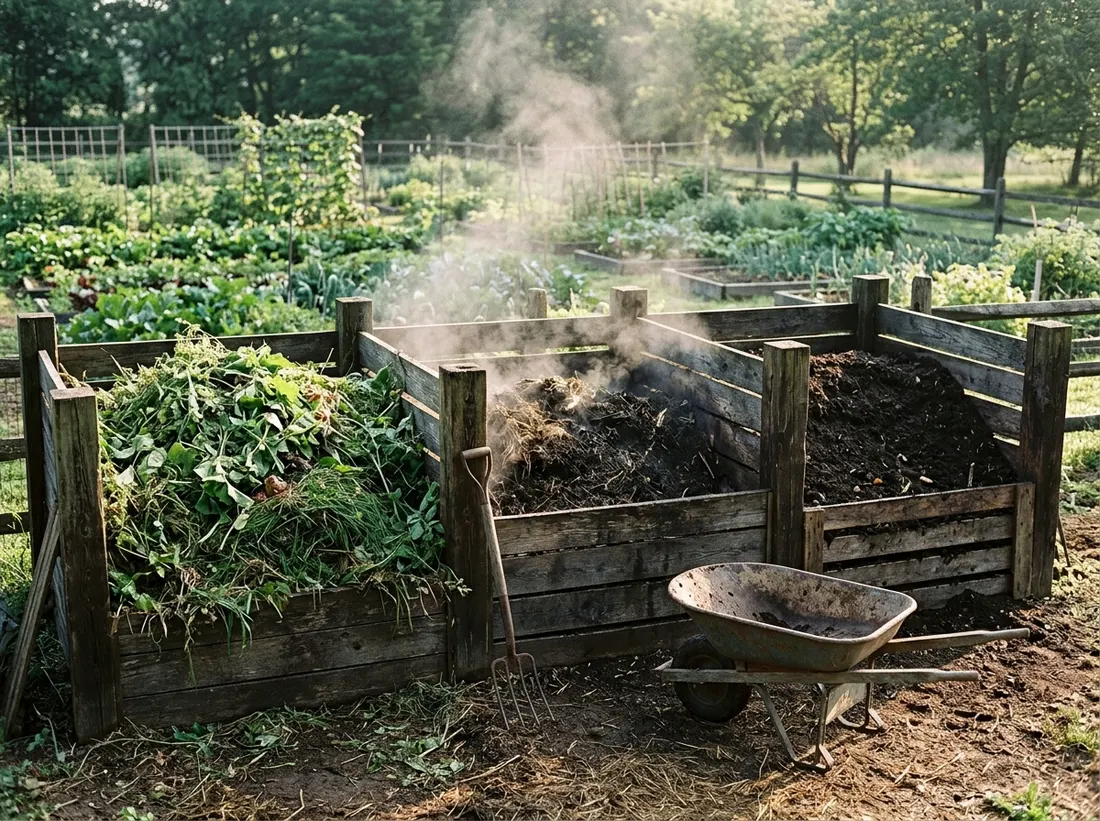
A large garden generates enough plant waste to justify a real composting system, three connected bins or a long windrow, rather than a single small tumbler. Locate it at the edge of the garden, close enough to wheelbarrow finished compost to any bed but far enough that turning it doesn’t disturb planted rows. Plan for at least one bin actively cooking, one curing, and one you’re currently filling, so finished compost is always ready when a bed needs it.
12. Map Sun Exposure Across the Whole Plot
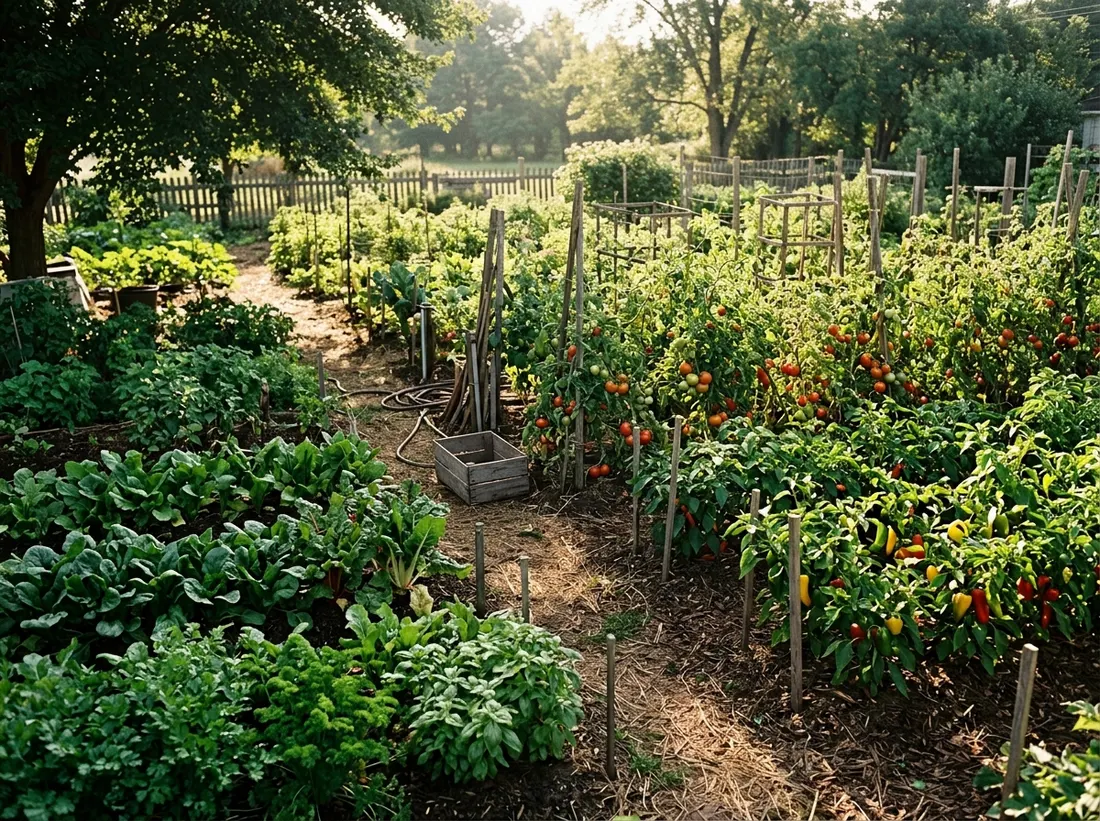
A large plot rarely gets uniform sun across its entire area once trees, buildings, or slopes come into play. Walk the site at a few points during the day, morning, midday, and late afternoon, and sketch where shade falls. Place sun-hungry crops like tomatoes, peppers, and corn in the consistently sunniest zones, and use partially shaded areas for leafy greens and herbs that tolerate four to six hours of direct sun instead of the eight-plus that fruiting crops need.
13. Build Raised Rows Instead of Raised Beds
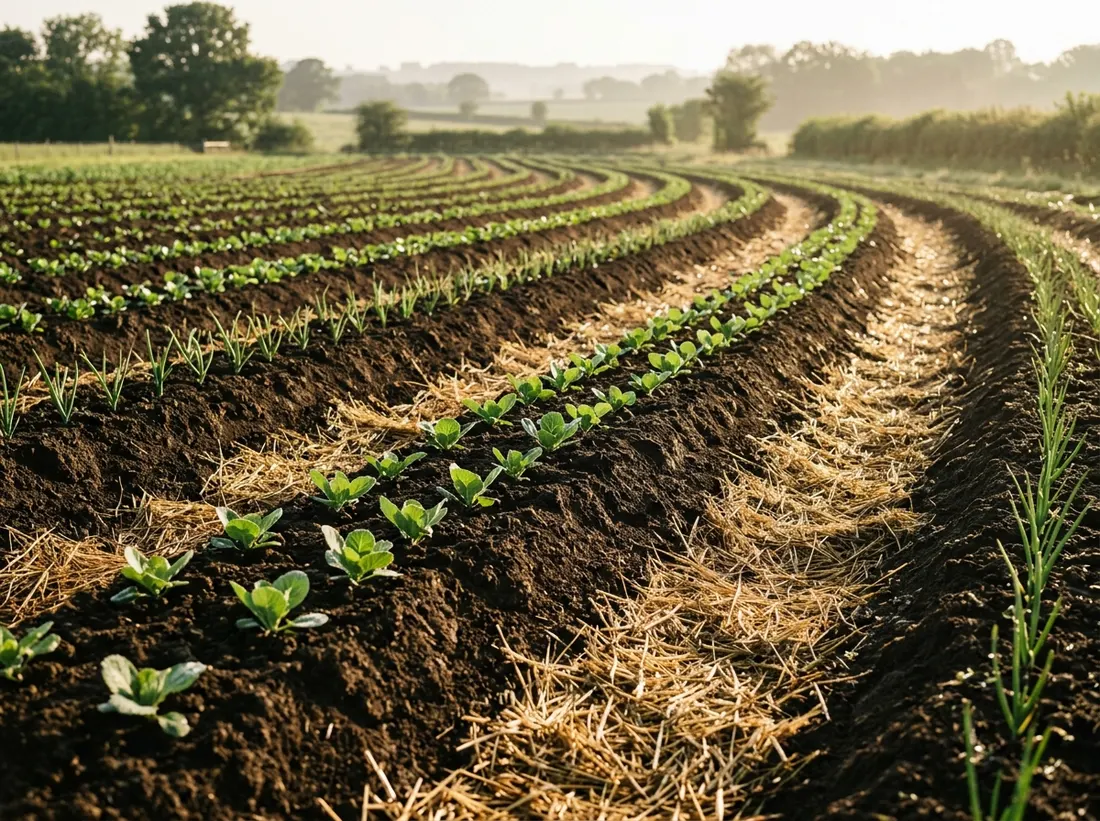
For plots too large to justify framed raised beds, mound soil into raised rows, roughly 8 to 10 inches high and 24 to 30 inches wide, using a hoe, a broadfork, or a tractor-mounted bedder if you have access to one. Raised rows drain better than flat ground in wet climates and warm up faster in spring, without the material cost of lumber for dozens of framed beds.
14. Reserve Headland Space for Turning Equipment
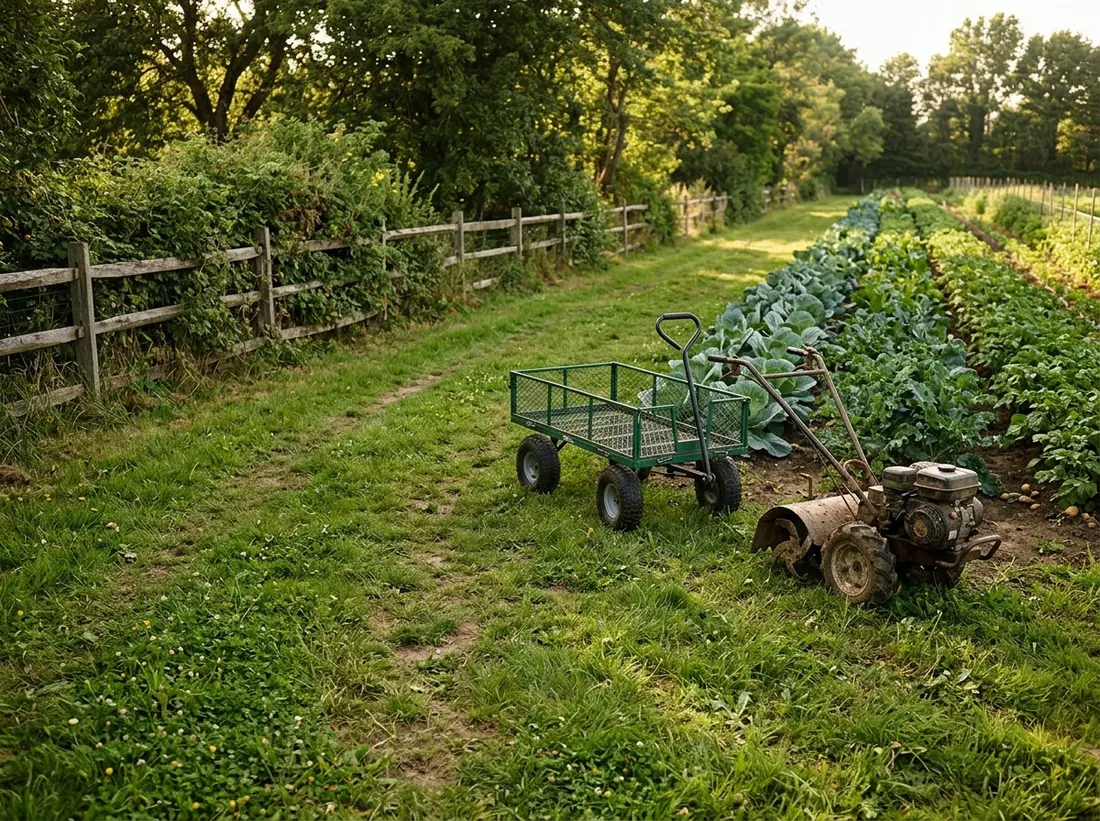
If you’re using a tiller, small tractor, or even a wheelbarrow with a wide turning radius, leave a clear headland, an unplanted strip at least 6 to 8 feet wide, along one end of the garden. This gives equipment room to turn around without driving over planted rows. Skipping this step is one of the most common large-garden planning mistakes, since it only becomes obvious the first time you try to turn a loaded cart at the end of a row.
15. Zone the Garden by Water Needs
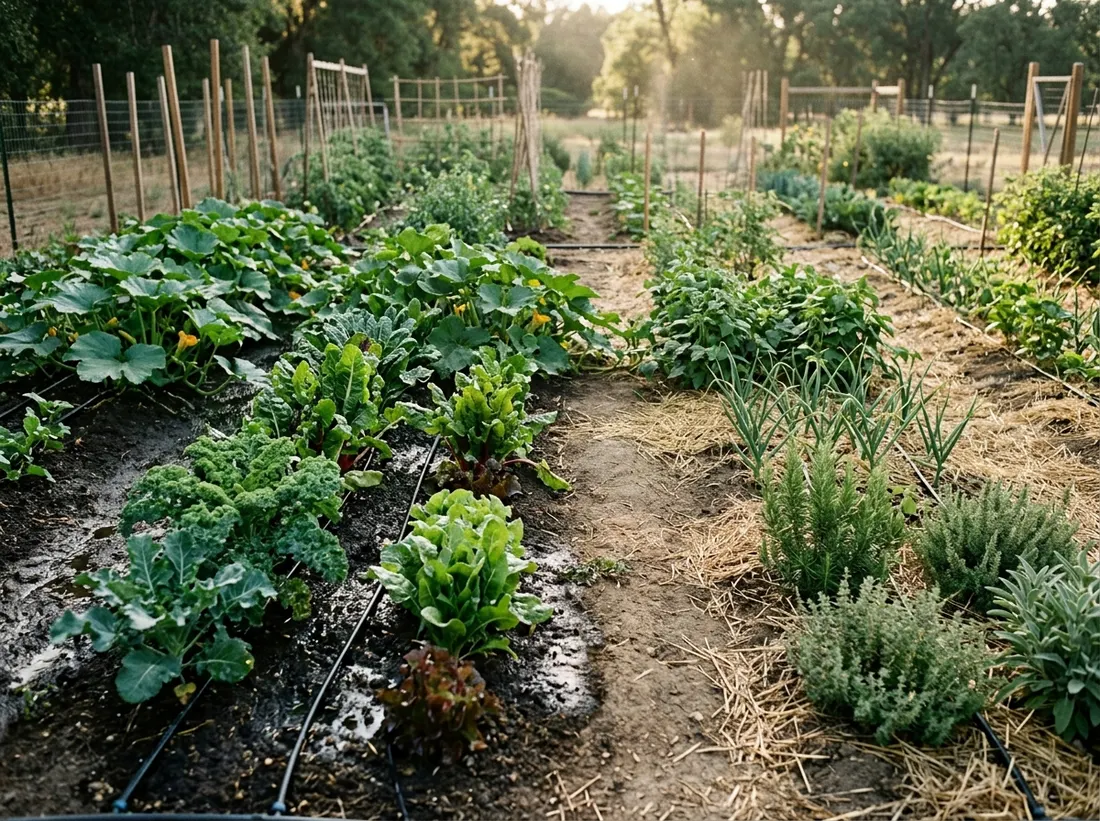
Group crops with similar water requirements into the same section so irrigation zones match plant needs instead of watering everything on one schedule. Squash, melons, and leafy greens generally need more frequent water than root crops, herbs, and most beans. This zoning cuts water waste and makes it far easier to troubleshoot a struggling section, since you know immediately whether it’s on the right irrigation zone.
16. Add a Cut Flower Row for Pollinators and Cutting
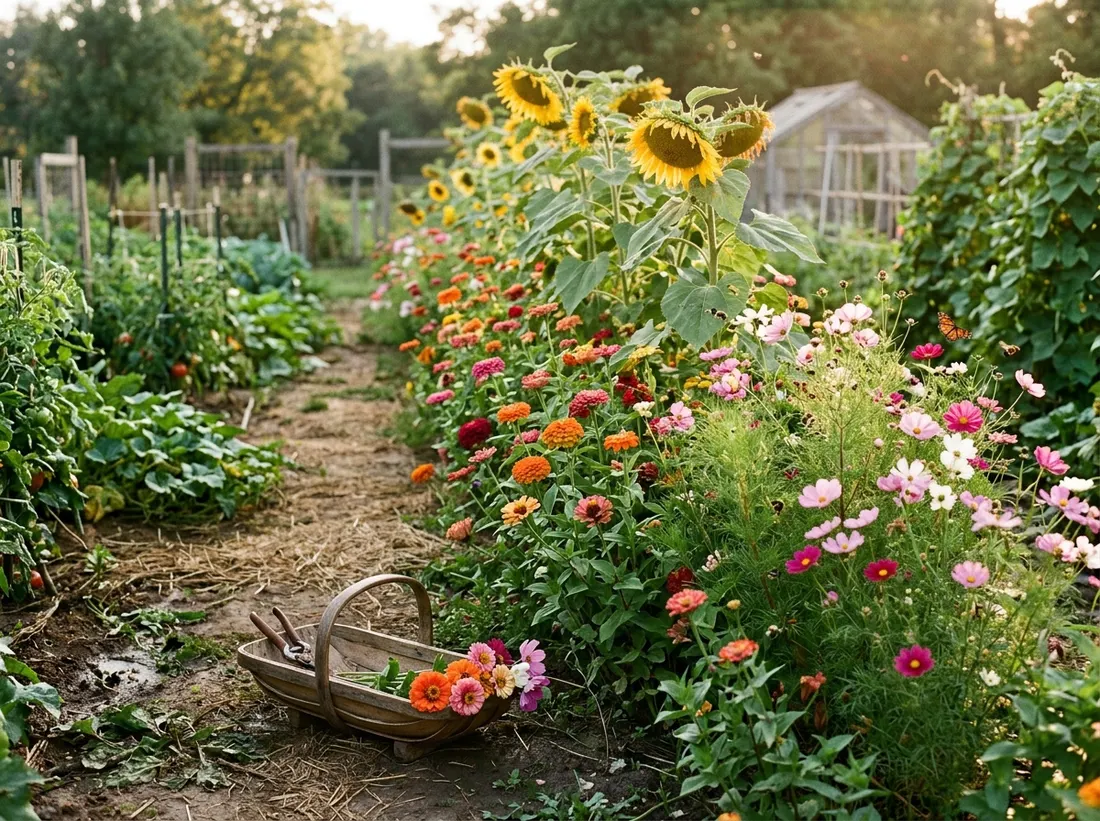
A dedicated row of zinnias, cosmos, or sunflowers does double duty, drawing pollinators to the whole garden while giving you flowers to cut for the house. Place it along a main path where it’s easy to reach and doesn’t compete with vegetable blocks for the best soil, since most cut flowers tolerate less-than-ideal soil better than fruiting vegetables do.
17. Build in a Fallow or Cover Crop Section
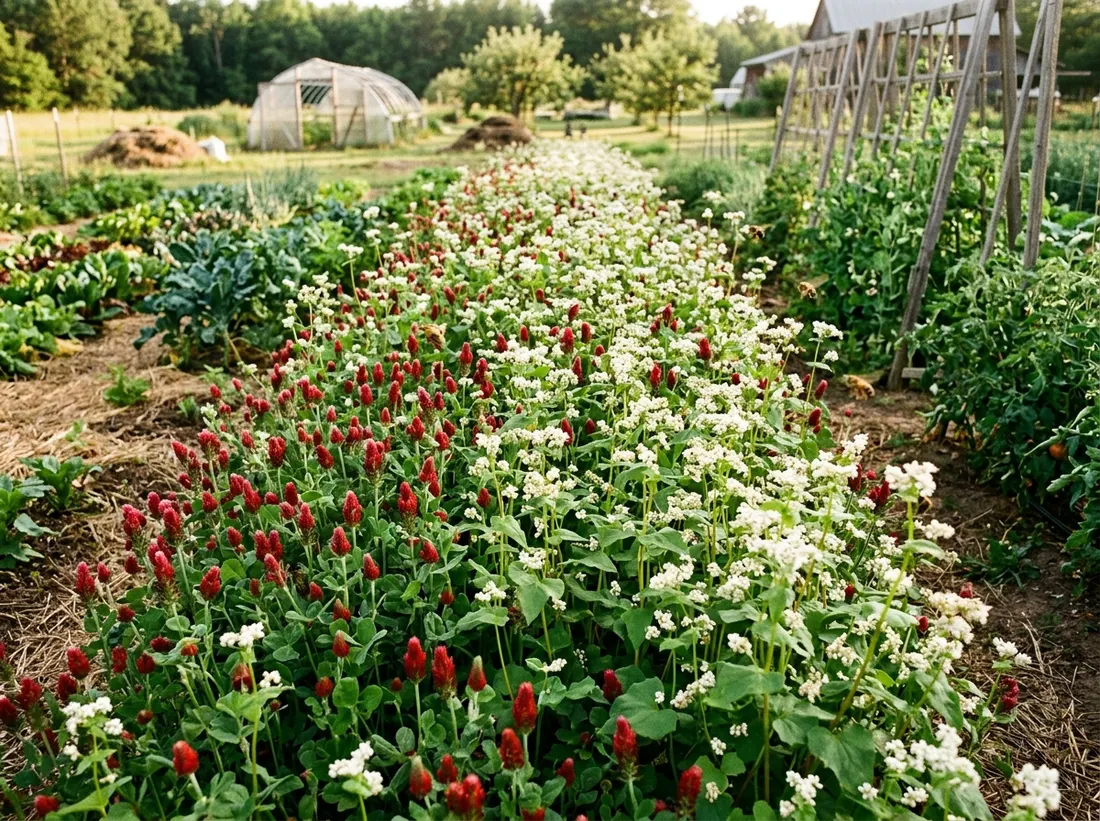
Rotate one zone out of vegetable production each season and plant a cover crop, like clover, buckwheat, or winter rye, to rebuild soil structure and add organic matter. This matters more on large plots, where soil across the whole area gets worked hard every year. A fallow section on a rotation, one zone resting per season across a four-zone rotation, keeps overall soil health climbing instead of slowly declining.
18. Use a Grid Layout for Easier Record Keeping
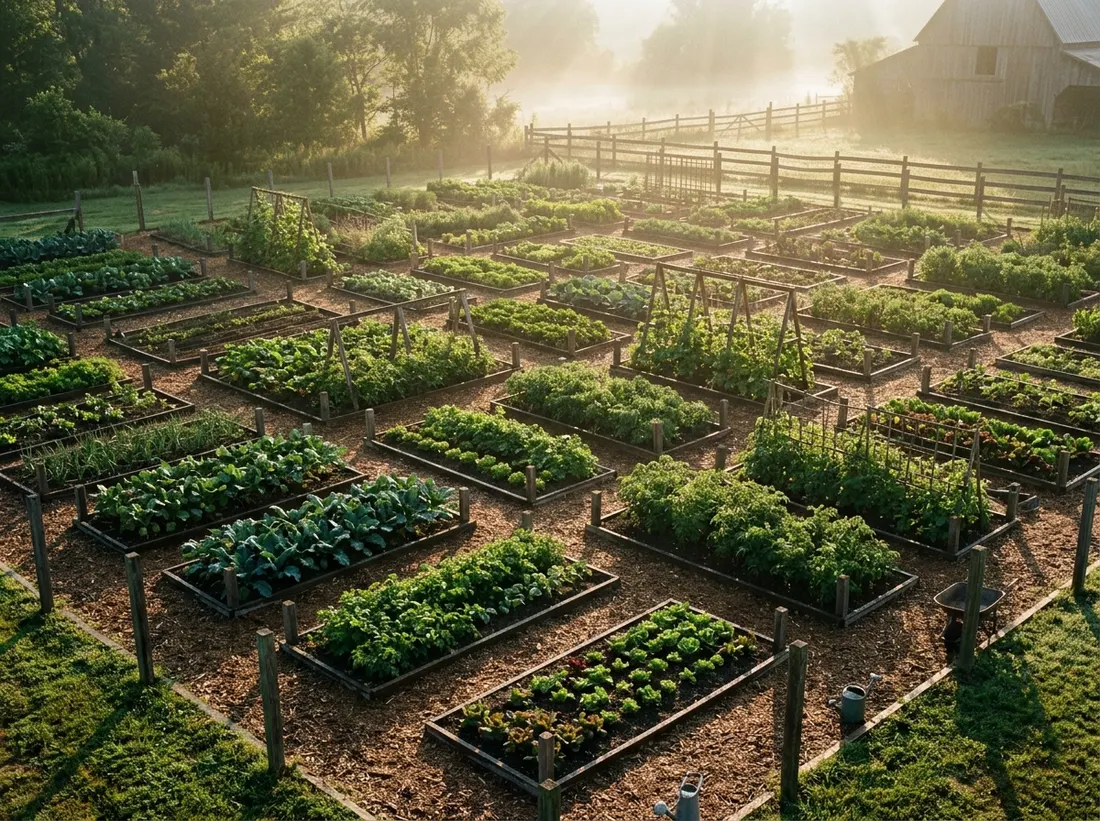
Lay the whole garden out on a numbered grid, whether that’s physical stakes and string or just a mapped plan on paper, so every bed or block has a clear reference point. This makes it dramatically easier to track rotation history, note which zone had a pest problem last year, and plan next season’s layout without relying on memory alone, which gets unreliable fast once you’re managing more than a handful of beds.
19. Plan a Wide Perimeter Path for Full-Garden Access
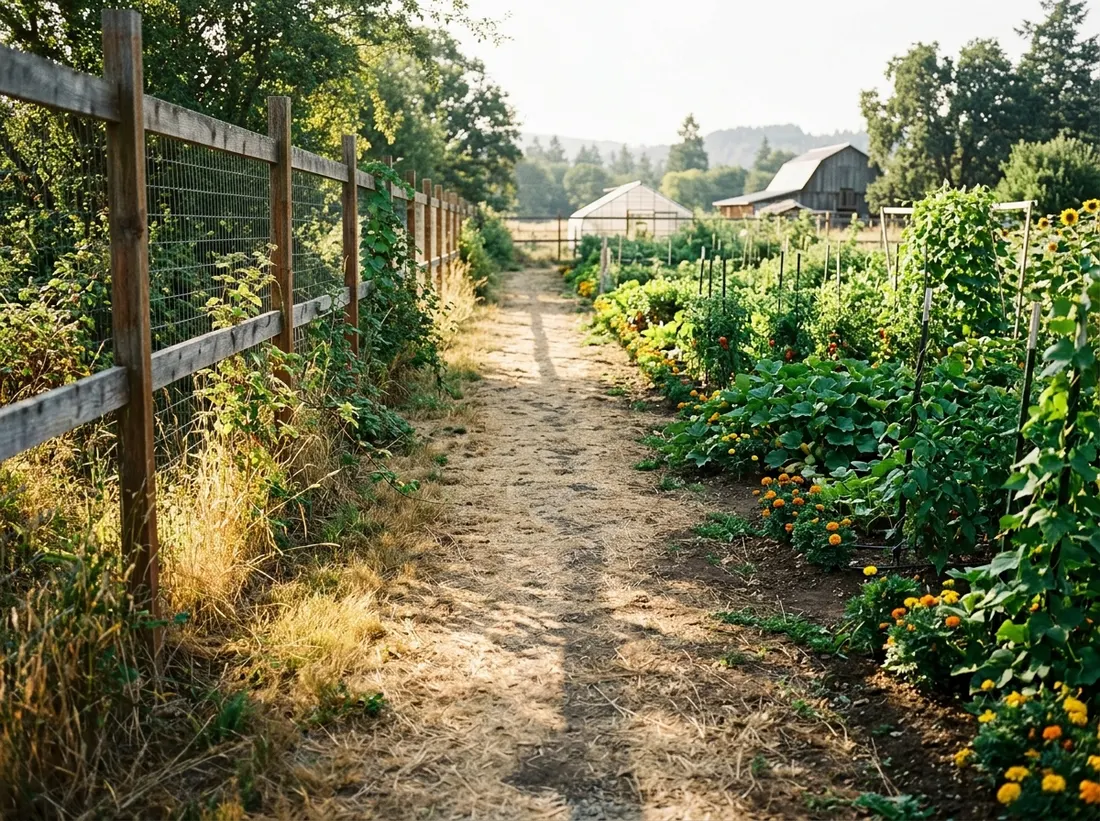
In addition to internal paths, keep a wide path, at least 4 feet, running the full perimeter of the garden. This gives access to every outer edge without cutting through planted zones and makes it easier to run perimeter fencing for deer or rabbit protection, which large plots in rural areas usually need at some point.
20. Stagger Tall Crops to Avoid Shading Shorter Ones
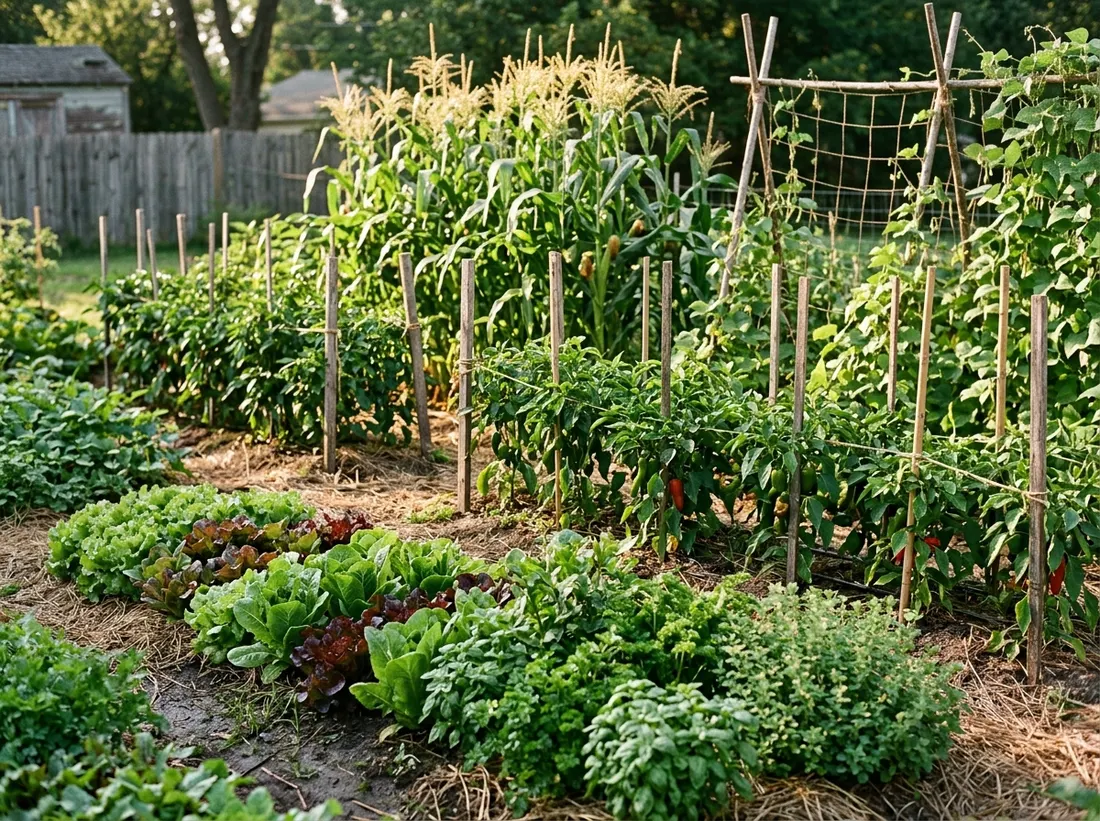
Place tall crops like corn, staked tomatoes, and trellised beans on the north side of the garden, in the northern hemisphere, so they don’t cast shade over shorter crops during the growing season. On a large plot with multiple blocks, this usually means planning the tallest block first and building shorter crop zones outward from there based on the sun’s path.
21. Leave Room to Expand Next Season
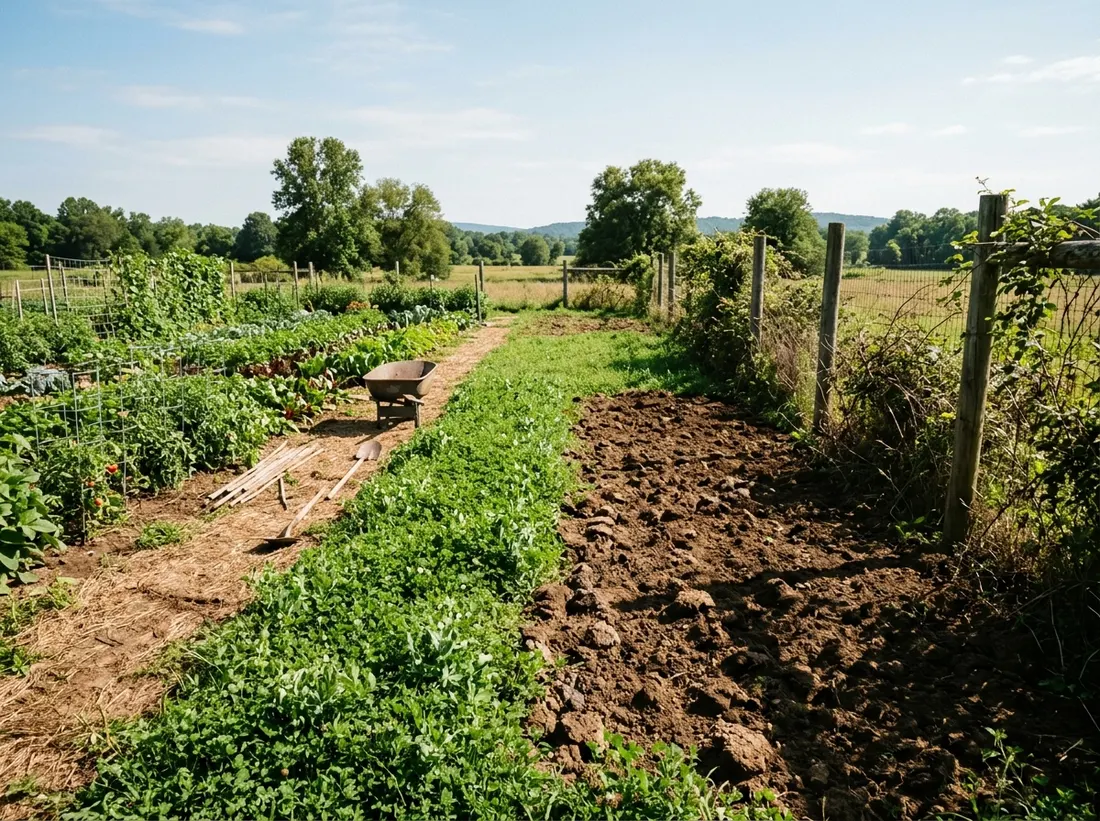
Reserve an unplanted or cover-cropped section at the garden’s edge specifically for next year’s expansion. Large gardens tend to grow larger over time as you find what works, and having room already fenced or tilled saves a full season of site prep when you’re ready to add another zone.
Conclusion
A large vegetable garden layout works best when it’s planned around how you’ll actually move through and maintain the space, not just what looks good on paper. Wide paths, zoned irrigation, and a real rotation plan matter more at scale than they do in a small backyard bed. Pick the ideas here that solve your specific site’s biggest constraint, whether that’s wind exposure, equipment access, or water delivery, and build the rest of the layout around that. A plot this size takes a season or two to fully dial in, so treat the first year’s layout as a working draft you’ll refine once you see how the space actually performs.
Frequently Asked Questions
How wide should rows be in a large vegetable garden?
Rows should be 36 to 48 inches apart in a large vegetable garden to allow equipment like wheelbarrows, carts, or small tillers to pass through without damaging plants. Sprawling crops such as squash and melons often need the wider end of that range once vines fill in. Measure the actual width of your cart or tiller before finalizing spacing, since equipment that needs to turn requires more clearance than a straight pass-through would suggest.
How do I plan crop rotation for a big garden with multiple zones?
Divide the garden into at least four zones and rotate crop families, brassicas, legumes, nightshades, and roots, through them on a multi-year cycle, tracking what grew where for the past two to three years. This breaks the buildup of soil-borne pests and diseases that comes from planting the same family in the same spot repeatedly.
What’s the best irrigation system for a large vegetable garden?
Zoned drip irrigation, run through timer-controlled valves grouped by crop water needs, is the most practical system for a large plot since hand watering becomes unmanageable past a certain size. A basic setup needs a pressure regulator, a filter, and a manifold splitting the main line into separate zones. Grouping zones by crop water need, rather than just by physical section, means you’re not overwatering drought-tolerant beans on the same schedule as thirsty squash.
Do I need a windbreak for a large vegetable garden?
You need one if your plot is exposed to consistent wind, since wind increases water loss and can damage tall crops like corn and staked tomatoes. A windbreak reduces wind speed for a distance roughly ten times its own height, so even a modest shrub row or fence section helps. Plant a living windbreak at least a season ahead of when you need it, since shrubs and small trees take time to fill in enough to block wind effectively.
How much space should I leave for paths in a large garden layout?
Plan for a main path at least 4 feet wide down the center or perimeter, plus a headland of 6 to 8 feet at one end if you’re using any equipment that needs to turn around. Internal paths between blocks can run narrower, around 2 to 3 feet, for foot traffic alone. Skipping the headland is one of the most common planning mistakes, since it only becomes obvious once you’re trying to turn a loaded cart at the end of a row.