
8 Vertical Gardening Ideas for Every Garden
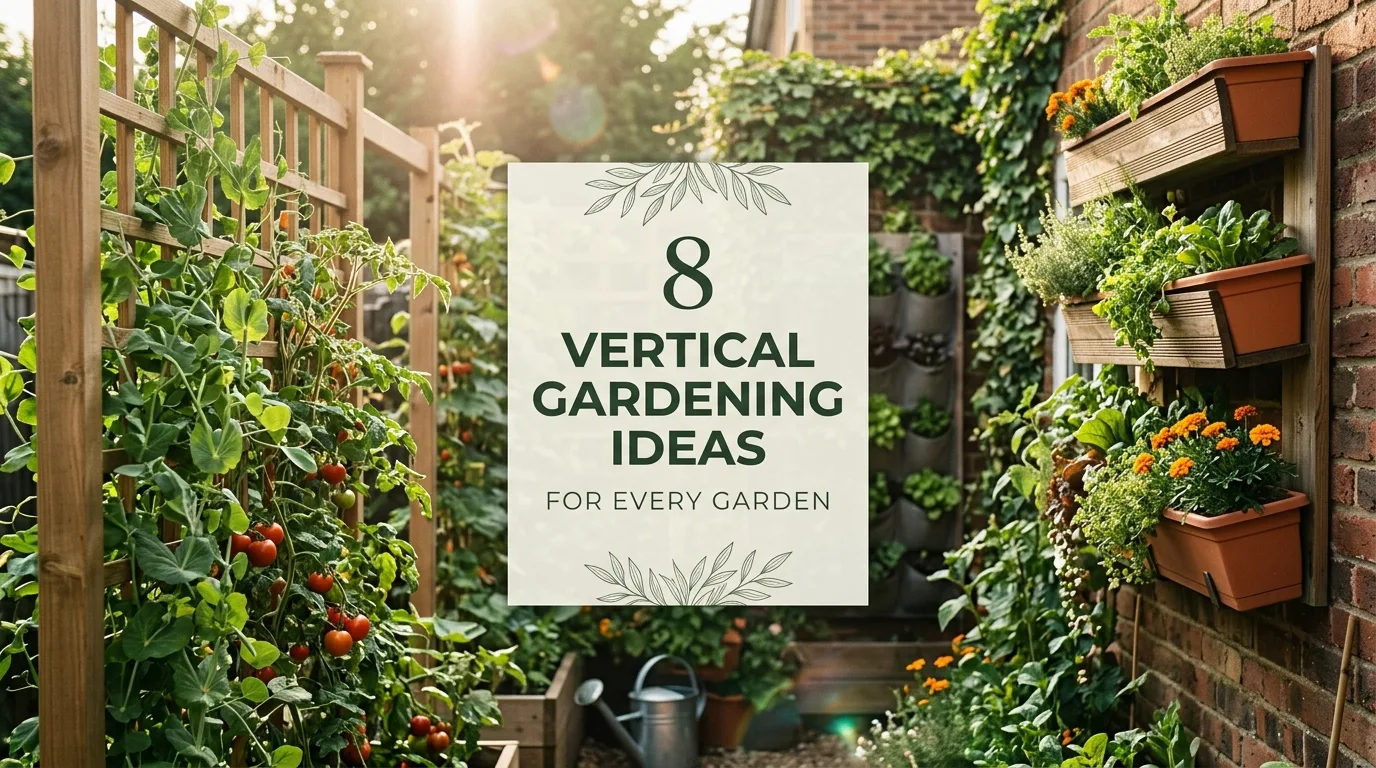
Running out of ground space doesn’t mean running out of room to grow. I’ve noticed that most gardeners hit the same wall eventually: the beds are full, the patio is crowded with pots, and there’s still a list of plants they want to try. Vertical gardening ideas solve this by using the air above your garden instead of only the ground beneath it, turning a bare fence, an empty wall, or a narrow strip beside the house into real growing space. This matters most for vining crops like cucumbers, pole beans, and small squash, which actually produce better fruit and stay healthier when trained upward instead of sprawling across damp soil. It also matters for anyone gardening on a balcony, a small patio, or a rented yard where digging isn’t an option. This guide covers eight distinct vertical growing structures, from simple trellises you can build in an afternoon to living wall panels that turn a blank wall into a green feature. Each one suits a different space, budget, and skill level, so you can pick the structure that fits your garden instead of trying to force one system to do everything. Start with the simplest option first: the trellis.
1. Classic Garden Trellises
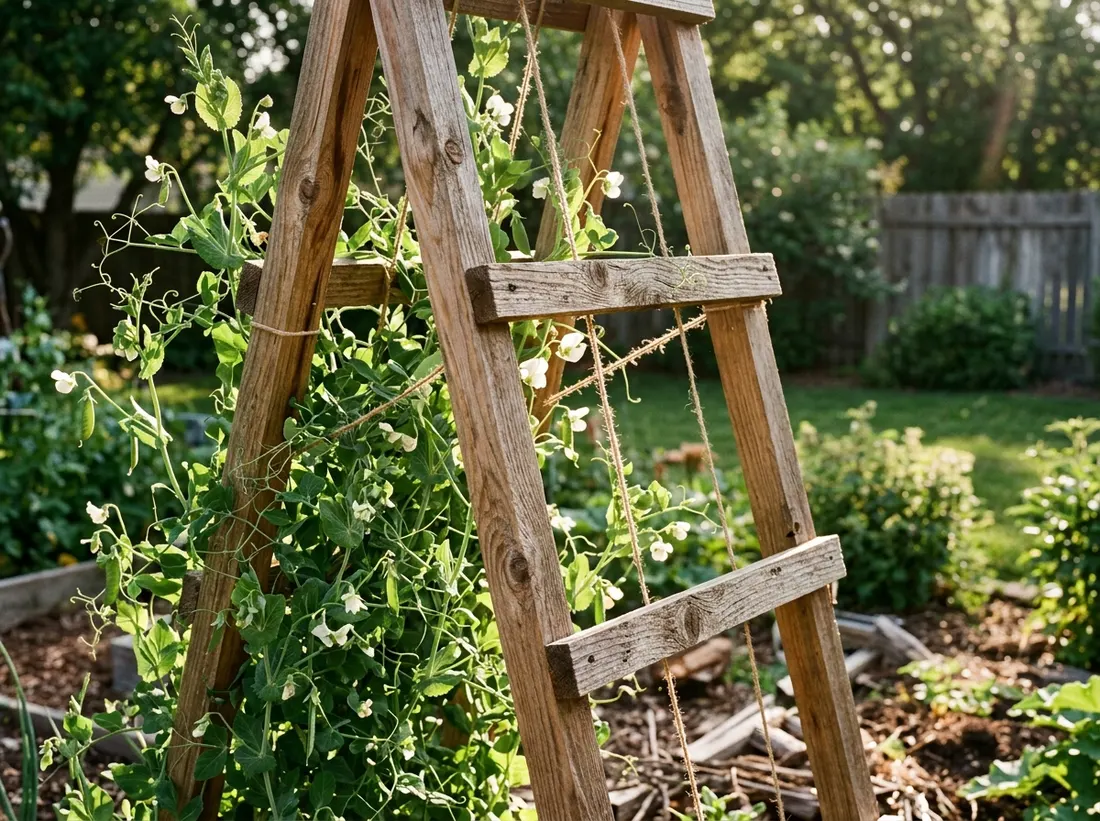
A trellis is the most versatile vertical structure you can add to a garden, and it works for anything that climbs by tendril or twining stem, cucumbers, peas, pole beans, and small melon varieties bred for trellising. A basic A-frame or flat panel trellis made from cedar, bamboo, or cattle panel costs relatively little to build and lasts several seasons if the wood is treated or naturally rot-resistant. Set posts at least 18 inches into the ground for stability, since a mature bean vine loaded with pods is heavier than it looks in June. Place the trellis on the north side of a bed so it doesn’t shade shorter plants growing in front of it, and angle it toward your sunniest exposure. Cucumbers grown on a trellis stay straighter and cleaner than ground-grown fruit, since they aren’t sitting in soil contact where rot and pests take hold faster.
2. Wall-Mounted Planters and Pocket Systems
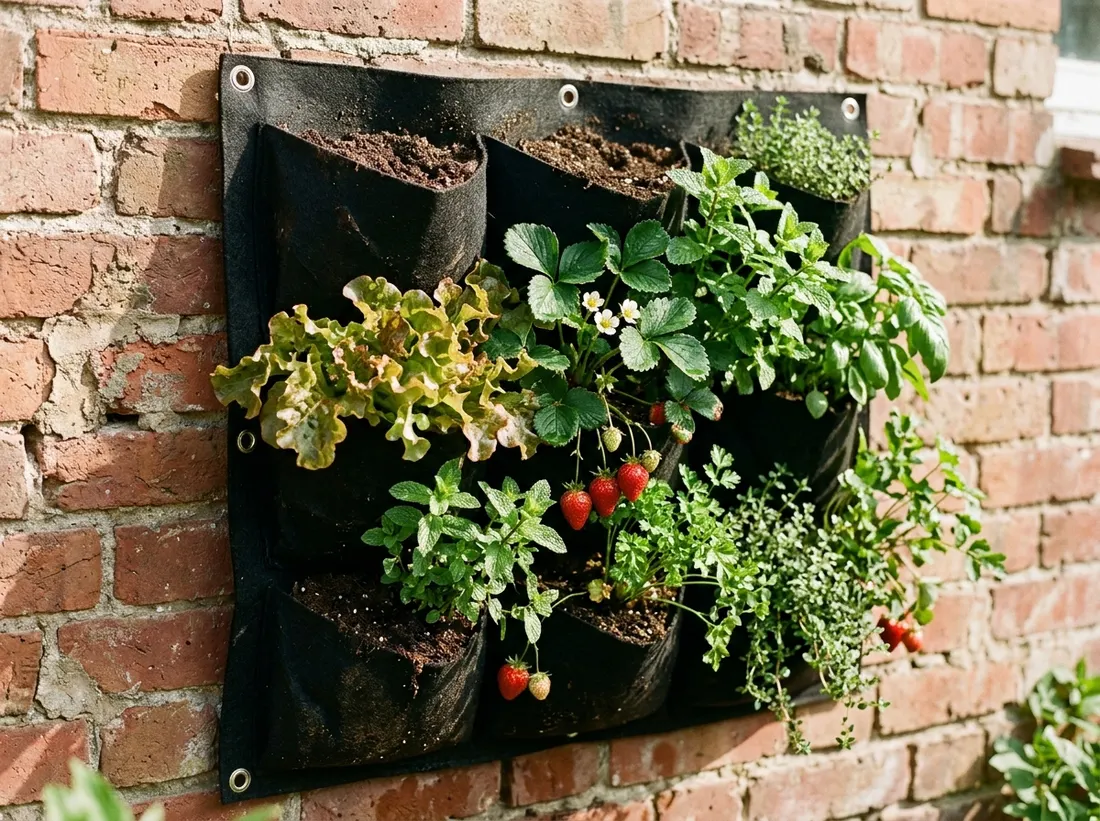
Wall-mounted planters, including fabric pocket systems and modular plastic grid planters, let you grow directly on a fence or exterior wall without any floor footprint at all. Felt pocket planters work well for shallow-rooted crops like lettuce, strawberries, and herbs, since each pocket holds only a few inches of soil and dries out faster than a full-depth bed. Mount these on a south or west-facing wall for the most sun, and check moisture daily in hot weather since shallow pockets lose water quickly. Rigid modular planters that snap together into a wall grid hold more soil and suit slightly larger plants like compact peppers or trailing tomatoes. Either system needs secure anchoring into wall studs or masonry anchors, since a fully watered wall planter carries real weight once the soil is soaked.
3. Tiered Plant Stands
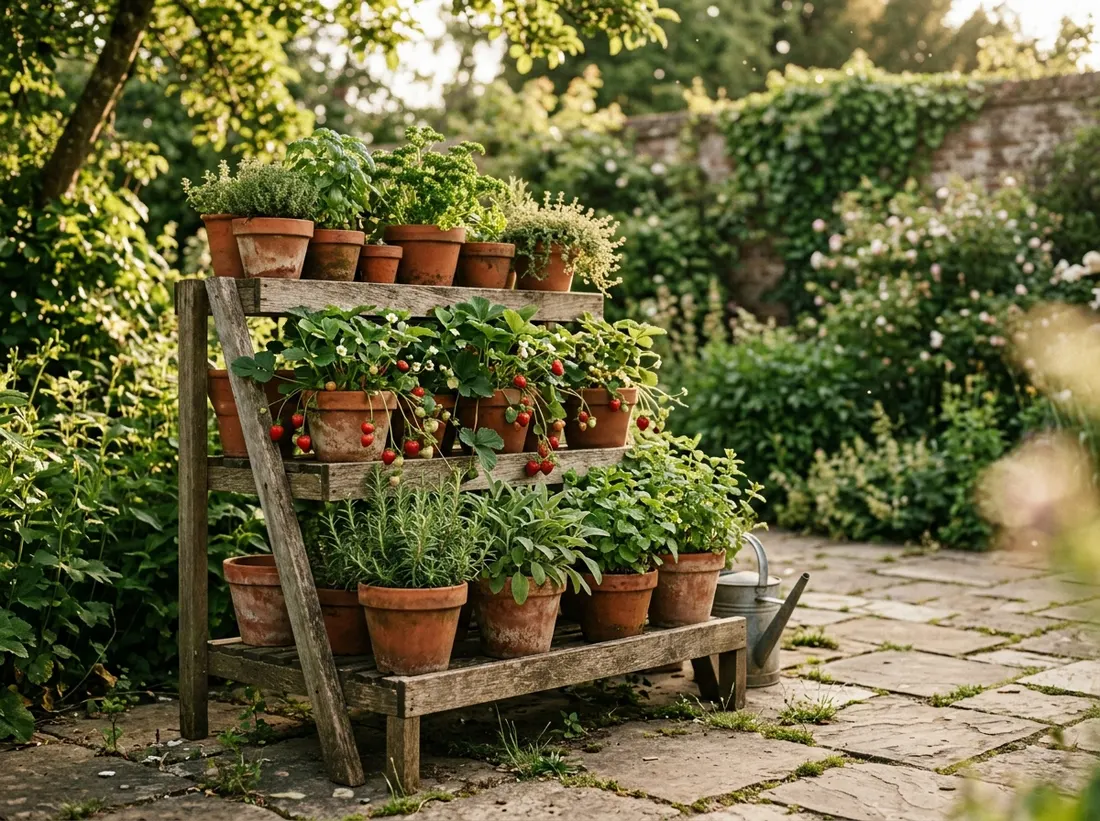
A tiered plant stand, with three or four shelves stepping up in height, is one of the easiest ways to fit more containers into a small footprint without building anything permanent. This works particularly well for herbs, strawberries, and compact lettuce varieties that don’t need deep root runs, and it lets you rotate pots for sun exposure since nothing is fixed in place. Choose a stand rated for outdoor use, since untreated wood or thin metal will warp or rust after a season of watering runoff. Position taller plants on the top tier and trailing or low crops on the bottom so nothing shades what’s below it. A tiered stand is also one of the few vertical options that moves easily, useful if you’re renting or want to shift your setup between a sunny spot in spring and a shadier one in peak summer heat.
4. Repurposed Pallet Gardens
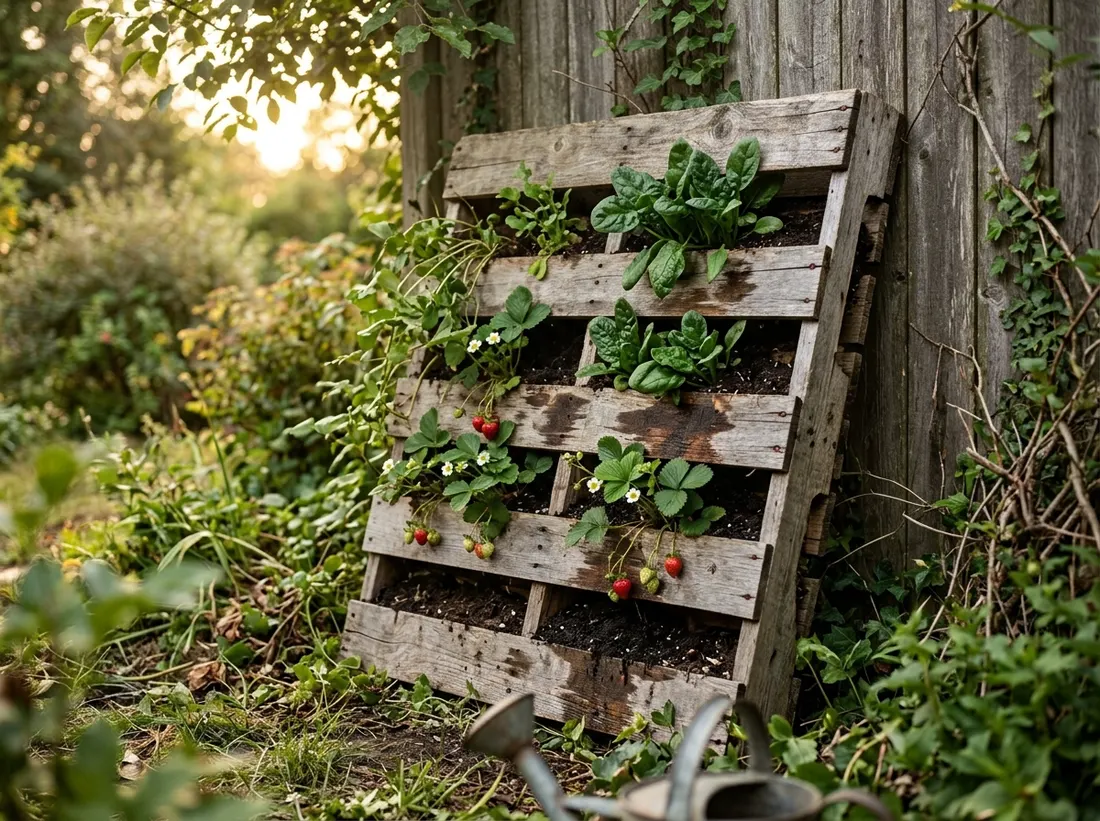
A wooden shipping pallet, stood on end and lined with landscape fabric, turns into a vertical planting surface with rows of small pockets you fill with soil and plant directly into. This is one of the cheapest vertical gardening ideas available since pallets are often free, though you should confirm the pallet carries an HT (heat-treated) stamp rather than an MB (methyl bromide) stamp before using it to grow food. Lay the pallet flat for a week or two after planting to let roots establish before standing it upright, since soil and young plants can shift or fall out if you tip it too soon. Shallow-rooted crops like lettuce, spinach, and strawberries do best here, since the soil pockets between pallet slats are rarely deeper than 4 to 6 inches. Lean the pallet against a sturdy wall or fence rather than standing it freestanding, since a fully planted pallet is heavy and top-loaded.
5. Living Wall Panel Systems
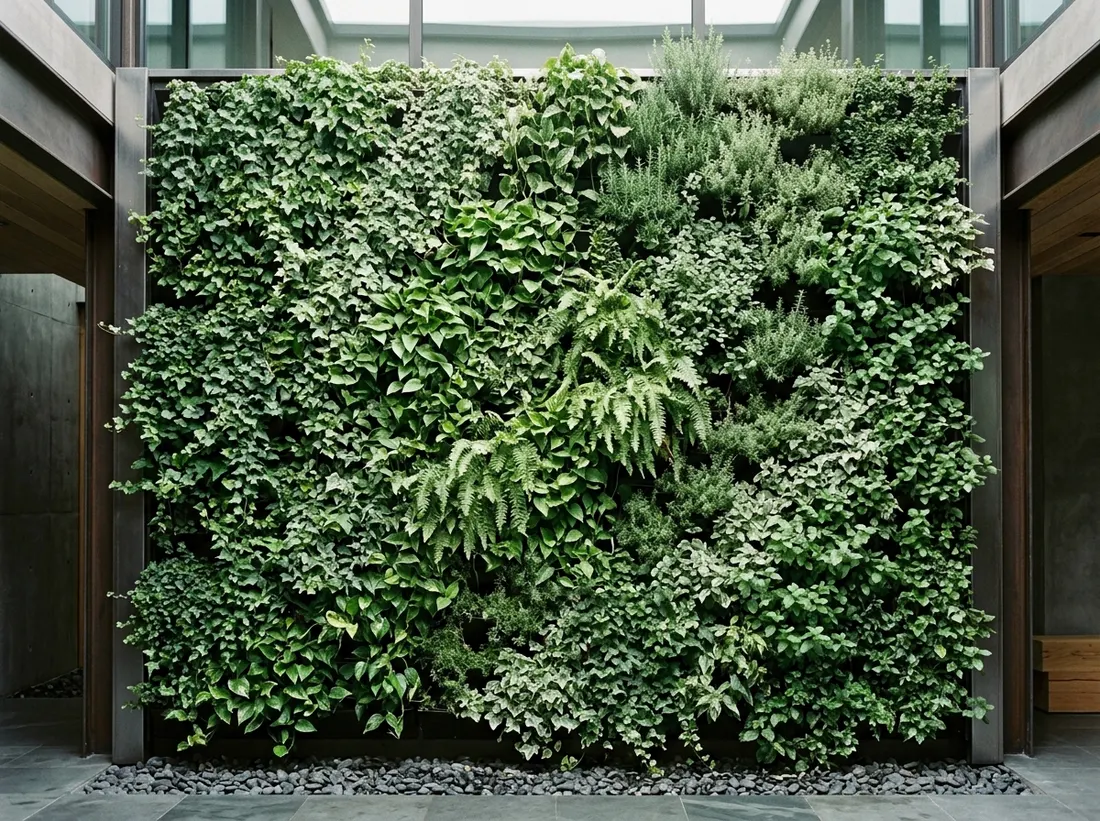
Living wall panels are modular, often felt or plastic-backed grid systems designed specifically for dense, all-over planting across a vertical surface, and they create the fullest, most finished-looking green wall of any option here. These systems usually include a built-in irrigation line or drip system, since the sheer number of small planting cells dries out faster than a single large container would. Living walls work best with a mix of trailing plants, compact herbs, and shallow-rooted ornamentals rather than anything with a deep taproot. They cost more upfront than a trellis or pallet, and they need a stable, weight-bearing wall or a freestanding frame built to hold the combined weight of the panel, soil, and water. This is the option to reach for once you’ve tried a smaller vertical structure and want a more permanent, higher-impact feature.
6. Hanging Planters and Baskets
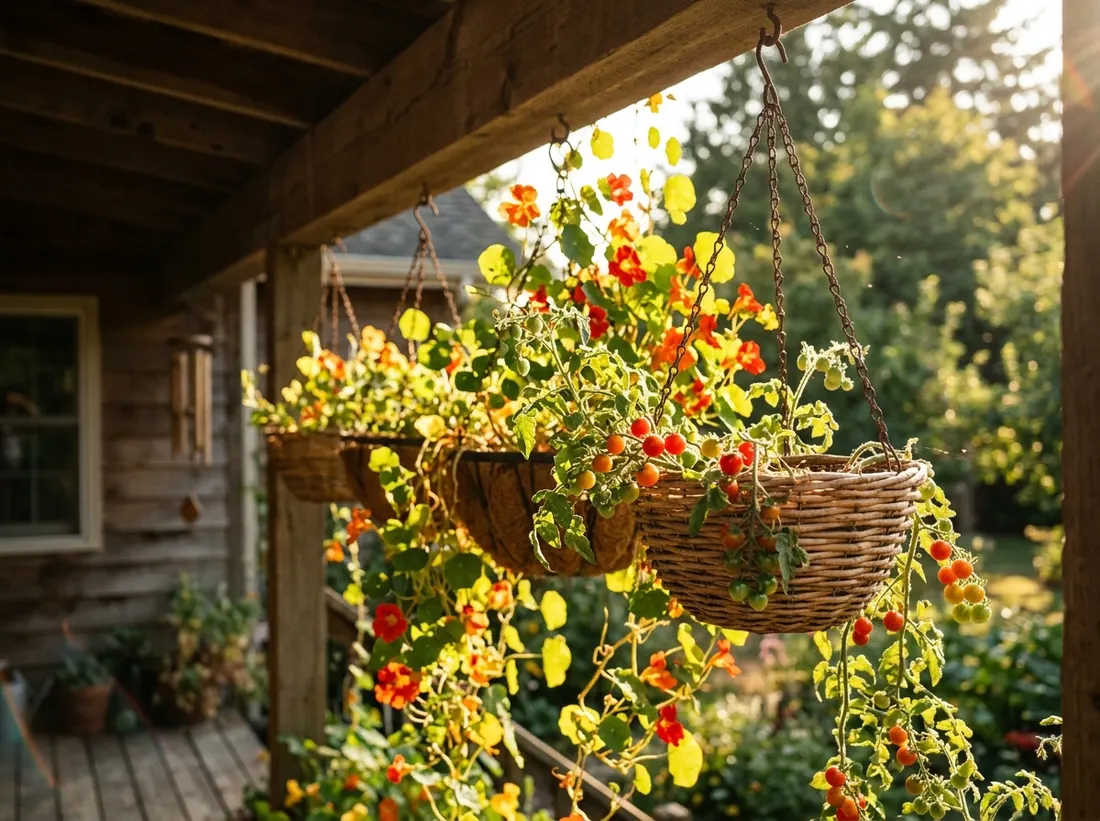
Hanging planters use overhead space, a porch beam, a pergola, or a sturdy bracket, to grow trailing plants like cherry tomatoes, strawberries, and trailing herbs without using any wall or ground space at all. Choose a hanging basket at least 12 to 14 inches across for anything fruiting, since smaller baskets dry out too fast in summer heat and struggle to support a full-size tomato plant through the season. Self-watering hanging planters with a built-in reservoir cut down on daily watering, which matters since hanging baskets dry out faster than ground-level containers due to airflow on all sides. Check the mounting hardware’s weight rating before hanging anything, since a soaked 14-inch basket with a mature plant can weigh 25 pounds or more.
7. A-Frame Trellis Structures
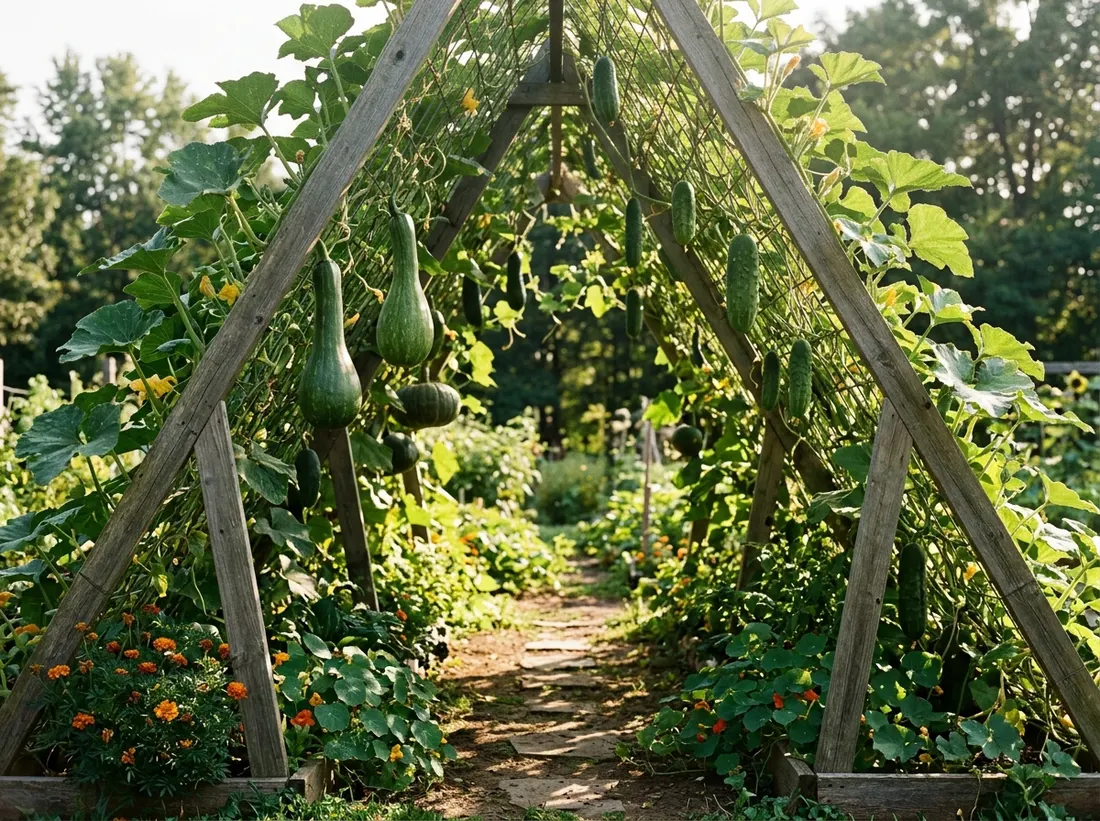
An A-frame trellis, two panels hinged together at the top to form a freestanding tent shape, is one of the sturdiest vertical structures for heavy vining crops like squash, melons, and larger cucumber varieties. Because it’s freestanding, it doesn’t need a wall or fence for support, and it works well straddling a garden path or standing in the middle of an open bed. The shaded space underneath an A-frame also creates a cooler microclimate, useful for lettuce or spinach that bolts quickly in full summer sun. Build the panels from cattle panel, wood lattice, or heavy-gauge wire mesh, and secure the hinge at the top with strong hardware, since wind load on a fully vined A-frame is considerable by midsummer.
8. Vertical Stacking Planters
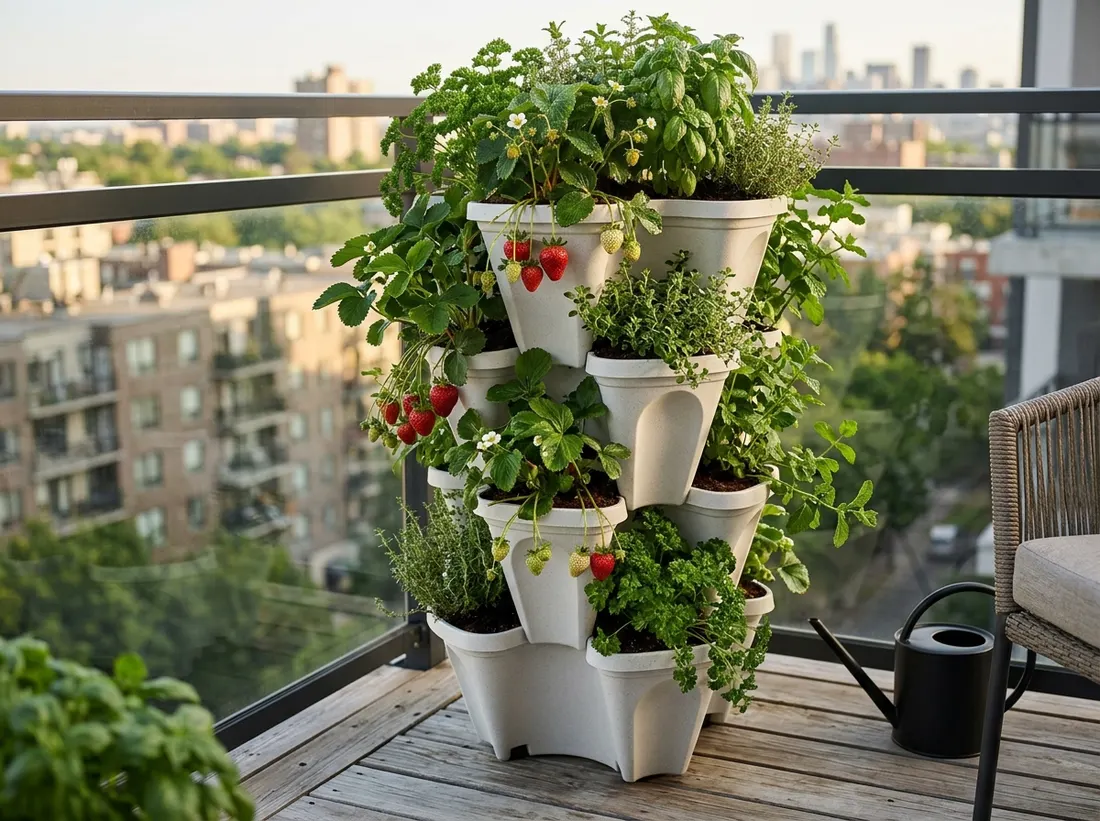
Stacking or tower planters, where individual pots or planting rings stack on top of each other around a central column, are built specifically to maximize growing space in a footprint as small as 12 to 18 inches across. These work well for strawberries, herbs, and compact lettuce, with each tier planted separately so you can harvest from different levels through the season. Water poured into the top tier should reach the lower levels through internal drainage or an embedded watering tube, so check the specific design before assuming even watering happens automatically. Stacking planters suit balconies and patios especially well, since they need no ground space and can sit directly on pavement or decking.
Conclusion
Vertical gardening ideas turn wasted vertical space into real growing capacity, whether that means a simple trellis for pole beans or a full living wall panel for a blank fence. The right structure depends on what you’re growing, how much weight your wall or support can hold, and how much upkeep you want to take on. Start with a trellis or a tiered stand if you’re new to vertical growing, since both are inexpensive and forgiving, then move toward a living wall or A-frame once you know which crops and conditions suit your space. Any one of these eight approaches will free up ground space for the plants that still need it.
Frequently Asked Questions
What is the easiest vertical gardening structure for beginners?
A basic trellis is the easiest vertical structure for beginners, since it requires minimal building skill and works immediately for common climbers like peas, cucumbers, and pole beans. A tiered plant stand is a close second, since it needs no installation at all and simply holds pots you already own. Both options cost relatively little and let you learn how vertical growing changes watering and sun exposure before investing in a bigger structural system like a living wall.
What plants grow best in a vertical garden?
Vining crops with tendrils or twining stems, cucumbers, pole beans, peas, and small melon varieties, grow best on trellises and A-frames since they climb naturally with light guidance. Shallow-rooted plants like strawberries, lettuce, and herbs suit pocket planters, pallet gardens, and living walls, since those systems hold limited soil depth. Heavy, deep-rooted crops like potatoes or large squash generally don’t suit vertical structures well and are better left in ground beds or large containers.
How much weight can a wall support for a vertical garden?
This depends entirely on your wall’s construction, but a soaked wall planter or pocket system can weigh several times its dry weight once soil and water are added. Mount any wall-based system into studs or solid masonry with anchors rated for the estimated wet weight, not the empty weight. If you’re unsure about your wall’s capacity, a freestanding A-frame or tiered stand avoids the question entirely since it doesn’t rely on wall support.
Do vertical gardens need more watering than regular gardens?
Most vertical systems need more frequent watering than ground beds, since containers, pockets, and panels hold less soil volume and dry out faster with airflow moving around them on multiple sides. Hanging baskets and felt pocket planters are especially prone to drying out in hot weather and may need daily watering in summer. A built-in drip line or self-watering reservoir reduces this workload significantly, which is worth considering for any system with more than a few individual planting cells.
Can I build a vertical garden on a balcony or patio?
Yes, tiered plant stands, hanging planters, and stacking tower planters all work well on a balcony or patio since none of them require digging or ground access. Check your balcony’s weight limit before adding a fully soaked living wall panel or several large hanging baskets, since the combined weight adds up faster than it looks. A-frame structures and full pallet gardens generally need more floor space than a typical balcony provides, so they suit patios and yards better.
How do I keep a vertical garden from getting too heavy for its support?
Choose lightweight growing media, a mix that includes perlite or coco coir instead of dense garden soil, to reduce the overall weight a trellis, wall, or stand has to carry. Water in smaller, more frequent amounts rather than fully saturating a large hanging basket or pocket system in one pass, since fully soaked soil is often the heaviest single factor. Check mounting hardware and support posts at the start of each season, since wood, brackets, and anchors can weaken from a year of outdoor exposure.